Valdai to Beijing: Lukashenko Between Two Patrons

Baltic Security Monitor | Analytical Commentary
29 June 2026
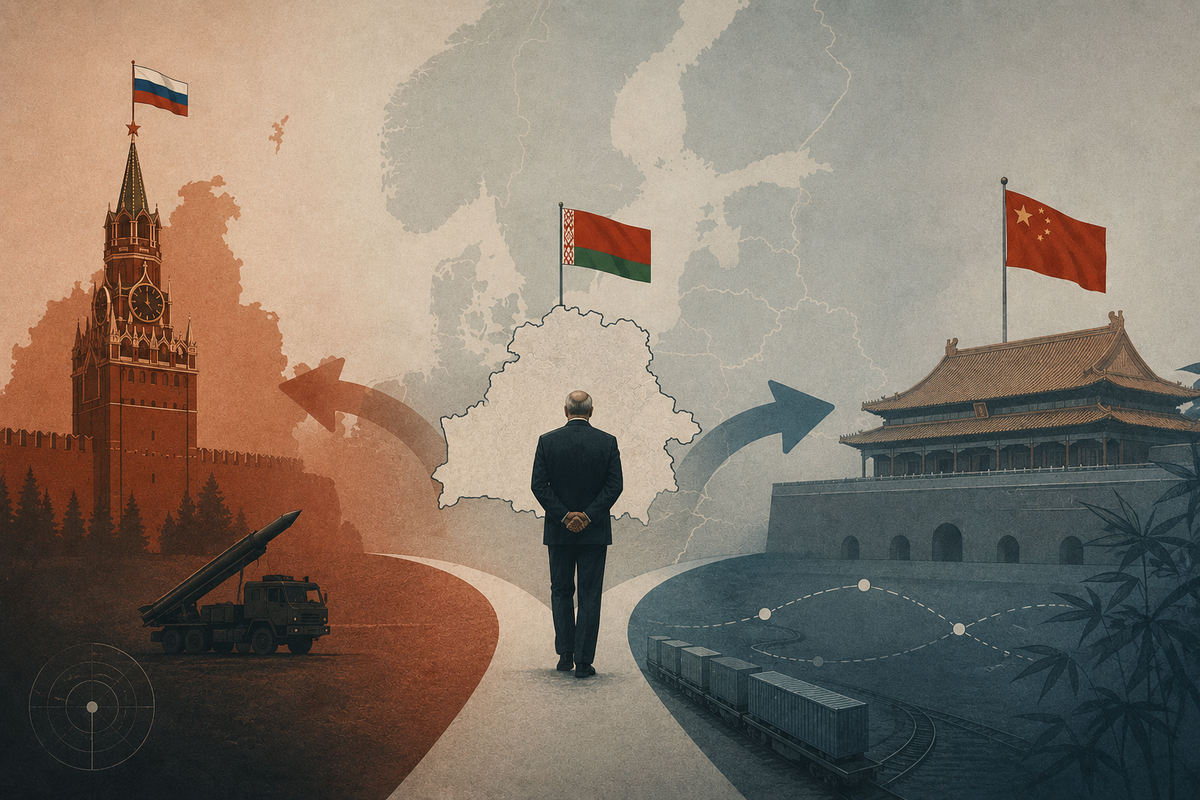
In four days, Alexander Lukashenko held talks with Vladimir Putin at Valdai and with Xi Jinping in Beijing. Two meetings. Two very different outcomes. One geopolitical equation that is becoming progressively harder to balance for the man standing between them.
Valdai, 26 June: A Meeting Without a Signature
Putin received Lukashenko at his private Valdai residence — a location he rarely uses for official negotiations with foreign leaders. The Kremlin confirmed the meeting only after it had concluded. Spokesman Dmitry Peskov told TASS that the two discussed the Union State agenda, trade and economic cooperation, and regional security — and that no official statements would be issued.
Those words describe the format, not the substance.
The meeting took place the day after Lukashenko publicly demanded that Russia's ambassador to Belarus, Boris Gryzlov, refrain from dragging Minsk into the war against Ukraine. According to the Wall Street Journal, Putin has been pressing Lukashenko to open a second front against Ukraine from Belarusian territory. Russia is also seeking a legal basis to recruit Belarusian citizens into its armed forces through Union State frameworks.
The context for understanding the meeting is this: on 19 June, Zelensky issued Belarus a seven-day ultimatum — remove Russian signal relay stations used to guide strike drone trajectories, or Ukraine would remove them by force. By 22 June, before the deadline expired, the relay stations had stopped operating. On 24 June, Zelensky confirmed that Ukrainian intelligence had verified they were no longer functioning.
Lukashenko therefore travelled to Putin immediately after having complied with Kyiv's ultimatum — and after publicly telling Moscow's ambassador that Belarus would not be drawn into the war. It was the most visible public assertion of Minsk's independent position since the start of the full-scale invasion.
For Putin, Belarus is useful only as long as it can provide territory, infrastructure and strategic depth without incurring direct consequences. Ukraine's ultimatum demonstrated that this arrangement is no longer consequence-free.
What Moscow sought from the meeting is known: a launchpad for a potential renewed offensive on the Kyiv axis, relay station deployment, a mobilisation quota. What it did not receive is confirmed by the absence of any signed documents, joint statements, or even the standard protocol photographs.
Beijing, 29 June: Sovereignty as a Shield
Immediately after Valdai, Lukashenko flew to China. Today, 29 June, he met Xi Jinping at the Diaoyutai State Guesthouse in Beijing.
Xi stated that China supports Belarus in safeguarding its national sovereignty, independence and territorial integrity, and in pursuing a development path suited to its own national conditions. Beijing expressed willingness to continue providing assistance within its capacity for Belarus's development and construction.
Relations between the two countries stand at their "historic peak," Xi said. "This is exactly what we talked with you before," Lukashenko replied. "And perhaps, to some extent, what we had dreamed of on the eve of this global cooperation between Belarus and China."
Xi called for mobilising resources across sectors to advance Belt and Road cooperation and for enhancing coordination within multilateral frameworks so the two countries can jointly serve as a stabilising force in a turbulent world.
The sequence is symbolically precise and almost certainly not coincidental: Moscow with demands first, Beijing with protection immediately after. For Lukashenko, Beijing functions as an insurance policy that constrains Moscow's freedom of action. China has no interest in Belarus being drawn into active hostilities: Minsk is a key logistics node of the Belt and Road Initiative's European corridor. An isolated or belligerent Belarus destroys a route into which Beijing has invested years of diplomatic and economic capital.
Lukashenko last visited China in September 2025, when he attended the grand military parade in Beijing and the SCO summit. The current visit — immediately following Valdai — is no longer protocol. It is a geopolitical statement.
Analysis: Three Levels
Moscow's level. Putin did not get what he wanted. The Valdai meeting without documents or statements is a public acknowledgement of a red line Lukashenko is currently unwilling to cross. But Minsk is not a free actor: Russian tactical nuclear weapons — including the Oreshnik missile — are based on Belarusian territory, and a Wagner instructor contingent of roughly 1,000 personnel remains in the country. Dependence on Russian fuel supplies and defence industry integration chains is structural, not situational.
Minsk's level. Lukashenko is playing for maximum regime survival, not for a geopolitical alignment. Disabling the relay stations after Kyiv's ultimatum, publicly rebuking Moscow's ambassador, and immediately flying to Beijing — this is not independent foreign policy. It is a survival strategy of a ruler being squeezed simultaneously by strike threats from Kyiv and pressure from Moscow. Beijing in this picture is not an ally but an insurance policy: its formal support for "Belarusian sovereignty" is the most effective deterrent against Kremlin coercion currently available to Minsk.
Beijing's level. Xi's statement that "China supports the sovereignty and territorial integrity of Belarus" was not delivered in a vacuum — it was addressed to Moscow no less than to Minsk. Beijing publicly signalled that turning Belarus into an active belligerent crosses a line China does not wish to see crossed. This does not mean China is breaking with Russia — it means Beijing is marking the outer boundary of what it considers compatible with its vision of regional stability and its own economic interests in Europe.
Implications for Regional Security
For the countries of NATO's northeastern flank — Estonia, Latvia, Lithuania and Poland — this diplomatic sequence carries concrete meaning.
The reduction in the probability of Belarus opening a second front is real, but temporary and not structural. The Belarusian military is neither mobilised nor engaged. The relay stations are off. But Lukashenko has dismantled none of the infrastructure that remains useful to Russia: the nuclear deployment sites, the logistics depots, the drone routing corridors. Zelensky explicitly noted that Belarus continues to build road infrastructure, ammunition storage facilities and fuel depots along the Ukrainian border — without any non-military rationale.
The most important structural conclusion is this: China has entered the Belarusian neutrality equation as an active participant, not an observer. This complicates both Moscow's pressure on Minsk and any scenario involving the forced conversion of Belarus from passive enabler to active co-belligerent.
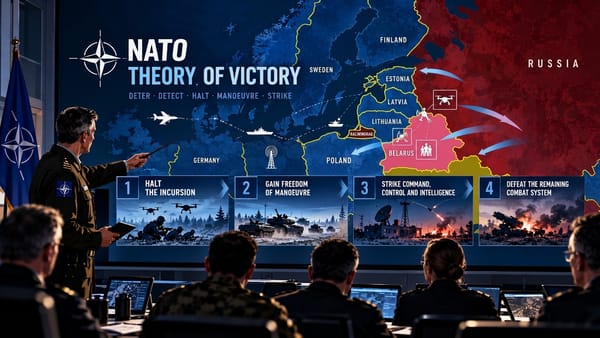
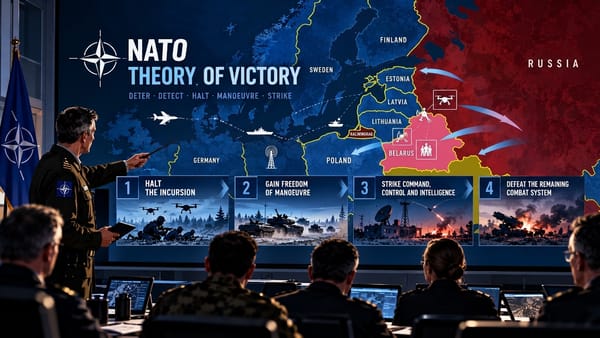
For NATO's threat assessment of the northern axis — the Suwalki corridor, the Polish-Lithuanian border, Lithuanian and Latvian security depth — the Valdai-Beijing sequence argues for maintaining planning scenarios that account for Belarus as an uncertain rather than a stable variable. The relay stations went dark because Kyiv threatened consequences. They can come back if the threat recedes. What has changed is not Lukashenko's fundamental disposition — it is the cost calculation. And that cost is now partly denominated in Beijing's preferences.
Baltic Security Monitor (osint-baltic.com) — analytical publication covering NATO's northeastern flank.