Ukraine bombs Russia's heart for over a year, but the Baltic prepares for 2027. Putin is unpredictable, and therein lies the danger

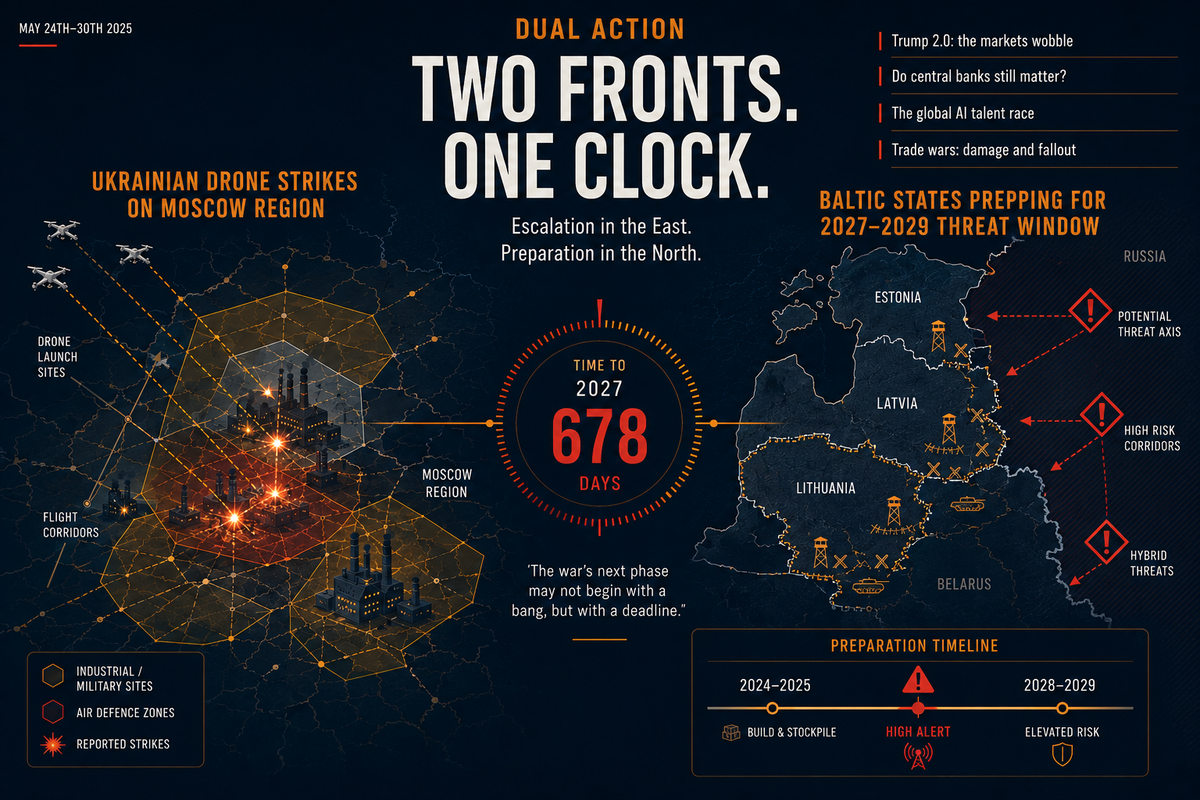
When a Ukrainian drone crashes into a petrochemical refinery near Moscow, social media erupts with predictions of imminent Russian economic collapse. But the numbers arrive from less romantic sources—from OSINT analysts who count not just explosions but economic consequences. The aggregate risk to Russian economic resilience is today assessed at 0.12 on a scale of 1.0. This means the panic visible in chat rooms and blogs substantially outpaces what the data actually convey.
But this is the wrong place to obsess. The real game unfolds not in Moscow, not in burning fuel tanks, but in the cold calculation of what happens when the Russian resources currently pinned in Ukraine suddenly become free.
Strikes on schedule: Ukraine compels Putin to manage crisis
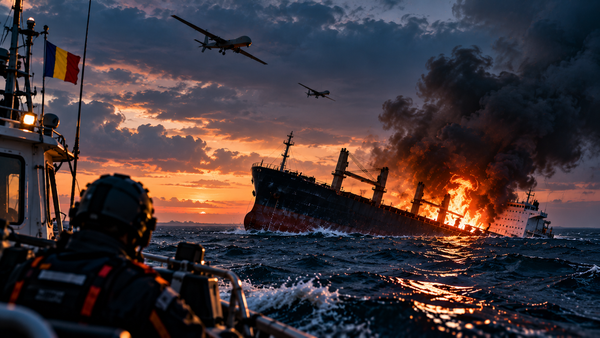
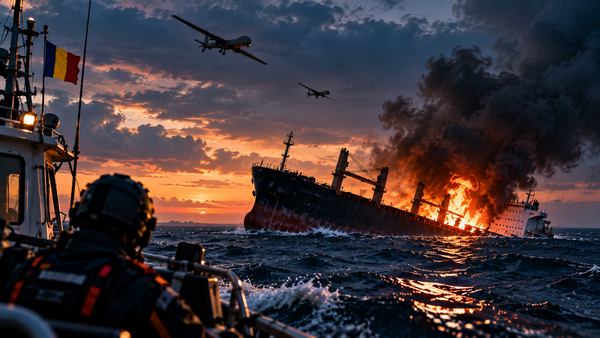
Over the past twelve months, Ukraine has launched the largest campaign of long-range strikes against Russian territory in the entire history of this conflict. Within forty-eight hours in early May, Ukrainian drone operations struck microelectronic facilities, petrochemical complexes, strategic fuel depots. Moscow glows from fires that commence each night.
The Kremlin, in turn, says nothing of losses or conceals them beneath bombastic rhetoric about "reliable defence" and "inevitable victory." This is standard procedure for a regime that learned long ago that acknowledging defeat is acknowledging incapacity.
Yet the data reveal patterns that cannot be hidden even beneath the noise of strategic communication. In the first quarter of 2026, Ukrainian drone and robotic platform acquisitions exceeded all prior-year purchases combined. This is not merely material expansion—it represents a qualitative shift in capability. Ukraine possesses not simply more drones but more intelligent drones.
In March, Russian armed forces assessed their losses at approximately thirty-six thousand military personnel. In one month. Numbers the Tsarist army could scarcely have imagined in the conflict's early years. It demonstrates both the exhaustion of the Russian war machine and Ukrainian understanding of how to maximise effect from constrained resources.
But Baltic anxiety is not about Moscow—it is about what comes after
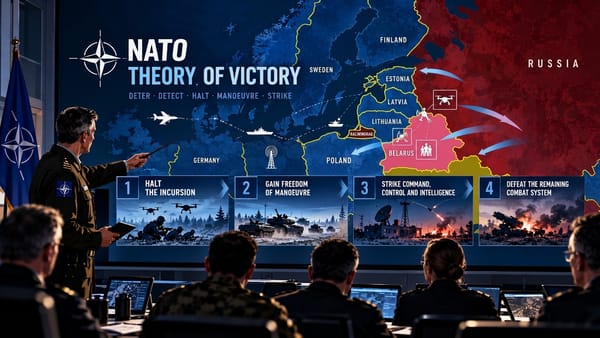
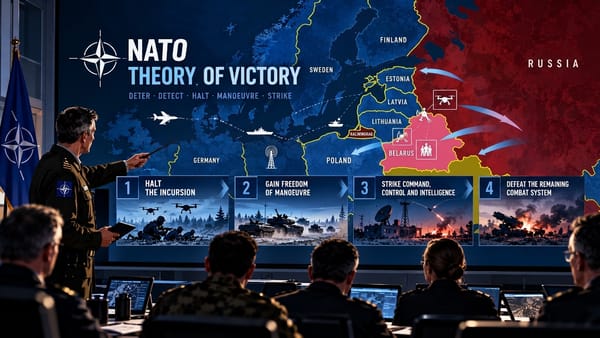
When American diplomat Christopher Smith addressed Congressional hearings in May 2026, his narrative was not about the present. It was about tomorrow. The State Department, with its fidelity to analytical precision, conveyed to Congress a single key assessment: the moment Russia disengages from Ukraine, it will, with near-mathematical inevitability, redirect its resources toward NATO's eastern flank.
"This is particularly acute in the Baltic region," Smith said. Not "this might happen." "This will happen."
Descend beneath the abstractions. Russia commits roughly ninety percent of its combat power to Ukraine. This figure is often cited as evidence of Russian exhaustion. But it also tells a less comfortable story: nine percent of Russian military capacity remains a quantity capable of launching significant hybrid operations, localised assaults, psychological campaigns. Nine percent suffices to fracture an alliance if that alliance is unprepared.
Latvia's military commander, addressing his nation's parliament, gave voice to what strategists discuss in private. Russia will possess a "window of opportunity" to conduct large-scale aggression against NATO during 2027–2029. This is not prediction born of fear—it is assessment built on analysis of Russian combat capacity, production capability, the time required for rearmament and regrouping.
Why precisely 2027–2029? Because after 2030, NATO will be qualitatively stronger. NATO's northern flank will receive sufficient resources, sufficient weaponry, sufficient forces that Russian calculations about swift success lose mathematical foundation. The window closes.
Baltic Shield 2026: NATO prepares for what it fears
From the eighth to the fourteenth of May 2026, on the island of Bornholm in the Baltic Sea, large-scale military exercises commenced under the designation "Baltic Shield 2026." On paper, routine exercise. In substance, rehearsal of scenarios European strategists prepare to endure.
The exercise was calibrated to practise island defence, to drill physical invasion scenarios and hybrid threat forms. Tanks, drones, logistical systems, civilian evacuation—all the components of how a state prepares for what it hopes not to receive.
Sweden's military commander, speaking during the exercise, voiced what makes this scenario particularly dangerous for NATO. Russia, he said, might attempt to seize a small island not for the territory itself—territorial acquisition is secondary—but for demonstration of power and testing of NATO's political reaction.
The discourse concerns micro-aggression. Not full-scale invasion of Tallinn or Riga. It is pixel-level operation—seize small territory, hold it, observe how long the West requires to respond, whether that response proves decisive, whether NATO fractures when confronted with direct conflict against a nuclear state.
America withdraws precisely when NATO most requires presence
Critical fairness demands noting one fatal synchronisation of events. Almost precisely as American strategists publicly warn of Russian plans against the Baltic, the U.S. military executes what can only be interpreted as a signal of diminished commitment.
American military command cancelled deployment of the "Black Jack" Army tank brigade to Poland—approximately four thousand soldiers meant to garrison NATO's eastern flank. Two weeks prior, withdrawal of five thousand troops from Germany was announced. The signal Moscow received was unambiguous: American presence in Europe remains no guarantee.
Worse, it reinforces precisely the scenario strategists seek to prevent. If America reduces presence on the Baltic precisely as Russian threat crescendos, then Baltic states are compelled to accelerate indigenous armament and defence planning without reliance on American security guarantee.
Putin's logic: unpredictability as strategy
What makes Putin genuinely unpredictable is not impulsiveness but calculation. Moscow long ago grasped that Western democracies orient toward detailed scenarios, timetables, diplomatic signalling. If Putin commits an act that defies such frameworks, Western reaction proves tardy.
This has occurred before. 2014 with Crimea, 2022 with full-scale invasion—both times the West required days to comprehend what transpired. Putin calculates that repetition will succeed again.
But Putin also understands such strategy requires precise timing. The 2027–2029 window exists precisely because Putin knows that post-2030, his mathematics no longer align. Therefore, operations, if they occur, must occur within this specific, narrow but critical interval.
Ukraine's response: maintain pressure on the board
Meanwhile, Ukraine comprehends it is only part of the equation. It does what it can—strike, exhaust Russian resource, prevent Putin from resting. Strike after strike—a psychological campaign calibrated to ensure that continuous pressure on Russian command erodes the time available for organising the next assault.
But Ukraine also understands the limits of its capacity. It cannot forestall Russian decisions about force redeployment. It can only render such decisions vastly more expensive and dangerous than they might otherwise appear to another Kremlin.
The strategy's simple formulation: become costly enough that the adversary cannot afford to ignore you. And buy sufficient time that Western Europe gathers itself, rearms, masters what it requires to hold the line without American guarantee.
Conclusion: prepare, but do not panic
Data suggest panic remains premature. Aggregate risk to Russian economic or military capacity will remain manageable across coming months. But data also show that Europe's window for critical decision-making narrows.
Baltic states already comprehend this. They prepare. They train. They construct defences independent of American promise. It is difficult, expensive, and unglamorous—but it is inevitable.
Ukraine understands this as well. It strikes not merely because it can, but because it must. Each strike on Moscow is not solely assault on Russian economy; it is also assault on Russia's chronology. It is attempt to stretch the 2027–2029 years so long, so costly, so exhausting that Putin is compelled to reconsider his calculations.
The game proceeds. And each player comprehends that the game's bottom line is survival.