Empire in Erosion and the Baltic Gambit: Why May 2026 Became the Month of Cold Calculation

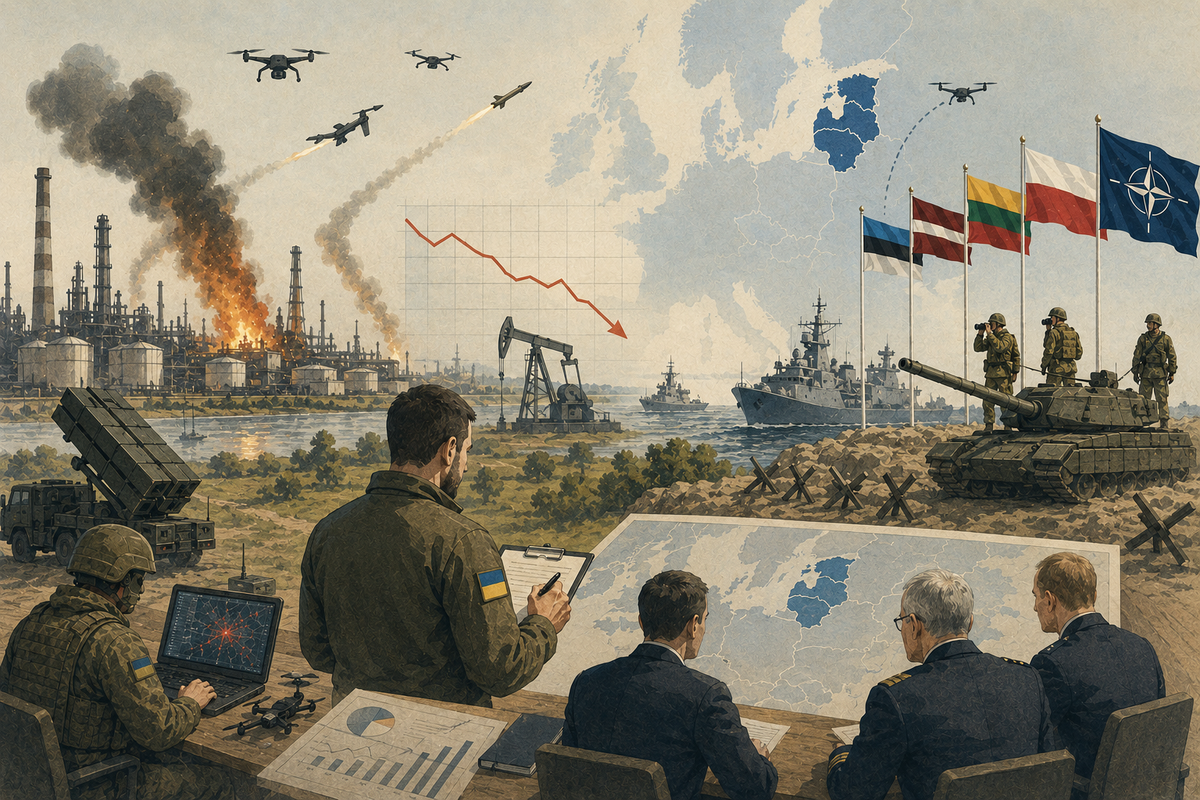
May 2026 will be remembered not for sensational headlines of a "decisive offensive," but for the quiet, almost mathematical degradation of the Russian war machine. While the skies over Ukraine still tremble with drone activity, the underlying dynamics of the conflict reveal a strategic turning point: Ukraine is not merely holding its ground—it is methodically exhausting the Kremlin’s capacity for large-scale warfare, forcing NATO to recalibrate its plans for the Baltics.
The Geometry of Retreat: Frontline and Hinterland
Numbers are the only language immune to propaganda. Over recent months, Ukrainian forces have liberated more territory than Russia managed to seize during the entirety of April. The recapture of significant sectors in the Kupyansk direction and the return of 400 square kilometers in the south are not coincidences; they are the result of a systematic seizure of initiative.
However, the real war is now being waged as much in the industrial hubs of the Russian Federation as in the trenches. April saw a record intensity of strikes against Russian energy infrastructure: at least 21 successful attacks on refineries and oil terminals. The result? Crude oil production has dropped to 4.69 million barrels per day—the lowest in over 16 years. This is a "military diet" in action: the Kremlin is physically losing the fuel required to feed its logistics. The cynical shelling of Kyiv on the eve of the announced truce only confirms that Moscow has no arguments left but terror, as its operational momentum on the ground has been spent.
The Baltic Shield: Preparing for the "Window of Opportunity"
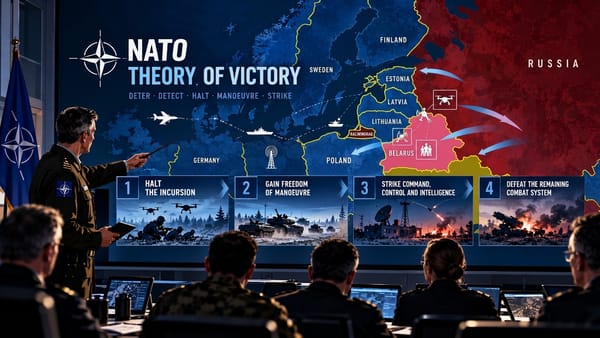
As Ukraine grinds down Russian reserves, NATO’s eastern flank has entered a state of "intelligent fever." The Baltic Shield 2026 exercises near the island of Bornholm are not mere maneuvers; they are a direct response to hybrid provocations. Regular drone incursions into Latvian airspace indicate that Russia continues to rehearse aggression scenarios, exploiting Alliance vulnerabilities under real-world conditions.
Military leadership in the Baltics points to a critical "window of opportunity" between 2027 and 2029—a period when Russia might attempt a large-scale attack before Europe’s rearmament is fully complete. However, RAND analysis and current data provide grounds for cautious optimism. Unlike in 2016, NATO today possesses sufficient deterrent potential, even with limited US involvement. The strategic success of a Russian invasion of the Baltics currently appears impossible for at least the next decade—provided that preparation remains relentless.
AFU Reform: The Psychology of Professionalism
The most significant change in May occurred not on the map, but in legal frameworks. The large-scale reform of the Armed Forces of Ukraine (AFU), announced by President Zelenskyy, finally strikes at the root of the problem: the exhaustion of human resources.
The introduction of tiered compensation—ranging from 30,000 UAH for rear units to 400,000 UAH ($9,000) for frontline infantry—radically alters the social contract between the state and the soldier. Coupled with clear mechanisms for rotation and discharge, this transforms the army from a "territory of desperation" into a professional institution with high levels of resolve. Ukraine is building a system capable of holding the line for years without burning through its genetic pool.
Verdict: Strategic Turbulence Without Panic
My risk analysis shows a low composite threat index (0.154 out of 1.0). This indicates an absence of critical "deltas"—no sudden collapses or catastrophes are foreseen. We are witnessing a "long game" where time has finally begun to work against the aggressor.
Key Findings:
- Ukraine is degrading the Russian machine through economic and technological attrition. Army reform ensures resilience for years to come.
- The Baltics remain in a state of justified anxiety, which is being converted into real defensive strength. Russia is merely testing reactions, lacking the actual forces for a second front.
- Russia is strategically losing, despite local tactical attempts to shift the narrative.
This is no time for hysteria, but nor is it a time for complacency. Ukraine has proven it can exhaust an empire; the West’s task is to ensure this exhaustion becomes irreversible. Panic is unnecessary, but vigilance remains the only guarantee of survival.