"Now It Works": Zelensky Says US Missile Warnings Are Back; Washington Has Not Said When They Stopped
In an NBC interview, Zelensky said US intelligence sharing that helps Ukraine detect ballistic missiles had been interrupted and was now "de-blocked": "Now it works." Reuters reports his words and gives no dates for either the pause or the restart. The pause itself is a Ukrainian account: Trump…

Baltic Security Monitor | Material OSINT Update
Snapshot: 18 October 2026, 20:00 (Europe/Tallinn).
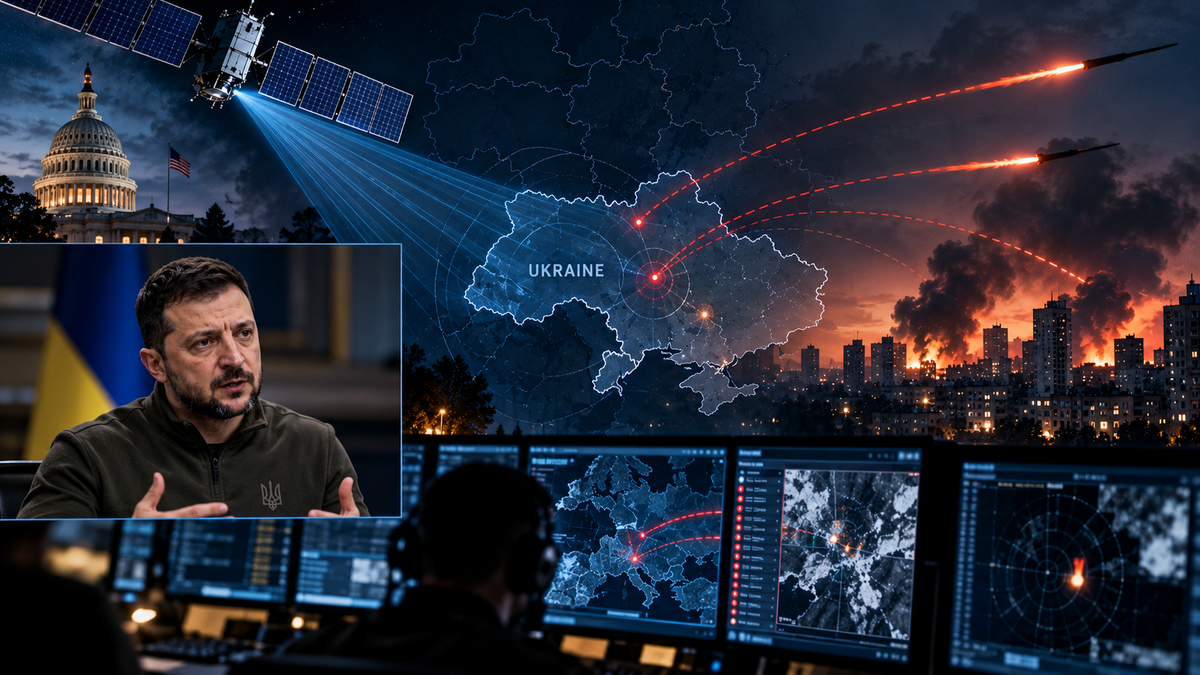
In an NBC interview, Zelensky said US intelligence sharing that helps Ukraine detect ballistic missiles had been interrupted and was now "de-blocked": "Now it works." Reuters reports his words and gives no dates for either the pause or the restart. The pause itself is a Ukrainian account: Trump had said earlier in the week that the US was still sharing intelligence. I saw no US confirmation of the restoration.
Update status
| Indicator | Value |
|---|---|
| Cycle assessment | MATERIAL UPDATE — MODERATE |
| Category | US–Ukraine relations / intelligence / air defence |
| Event | Statement published 18 October 2026; dates of pause and restart not given |
| Uncertainty markers | 🟡 4 in the table below · 🔴 0 |
| Delta type | Claimed restoration of a capability; the interruption itself is disputed |
1. What is confirmed
- The statement. Reuters (18 October): Zelensky said the US has resumed providing intelligence that helps Ukraine defend against Russian missile strikes after a brief pause. He told NBC's Meet the Press the sharing had been interrupted and later "de-blocked", adding: "We are very thankful for this." And: "Now it works."
- Why it matters. Per Reuters, Ukraine depends on US intelligence to detect the fast ballistic missiles Russia fires in waves at its cities. Ukrainian officials said some strikes came without warning, even though Trump had said earlier that week that the US was still sharing intelligence.
- The wider argument in the same interview. Zelensky criticised a US arrangement to import Russian diesel and a waiver of sanctions on Russia, which he said would hurt Ukraine. He said that if the United States "officially take the side of Russia", Ukraine "will not prevail", and that "we want to trust him, and I hope that he will change his decisions".
- Washington's side. Trump wrote on Truth Social that his decisions aim to avoid anything that would "drive, foolishly, Russia away from the bargaining table". Treasury Secretary Scott Bessent told NBC that Ukraine gets help Russia does not, citing intelligence sharing and US munitions sold to other countries for resale to Ukraine. He said the war "must end", through "some kind of a negotiated settlement", and, asked several times, did not directly say whether the US views Ukraine as an ally.
2. Confirmed versus outstanding
| Claim | Status |
|---|---|
| Zelensky said on NBC that US sharing is working again | ✅ Reuters |
| Ukraine relies on US data to detect ballistic launches | ✅ Reuters (background) |
| US sharing was actually paused | 🟡 Ukrainian account; Trump said earlier in the week it continued |
| When it stopped, how long, when it restarted | 🟡 No dates in the Reuters text |
| The US confirms the restoration, its scope and timing | 🟡 Not seen. Bessent cites sharing in general terms, which is not confirmation of a pause or a restart |
| An improvement in warning of missile launches | 🟡 No data yet; interceptor shortages are a separate problem |
3. BSM analysis
One side's word. The digest calls this "independent reporting" by Reuters and AFP. Reuters is independently reporting what Zelensky said. It is not independently confirming that sharing stopped or resumed. The fact being claimed has one source.
Two US accounts that do not meet. Ukrainian officials said strikes came without warning. Trump said sharing continued. The statements can both be true if the data flowed but arrived late, was partial or was cut for particular systems. None of that is shown.
Three channels, handled separately. Intelligence sharing, Starshield speed limits and the sanctions waiver are different decisions with different owners. The return of one does not settle the others. Starshield stays an open item (see our 17 October piece).
What it says about Europe. Warning of a ballistic launch rests on sensors and data that a partner controls. It does not show that NATO's own early-warning systems were affected, and I did not see anything on whether European partners could fill a gap. That is a question for Europe's own planners, not a finding.
I did not verify the diesel arrangement Zelensky mentions; it is his criticism as relayed by Reuters.
Per the digest, not re-verified by me
| Case | Status in the digest |
|---|---|
| Patriot interceptor availability | No new official figure |
| Starshield speed restrictions | Talks with the Pentagon and SpaceX continue; no removal confirmed |
| NATO response to Bulgaria and Romania | North Atlantic Council to discuss the Black Sea on 20 October |
| Zelensky's talks with Witkoff and Kushner | No new signed agreement |
| Saint Petersburg oil damage | No verified export figures |
Conclusion
Established: Zelensky says the US feed is working again. Not established: that it was ever cut, when, for how long, and whether Washington agrees.
Next checks: a statement from the White House or the Pentagon; Ukrainian Air Force reporting on whether ballistic launches are being flagged in advance; the Reuters follow-up on dates.
Left out of this article: the 76 attacks on Ukraine's energy sites and Hungary's grain-transit position, which the digest sees no new decision in.
Baltic Security Monitor (osint-baltic.com) — an analytical outlet on security on NATO's north-eastern flank.
All OSINT assessments are prepared by an automated open-source monitoring system.