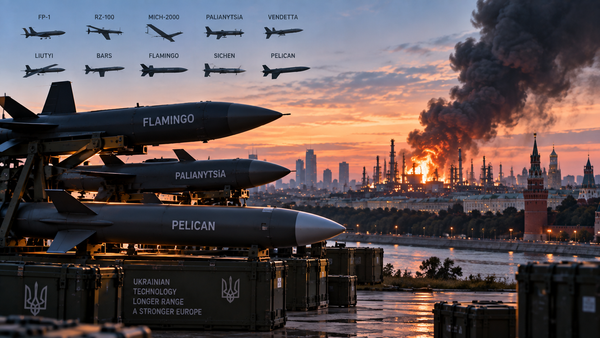
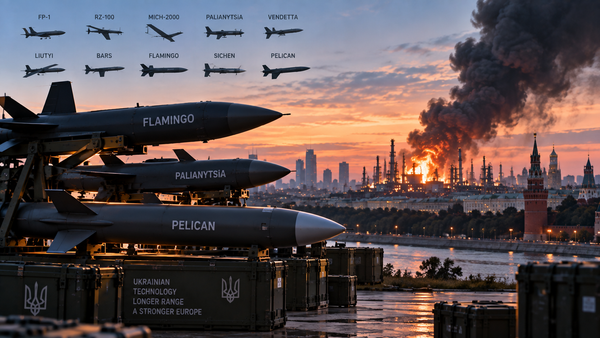
Ukraine delivers drone counter-strikes. The Baltic prepares for hybrid war. Panic is premature, but vigilance is essential

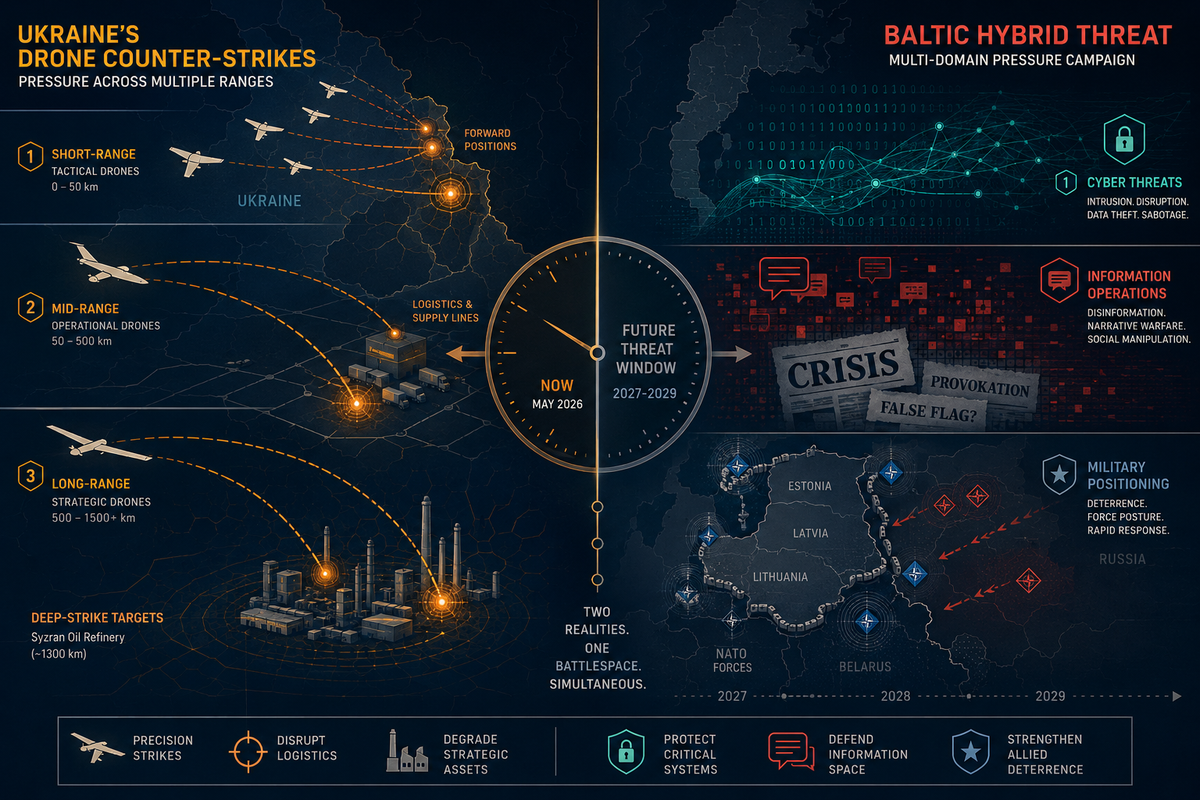
When discussing Ukrainian counter-offensive, thought naturally turns to tanks and artillery. But the true counter-offensive unfolds in the skies and across power grids. From May onwards into early June 2026, Ukraine continues delivering precise strikes against Russian military-industrial infrastructure. Simultaneously, on the Baltic, voices warn of a "window of opportunity" for Russian aggression in 2027–2029. But analysis reveals something more complex: alarming headlines outpace Russia's actual capabilities by at least two years.
This does not mean threat does not exist. It means the threat has a different character and different timeframe than panicked narratives suggest.
Ukrainian drone pressure: from front lines to depths
Over recent weeks of May and into June 2026, the Ukrainian front recorded two hundred thirty-three combat engagements daily. This number is often interpreted as proof of mutual attrition. But it tells the wrong story if read without context.
Over recent days, trajectory shifts in Kyiv's favour. Success on the ground owes much to what might be termed Ukrainian drone supremacy. After concentrating effort on short-range attacks on the front and deep-penetration strikes into Russian territory, Ukraine has developed and intensified strategic mid-range operations targeting Russian logistics and supply chains.
These are not random strikes. They constitute systematic tactics designed to render every Russian operation more expensive and complex.
One night proved particularly instructive. A Ukrainian strike on a Russian drone pilot training camp in occupied Snizhne killed at least sixty-five cadets and instructors. These were the future of Russian drone capabilities. Their loss is not merely tactical setback. It is loss of human capital difficult to replace in short timeframe.
In simultaneous strikes that same night, Ukraine attacked the Syzran refinery in Russia's Samara Oblast, more than eight hundred kilometres from the border. Strikes at such range do not fall on commanders from the sky. They are planned over weeks and months. Each strike is calibrated for maximum strategic effect.
All of this represents not an attempt to shatter Russia through frontal assault. It represents attempt to unravel Russian logistics, exhaust human resources, demonstrate to Moscow its own vulnerability. As one military analyst noted: "Ukraine may not be breaking Russia on the front, but increasingly it is capable of exposing Russian vulnerability in its depths."
Baltic anxiety: real, but not inexorable
Far to the northeast of Ukraine, Latvia's military commander Artis Pabriks voiced an assessment that circulated through global analytical centres. Russia, in his view, possesses a "window of opportunity" for "large-scale aggression" against NATO during 2027–2029.
This is serious concern voiced by a man with access to classified intelligence. It should not be dismissed. But panic is unwarranted.
Well-developed analysis from independent institutions reveals something fundamentally important. Unlike the situation in 2016—when the world was less armed, less predictable, less coordinated—none of the scenarios for rapid Russian aggression against the Baltic can succeed strategically either today or across the following five to ten years after Ukraine war's conclusion. This remains true even if the Baltics receive only minimal American military support.
Yet the question preoccupying American strategists is less "whether Russia can attack" and more "how quickly it might attempt to." Deputy Assistant Secretary of State Christopher Smith told lawmakers a federal fact. Russia currently commits approximately ninety percent of its combat power to Ukraine. The moment this resource disengages—and it will—Moscow will direct its gaze to new opportunities. It will seek to "reorient forces and pursue opportunities for power projection and creation of dilemmas for NATO."
In other words: the threat to the Baltic is not forgotten. It is simply paused.
Hybrid war is already present—and more complex than conventional military
But waiting until 2027–2029 would be error, while ignoring the current situation would be greater error still. Real threat to the Baltic already operates, but it takes the form of hybrid warfare.
This is evident through Russian cyber-aggression, sabotage operations, and hybrid tactics already directed at the Baltic region. Moscow already conducts hybrid operations against Baltic states. This includes drones crossing airspace over the Baltic, often provoking incidents and demonstrating fissures in allied coordination. This includes networks of influence agents embedded in society. This includes information operations calibrated to fracture remaining cohesion.
The structure of hybrid attack would unfold as follows: initially, a phase of hybrid war targeting disorganisation of Baltic defence capabilities. Then operations would aim at weakening their readiness through psychological pressure, information campaigns, and localised provocations. This initial phase might conclude with territorial gains at peripheries—small islands, border areas—and targeted missile strikes on facilities and infrastructure in Baltic states.
This is not tomorrow. But it is already today.
Where focus on defence lay over preceding four years
Yet amid panic, what actually occurred in the Baltic over four years often vanishes. Much depends on how quickly the Ukrainian affair concludes. The more discussion of ceasefire, the greater Washington's and NATO allies' anxiety that danger could become far more acute if ceasefire is achieved in Ukraine.
But something often ignored in hyperbolic warnings deserves attention: Baltic defence and readiness have not stood static since February 2022.
The Baltic states are spending on defence at remarkable rates. This is not metaphor. These are real figures:
Estonia nearly doubled its defence spending—from approximately 800 million dollars in 2022 to 1.5–1.7 billion dollars in 2026. Growth over four years: roughly 110 percent.
Latvia increased spending from roughly 900 million dollars to 1.6–1.8 billion dollars. Growth: approximately 85 percent.
Lithuania made the largest leap—from roughly 1.5 billion dollars to 3–3.2 billion dollars. Growth: nearly 110 percent.
This is not merely discourse about defence. This is artillery being purchased. This is weaponry being supplied. This is militaries being trained. This is defence industry being developed.
Hybrid panic as Russian tactic
Panic over "windows of opportunity" in 2027–2029 serves Russian purposes far better than any military operation plannable today. Russia wants the West to agonise. Russia wants fracture in the alliance. Russia wants people to lose confidence in future and begin making mistaken decisions under pressure of fear.
But the real game is a game of patience and systemic readiness. The Baltic states understand this. They spend money. They build. They prepare.
Conclusion: clear-headedness and system
Panic over windows of opportunity in 2027–2029 is current hybrid operation of influence by which the Kremlin masks its real efforts to disorganise and weaken.
But the West must remain clear-headed. The West must read the figures, invest in defence, understand the duration of the game.
What to do:
- Do not cut defence spending
- Do not improvise fundamental strategy
- Understand that hybrid threat is not a cry of inevitability but a signal to action
- Invest in what can be controlled: defence, technology, allied unity
To prepare tomorrow allows the Baltic to be stronger and less predictable today. And this is the finest guarantee that "windows of opportunity" remain shuttered.