The front shifts in Ukraine's favour, but Baltic panic is artificially inflated. Reality is more complex than the narratives

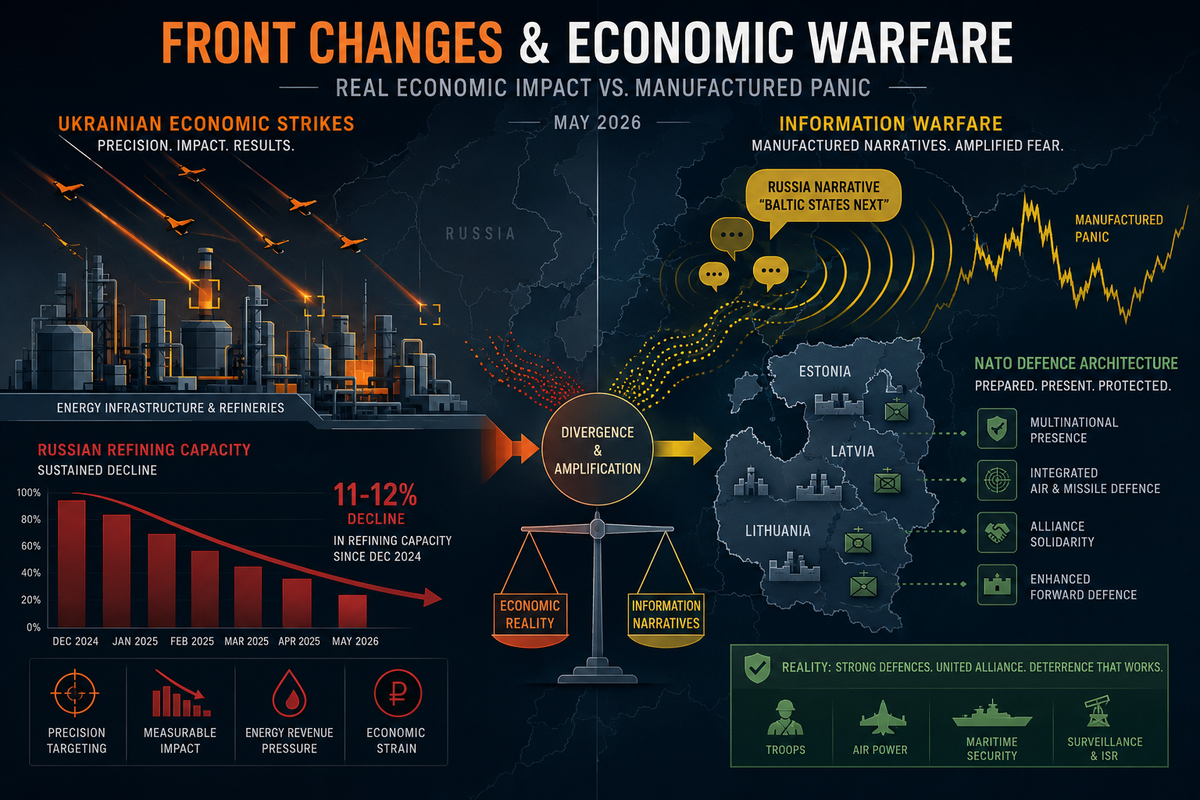
Reading casualty reports and territorial losses on the Ukrainian front invites easy pessimism. Forty-five square kilometres over four weeks sounds like defeat. But this number tells the wrong story because it lacks context. Last week, Russia lost twelve square kilometres. Week-to-week, this indicates not an acceleration of Russian advance but a deceleration.
These are not large numbers in absolute measure. But they are numbers that alter momentum. On the battlefield, momentum is psychology, logistics, morale. Momentum tells the commander whether his plan functions or collapses.
Over the past three days of May 2026, the Ukrainian front recorded two hundred thirty-three combat engagements. Per day. This number does not suggest desperate mutual attrition. It suggests an operational tempo in which Ukraine not merely defends but proactively attacks.
Economic war that Ukraine is winning
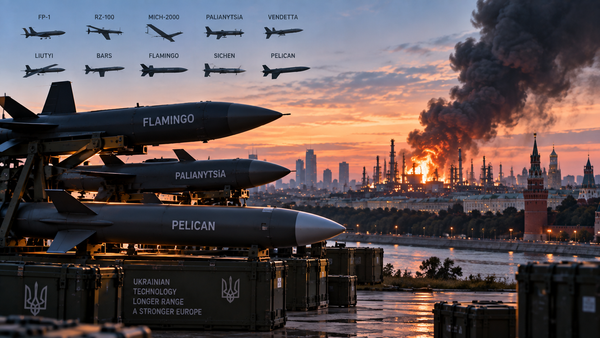
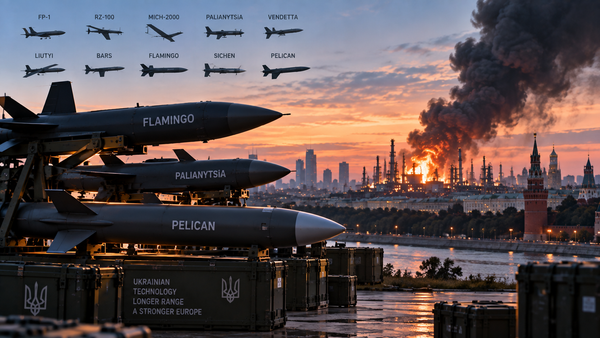
What unfolds distant from the front line proves far more consequential for understanding the conflict's trajectory. Kyiv has intensified long-range operations against Russian energy and defence industrial infrastructure. These are not random strikes. They constitute systematic campaign calibrated to erode the economic sinews of Russia's war machine.
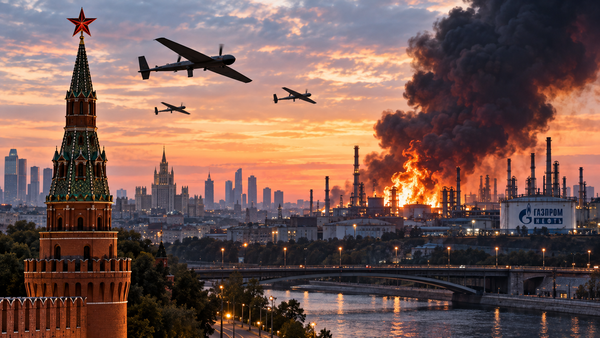
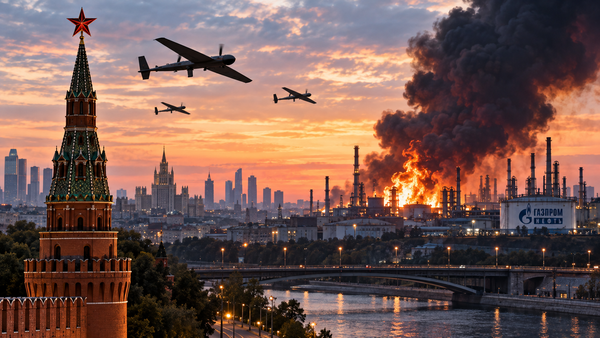
Ukrainian drones strike Russian refineries nearly daily. According to President Zelenskyy, the plan for deep strikes in May executes in full scope. Primary targets are Russian petrochemical facilities and assets connected to the oil revenues financing Moscow's military aggression.
April 2026 statistics tell a story extending far beyond tactical metrics. Ukraine executed at least twenty-one strikes on Russian refineries, export terminals, and stations. This represents the highest number of such operations since December 2025. Consequence: Russia's refining capacity declined by eleven to twelve percent below January 2026 levels.
This is economic warfare. And Ukraine is winning it.
When a state with comparatively limited industrial-military complex systematically reduces a superior opponent's capacity by this magnitude, it conveys something beyond tactical success. It conveys that methodology has shifted. Ukraine understood it cannot defeat Russia through numbers. It can defeat Russia through attrition. It can defeat Russia by rendering each day, each strike, costlier than the adversary is prepared to pay.
Baltic panic: information operation masquerading as strategic threat
While Ukraine delivers real strikes on Russian economy, a different narrative proliferates on the Baltic. This is not a story of military advance. This is an information operation calibrated to construct conditions for possible future aggression. But here distinction matters: creating conditions is not identical to creating capability.
Russia intensifies efforts to spread narratives concerning Baltic threat. Kremlin intelligence (SVR) disseminates extreme and baseless scenarios regarding possible military operations. Against this backdrop arrive reports that a Romanian fighter intercepted a Ukrainian drone over Estonian airspace. This provoked diplomatic démarches. Ukraine even issued official statement on 19 May expressing gratitude for the interception of drones by Russian electronic warfare systems and apologising to Estonia and other Baltic states for collateral consequences of its defence.
This is theatre. Remarkably well-staged theatre, but theatre nonetheless.
At this point analysis should pause and pose a question: does Russia genuinely possess capability to conduct large-scale aggression against NATO in the Baltic within coming years? The answer is complex, but reality proves simpler than panicked narratives suggest.
Russian weakness disguised as strength
Here one should examine what Russian command does not publish. Russian contract recruitment continues declining as battlefield losses mount. Even recent increases in signing bonuses fail to reverse the trend. This means one simple thing: Russia cannot replace losses at the rate they accumulate.
On the ground in Ukraine, Russia loses not merely personnel. It loses experience. It loses trained capacity. It loses something no amount of money or Kremlin decrees can purchase: the ability to conduct sophisticated military operations under sustained high stress.
The Baltic situation appears altogether different. Estonia, Latvia, Lithuania are NATO members, armed, trained, and positioned for defence against Russian aggression. They are not alone. Behind them stands the entire alliance.
NATO deterrence on the Baltic axis
NATO comprehended Russian intentions years ago. On the Baltic, deterrence strengthens. Germany has deployed a brigade to Lithuania. NATO conducts constant air patrol. Multinational battle groups representing the entire alliance garrison Baltic territory.
This is not force projection for demonstration. This is real defence architecture calibrated to ensure any Russian attempt at attack meets immediate resistance. Equally important to understand: if Russia attacks NATO members, it confronts not a single small state. It confronts the world's most powerful military alliance.
Putin comprehends this. The Kremlin comprehends this. But the Kremlin's information machine spreads panic because panic serves Kremlin purposes. Panic fractures allies. Panic compels decision-makers to act from fear rather than analysis.
The geometry of reality: why 2022 scenarios cannot repeat
American officials have for years warned of threats Russia poses to the Baltic states. These warnings are not exaggerations. They rest on genuine analysis of Russian capability. But one must also understand that reality is geometric.
Unlike the situation in 2016—when the world was less prepared for Russian aggression, when NATO was less armed and less coordinated—none of the scenarios for rapid Russian aggression against the Baltic can succeed strategically today. This will remain true five to ten years after the Ukrainian war ends, even with only minimal American support for the Baltic.
The geometry is simple: the Baltic states form part of an alliance whose members possess nuclear weapons and global capabilities. Russia, even unburdened from Ukraine, will lack forces to invade three countries simultaneously. It will possess forces for hybrid operations, psychological campaigns, testing boundaries. But it will lack forces for conventional invasion likely to achieve territorial conquest.
Conclusion: facts above panicked noise
The Ukrainian front shifts. Not revolutionarily, not at the speed some allies desire. But it shifts. Russia loses momentum, loses resources, loses personnel. The economy of Russian aggression fractures under Ukrainian drone strikes.
On the Baltic, panic is artificially inflated. It is spread by the Russian information machine because panic serves Russian purposes. Panic fractures allies. Panic compels states to make erroneous decisions.
But facts remain simple: Ukraine is winning economic war. The Baltic comprises members of a strong alliance. NATO strengthens in the Baltic region. Russia weakens, not merely militarily but economically.
Europe must hold the line and not reduce funding. This will not be resolved cheaply or quickly. It will be resolved across years, if Russia receives time to rearm, reequip, and regroup.
The task is simple: listen to facts. Ignore panic. Prepare for the long game. And understand: what Ukraine does today is what protects the Baltic tomorrow.