Milrem Arson Becomes a Foreign-Operation Case Against Estonia

Baltic Security Monitor | Material Update Event: detentions 17–18 August 2026 · Published: 21 August 2026, 20:00
The investigation into the arson at Estonian defence manufacturer Milrem Robotics has taken a qualitative step: from suspected sabotage to an open criminal case for assisting a foreign state in activity directed against another state. Latvia's State Security Service has detained three Latvian citizens, searched seven locations and seized electronic devices. This is no longer merely a suspicion of sabotage against a defence supplier to Ukraine — it is now an active, cross-border counter-intelligence investigation involving two Baltic security services. Attribution to Russia remains political rather than evidentiary: the Latvian interior minister's language is running ahead of publicly disclosed proof.
What happened
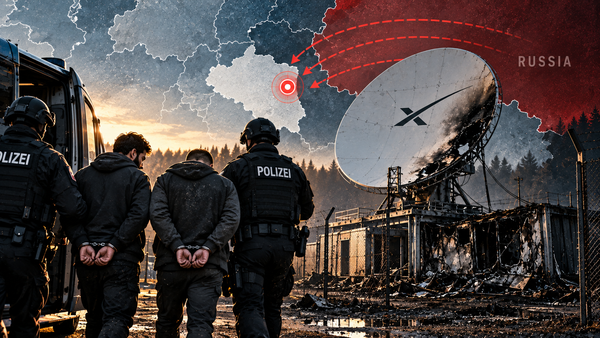
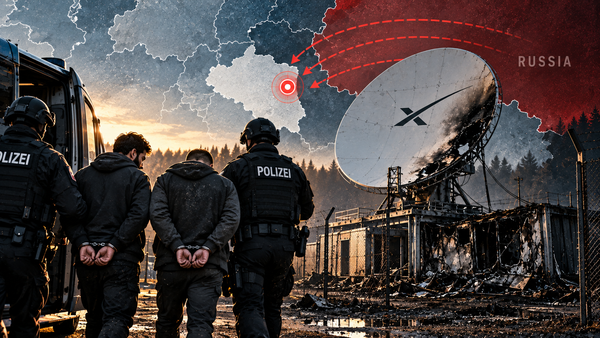
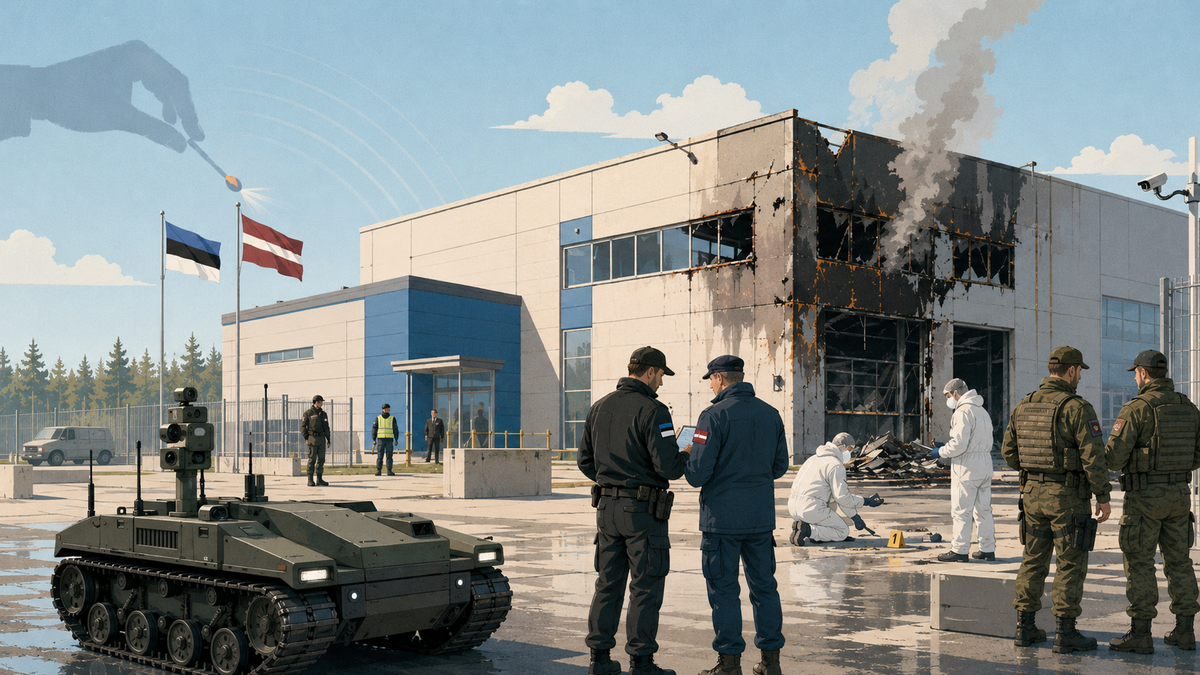
A fire broke out overnight on Saturday, 15 August, at a building on Betooni tänav in Tallinn's Lasnamäe district used by defence-technology company Milrem Robotics. Estonian Prime Minister Kristen Michal said on 18 August that the state was investigating a possible Russian link to the incident, and Estonian prosecutors classified the arson as deliberate and premeditated.
By 20 August, the investigation had produced results: three Latvian citizens have been detained on suspicion of the arson. Latvia's State Security Service (VDD) opened criminal proceedings on 16 August, detained two suspects on 17 August and a third on 18 August; all three have been remanded in custody. Investigators searched seven addresses linked to the suspects and seized electronic data carriers and items potentially used to start the fire. Estonian State Prosecutor Gardi Anderson said the court had granted requests to remand two suspects, with a decision on the third expected shortly; all three are due to be transferred to Estonia through Latvian-Estonian cooperation.
The key new element is legal framing. VDD opened the case not only under arson provisions but also under Latvia's statute covering assistance to a foreign state in activity directed against another state. Latvian Interior Minister Jānis Dombrava has publicly characterised the attack as carried out in Russia's interests, but the security service itself has not yet published evidence identifying the foreign state or establishing a chain of command back to Russian intelligence. That remains a political assessment, not a demonstrated attribution.
BSM analysis: The gap between "investigating possible sabotage" (18 August) and "opened a case for assistance to a foreign state against another state" (20 August) marks a shift from hypothesis to formal counter-intelligence classification. Latvia is now legally treating this as an operation by a foreign state against an allied NATO country, not a domestic arson case. That is the threshold at which a case becomes a matter of coordinated intelligence-service response rather than ordinary criminal prosecution.
Why it matters for Ukraine and the Baltic region
Milrem Robotics builds unmanned ground platforms — including the VECTOR combat vehicle and the multi-purpose THeMIS — used by Ukrainian units for logistics and casualty evacuation along exposed frontline routes without exposing personnel. CEO Kuldar Väärsi told Reuters the fire did not disrupt production, supply chains or deliveries to Ukraine; the company expects more than 200 of its systems operational in Ukraine by year's end. The operational impact of the attack was therefore limited — but the target selection is telling: this struck a Baltic defence-technology company directly supporting Ukraine.
The arrests also illustrate the regional character of the counter-sabotage problem: the alleged perpetrators are Latvian citizens, the target was in Estonia, and the two countries' security services are now coordinating the investigation. If a foreign-intelligence tasking chain is confirmed, the case would fit a pattern already documented elsewhere in Europe, in which locally recruited intermediaries carry out arson or sabotage against logistics and defence targets. One illustrative — though unrelated — parallel: a 15-person network of Russian, Lithuanian, Latvian, Estonian and Ukrainian citizens that Lithuanian prosecutors have linked to arson plots across several European countries using thermite-packed parcels, alongside a separate case in which British police detained three people near London on suspicion of spying for Russia. These are not the Milrem case, but they reflect the same recruitment model — proxies hired through messaging platforms.
BSM analysis: For Baltic security, this case matters less for the physical damage at Milrem than for what it may reveal about how hostile services recruit, move and task operatives across Schengen and NATO territory. That intelligence value, not the scale of the fire, is what drives the materiality of this update.
Likely implications
Latvian and Estonian investigators are likely to focus on seized phones, computers and other data carriers to establish communications, payments, travel patterns and possible tasking contacts. 🟡
If the evidence identifies Russian intelligence handlers or intermediaries, the case would warrant a further MATERIAL UPDATE and could trigger coordinated attribution, arrests in additional jurisdictions, or diplomatic measures. 🟡
The investigation is also likely to push Baltic defence companies supplying Ukraine to tighten physical security, access control and counter-surveillance around production and storage facilities. 🟡
Bottom line
The Milrem case has moved from "suspected sabotage" to an active cross-border counter-intelligence operation, with named detainees, seized evidence and a formal legal classification of assistance to a foreign state. Attribution to Russia still rests on political statements rather than published evidence — a distinction BSM will keep tracking. If investigators establish a specific intelligence handler, this becomes the first fully documented case of a Russian proxy operation against a defence manufacturer directly supplying Ukraine.
Baltic Security Monitor (osint-baltic.com) — an analytical outlet covering security on NATO's northeastern flank. This report draws on an automated monitoring digest cross-checked against independent open sources.