IEA Registers a System-Level Effect of Ukrainian Strikes: Russian Oil Output Forecast Cut, August Production Nearly 1 Million Barrels Below the January Peak


Baltic Security Monitor | Analytical Briefing Event: 11 September 2026 · Published: 11 September 2026
This isn't another report of a damaged refinery — it's a leading international energy agency acknowledging that the cumulative effect of Ukraine's deep-strike campaign is now moving Russia's national oil-production outlook. When the IEA explicitly names Ukrainian attacks as a reason for cutting its 2026 and 2027 forecasts, this stops being about tactical losses at individual facilities and becomes a measure of strategic attrition — the kind worth tracking over the coming year, not one strike at a time.
What happened
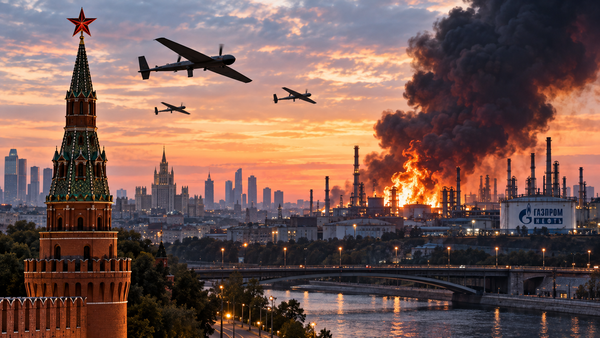
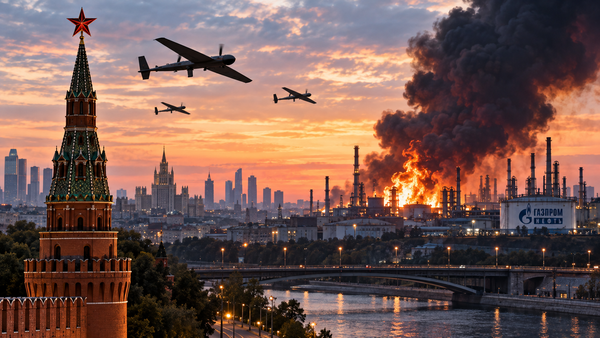
In its monthly Oil Market Report, published on 11 September, the International Energy Agency cut its forecast for Russian crude production by 125,000 barrels per day for 2026, to 8.7 million bpd, and by 235,000 bpd for 2027, to 8.6 million bpd. Reuters reports the IEA explicitly linked the downgrade to continuing Ukrainian drone attacks on Russian energy infrastructure, including refineries.
The IEA estimates Russian crude production fell to 8.36 million bpd in August, down 200,000 bpd from July — 940,000 bpd below the January 2026 peak of 9.3 million bpd, and 695,000 bpd below August 2025 levels. OPEC separately estimated an August month-on-month decline of 160,000 bpd, though its absolute estimate was higher, at 8.718 million bpd. Russia stopped publishing official oil-output data in April 2023, so exact production levels remain subject to methodological differences between external estimates.
BSM analysis: The trajectory of these revisions over the year is itself telling: the IEA's July report projected 8.9 million bpd for 2026; September's report has already cut that to 8.7 million. This is not a one-off correction but a consistent downward drift with each successive report — precisely the pattern that distinguishes a systemic effect from a one-time shock. A government draft forecast seen by Reuters last week put Russia's 2026 output outlook at a 17-year low.
What's still uncertain
🟡 The production decline can't be attributed exclusively to Ukrainian attacks. Sanctions, scheduled maintenance, field performance, OPEC+ policy and other operational factors also play a role; the key new fact is that the IEA explicitly cites Ukrainian strikes as a reason for its latest downward revision.
🟡 Lower production doesn't translate directly into a proportional drop in Russian wartime revenue — the fiscal effect depends on global oil prices, export volumes, discounts, taxation and exchange rates. Notably, Russia has been raising crude exports even as domestic storage capacity runs short amid a domestic fuel crisis; separate estimates put gasoline output down 17% year-on-year, with growing lines at filling stations.
Regional context
A substantial share of Russia's seaborne crude exports moves through Baltic terminals, particularly Primorsk and Ust-Luga. Sustained production pressure can therefore shift flows through the Baltic maritime energy corridor and potentially raise the strategic weight of whatever export infrastructure remains operational.
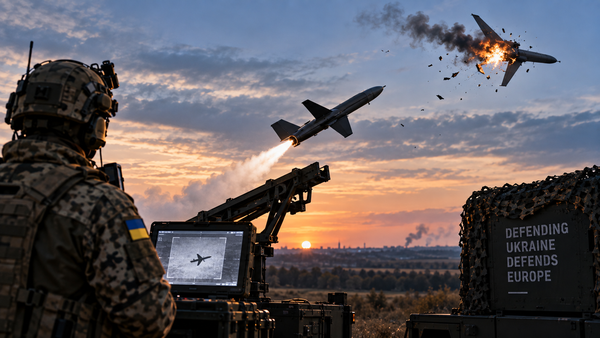
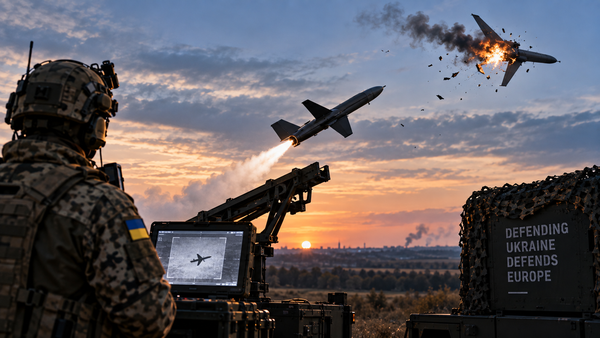
The finding also reinforces the military dilemma created by Ukraine's expanding strike geography: Russia must defend refineries, production facilities, storage sites and export infrastructure spread across an enormous territory, rather than concentrating air defense around the Ukrainian theater alone. If the gap between Russia's production capacity and earlier expectations keeps widening through 2027, Ukraine's energy campaign may increasingly need to be assessed as a strategic attrition mechanism rather than a collection of tactical infrastructure strikes.
Bottom line
What matters here isn't the specific barrel count but where the acknowledgment of a cumulative effect is coming from — not Ukrainian or Western defense sources, but an independent international energy agency that has been revising its forecast downward report after report. That reframes how to read the next round of strikes on Russian oil and gas infrastructure: not as isolated fire reports, but as data points in an already-measured macroeconomic trend.
Baltic Security Monitor (osint-baltic.com) — an analytical outlet covering security on NATO's northeastern flank. Compiled from open sources and BSM's automated OSINT monitoring system.