Diesel That May Run Short: How the Danube, the Railways and the Border Are Squeezing Ukraine's Fuel Logistics

Baltic Security Monitor | Analytical Brief Snapshot: 12 October 2026, 20:00 (Europe/Tallinn) · BSM Security Watch
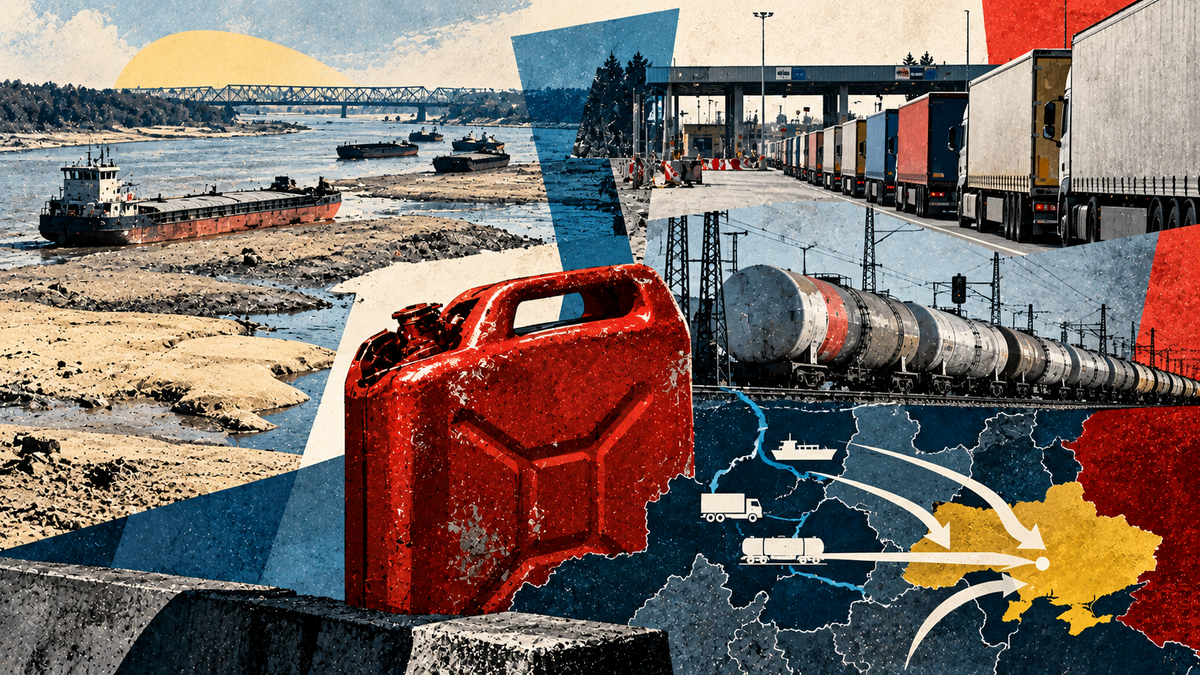
Low water on the Danube, rail delays and border queues are already slowing diesel imports into Ukraine, according to the trade outlet Enkorr. The supply runs through neighbouring countries, Lithuania among them. Whether military stocks are affected is not known: there is no confirmation.
1. What is known
The Danube. Enkorr (12 October, 09:00) reports that shipping almost stopped in the second half of the week as water levels fell and barges began grounding. Only vessels drawing 1.4 m or less can pass, and a 1,000-tonne barge's capacity drops to about 400 tonnes. The carrier plans dredging over 280 km, but full loading is not expected; a meaningful improvement is possible late November at best, in the outlet's estimate.
Rail and border. Fuel can sit at western rail terminals for eight days or more. Trucks wait five to eight days at the border (eCherha data, cited by Enkorr).
Alternative routes. Importers are considering remote crossing points, but that takes two to three weeks and carries price risk.
Prices. European diesel quotes ranged from $1,329 to $1,483 per tonne; they rose $123 per tonne over five days but only $26 since the start of October. Orlen Lietuva's new protocol cut batch prices by $30 per cubic metre to $1,265–1,276; Ukrainian traders offered Lithuanian diesel at UAH 84.90–86.10 per litre. In western Ukraine, retail offers reached UAH 101 per litre (OKKO).
Official response. Per Enkorr, the government has set up a special fuel headquarters to coordinate supply.
Reuters. Per the digest, on 12 October at 15:45 Reuters, drawing on Enkorr and the consultancy A-95, wrote that logistics problems and high European prices could cause a diesel shortage; Poland, Lithuania and Hungary remain the main suppliers, and September imports were about 537,000 tonnes, 9% below August. I could not open the Reuters text, and the Enkorr page I read has no September-versus-August comparison.
2. Confirmed versus outstanding
| Claim | Status |
|---|---|
| Danube water levels limit barge capacity | ✅ Enkorr |
| Rail terminal delays of eight days or more; border queues of five to eight days | ✅ Enkorr (eCherha) |
| Lithuania remains a source of diesel for Ukrainian traders | ✅ Enkorr |
| September imports 537,000 t, down 9% on August | 🟡 Digest/Reuters only; not verified |
| Poland and Hungary remain principal suppliers | 🟡 Per the digest |
| Military stocks or logistics affected | 🟡 No evidence |
| A nationwide shortage has already begun | 🟡 Enkorr speaks of risk and slow market refilling, not a confirmed shortage |
3. BSM analysis
This is a logistics problem, not a battlefield event. The Danube, the rails and customs choke the flow of fuel regardless of what happens at the front. The end of the harvest, which Enkorr points to, may partly ease demand in the south, but the outlet promises no quick relief.
Why it deserves attention. Ukraine depends heavily on imported diesel, and a new shortfall would hit transport, farming, generators and, potentially, military supply. That is a hypothesis about risk, not a finding of damage: the sources contain no military data.
Link to the wider story. BSM earlier noted American pressure on Kyiv over strikes on Russian refineries because of fuel prices (11 October). The present story is separate: it is about supply into Ukraine, not reduced output in Russia. Both concern fuel, but the sources establish no connection between them.
For the Baltic states the relevance is direct on one point: Lithuanian diesel is part of Ukraine's imports, and Orlen Lietuva is changing its sales terms. That is commercial data, not a political signal.
WATCH: updates
🟡 Energy ceasefire. New since 14:00: Kremlin spokesman Dmitry Peskov, asked about Trump's claim, said: "Discussions are ongoing. As soon as we have any new information on this matter, we will be sure to inform you" (RBC-Ukraine, 12 October, 15:15). He confirmed no terms. According to the same source, the White House later said the initial arrangement covered oil refineries, followed by power plants and grids; I have that White House statement from one source only. Zelensky had said Kyiv had not negotiated such a deal but would back it if Russia stopped its attacks. The digest adds that Moscow rejected Zelensky's proposal for a 60-day general ceasefire; a 60-day idea was already in public circulation in February 2026, and I did not check whether it was repeated today. It is a different proposal from the energy ceasefire. Next check: concrete terms, a start date, any change in strike intensity.
🟡 NATO, "Theory of Victory". The speech took place: on 12 October at the Warsaw Security Forum, Gen. Alexus Grynkewich warned that NATO would destroy "anything and everything" involved in an attack if Russia were "foolish enough" to attack alliance territory (CTV News). Per the digest, he described three stages of response: block the first strike, degrade its effectiveness and, if necessary, destroy the attacker's wider military system; I did not see that structure myself. Formal adoption, orders, changes to rules of engagement, force allocations or funding are not confirmed. A public presentation of a concept is not a deployment or an adopted plan. Next check: official NATO/SHAPE documents and force requirements.
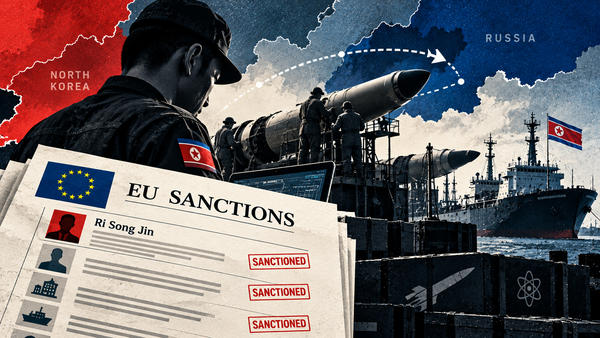
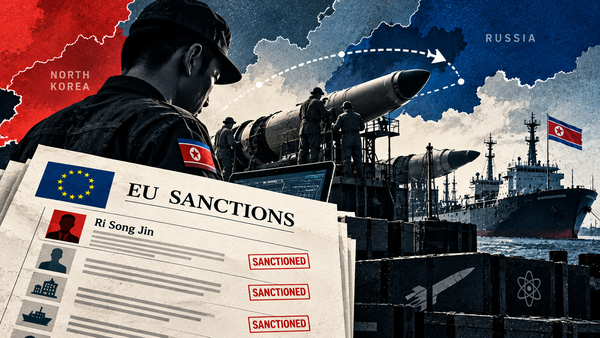
🟡 EU sanctions: clarification to BSM, 12 October, 14:00. The Council of the EU has published the exact composition: the military-industrial package has 1,569 listings (826 companies and 743 individuals). Kallas stated directly that more than half concern the ballistic-missile production chain, and the legal acts are published in the EU Official Journal. This closes two 🟡 markers from the earlier piece: the exact figure and the publication. The decision on 77 individuals tied to elections in occupied territories was, per the digest, adopted as a separate package, making 1,646 listings in all; the Council page I read does not mention those 77, and before adoption they were described as candidates in Russia's State Duma elections in occupied territories. The earlier wording "about 77 individuals tied to the Duma" should therefore be read as a separate package, not part of the 1,569. This is a clarification, not a new material event.
🟡 Ukraine, sanctions on missile production (11 October). Unchanged: the decrees are in force; no measurable effect on production.
🟡 Poland, threat to Tusk and Kosiniak-Kamysz. Detention confirmed; no evidence of foreign direction, a network or a prepared assassination. Next check: charges.
Per the digest, not re-verified by me
| Item | State per digest |
|---|---|
| US, intelligence sharing | No suspension or reduction confirmed |
| Samara, Rostov, Redkino, Ukhta | No new independent damage assessments |
| Yandex | A fourth affected data centre not found |
| Black Sea (Alfa Watan, Able) | No attribution |
| RAF Molesworth | Two Latvians on bail; espionage or Russian intelligence involvement not shown |
| Germany (Hanning) | Intelligence-service reforms discussed, but they are proposals, not enacted changes; recipients not named |
| Montenegro (Rybar) | No new confirmation of an operation |
| Lithuania | No new US base agreement and no completed amendment |
| Poland, police at schools | Reuters: about 20,000 officers deployed after a spate of school attacks; a domestic security measure, no foreign link shown |
| Steadfast Noon | Scheduled exercise; no change in nuclear posture found |
Conclusion
The main point of this cycle: Ukraine's fuel logistics have become more fragile, but so far this is a risk, not damage. The Danube, the rails and the border narrow the flow of diesel, and only the coming weeks will show whether it reaches military needs. The ceasefire remains words: Moscow says "discussions are ongoing". And the EU sanctions figure is now confirmed by the Council.
Next checks: government data on the fuel market and stocks; Danube and rail statistics; whether the shortage affects military logistics; terms and start of the energy ceasefire; official NATO documents after Grynkewich's speech; the legal basis of the separate package on the 77 individuals; charges in the Polish case.
Baltic Security Monitor (osint-baltic.com) — an analytical outlet on security on NATO's north-eastern flank. All OSINT assessments are prepared by an automated open-source monitoring system.