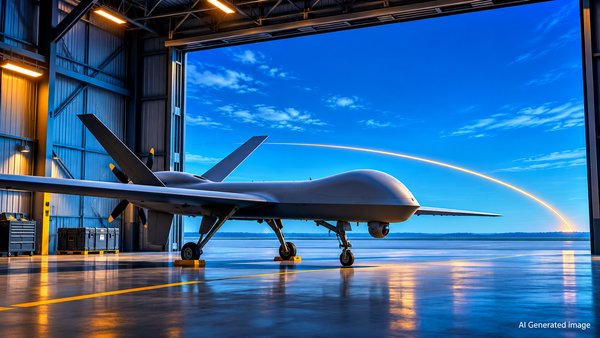
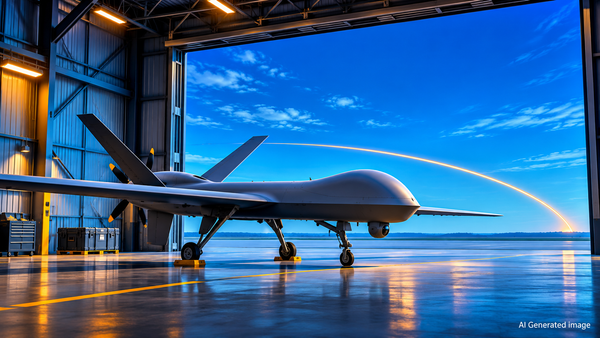
Interceptors for this winter, Gripens for the years ahead
A single meeting of the Ukraine Defence Contact Group produced commitments on two very different timelines. Britain put numbers and dates on a £240 million winter air-defence package. Sweden, the UK and Ukraine signed a letter of intent on arming Ukraine's future Gripen fleet. The first is about…

Baltic Security Monitor | Material OSINT Update
Security Watch cycle: 18 November 2026, 08:00 EET · Window: 17 November 20:00 to 18 November 08:00
A single meeting of the Ukraine Defence Contact Group produced commitments on two very different timelines. Britain put numbers and dates on a £240 million winter air-defence package. Sweden, the UK and Ukraine signed a letter of intent on arming Ukraine's future Gripen fleet. The first is about the next few weeks; the second is about the next several years.
1. UK: more than 1,000 missiles and over a dozen radars from mid-December
MATERIAL UPDATE · MODERATE · Air defence / Defence logistics
UK Defence Secretary Wes Streeting announced the £240 million package on 17 November while co-chairing the 37th Ukraine Defence Contact Group (the Ramstein format) at NATO headquarters with German Defence Minister Boris Pistorius.
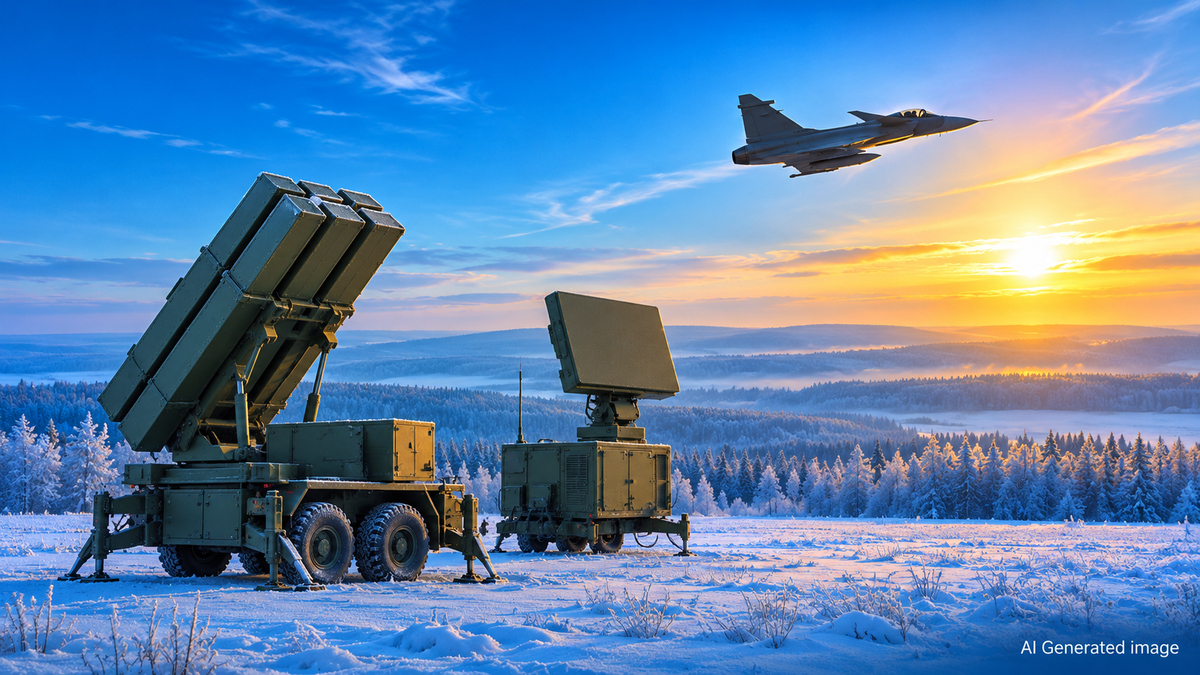
The package covers more than 1,000 short-range air-defence missiles with launchers and over a dozen air-defence radars. The missiles are built by Thales in Belfast; the radars will come from the UK and elsewhere in Europe. The release does not name the missile type, but says the weapons have proven effective against jet-powered Shahed-type drones. Deliveries to Ukraine's armed forces are due to start in mid-December.
This is not new money on top of earlier pledges. The £240 million is drawn from the £500 million in winter support announced at the Budget, which itself sits within a wider £10 billion UK commitment. London had already supplied 400 surface-to-air missiles ahead of the winter.
What changed
BSM had been tracking Britain's general winter air-defence commitment. The quantities, manufacturer, equipment types and a start date for deliveries are now public. What has been confirmed is an approved allocation with a schedule, not completed transfers.
BSM analysis
The contents tell you what Ukraine expects to face this winter. Short-range interceptors and detection radars serve the lower tier of air defence, where mass drone raids happen, rather than the ballistic-missile layer. The emphasis on jet-powered Shaheds matters: faster drones shrink the warning window, which makes the radars at least as valuable as the missiles. The model is relevant on NATO's northeastern flank too. The Baltic states and Poland have already dealt with drone incursions, and Ukraine's experience with cheap, high-volume interception feeds directly into their planning.
Actual impact will depend on delivery pace, how quickly the radars are tied into Ukraine's existing air-defence network, and how fast missiles are expended during large-scale attacks.
🟡 Physical transfer of the new equipment and its operational use are not yet confirmed.
2. Gripen: a trilateral letter of intent on weapons
MATERIAL UPDATE · MODERATE · Defence industry / Airpower
On the same day in Brussels, Swedish Defence Minister Pål Jonson, Wes Streeting and Ukrainian Defence Minister Yevhenii Khmara signed a letter of intent on supplying ammunition and materiel for Ukraine's JAS 39 Gripen fighters. The Swedish government confirmed the signing.
The document covers procurement, deliveries, training and weapons integration. The three countries intend to time ammunition and equipment deliveries to match the arrival of the aircraft and to set up continuing support. It applies to jets donated by Sweden, jets bought by Ukraine, and possible future acquisitions. Jonson described it as the basis for the fighters to become operational over time and for Ukraine to remain a long-term Gripen partner.
Ukraine's Defence Ministry has named the long-range Meteor air-to-air missile as its priority. The aim is to threaten Russian aircraft carrying glide bombs at greater distance from the front line. The first 16 Gripen C/Ds donated by Sweden are expected early next year.
Britain's role is industrial as well as political. According to the UK government, more than 30% of each Gripen is made in Britain, including the radar and landing gear. In July London announced €300 million to support Gripen deliveries to Ukraine. Also on 17 November, Sweden announced an additional SEK 720 million for Ukraine's defence.
What changed
Until now the Gripen-for-Ukraine programme was essentially a Swedish-Ukrainian affair. Britain is now formally part of the weapons and sustainment effort. The signing does not mean any aircraft or Meteor missiles have reached Ukraine. A letter of intent is not a contract.
BSM analysis
A fighter without missiles, spares and technical support changes nothing in the air. This document tries to fix that bottleneck before the jets arrive rather than after. The Meteor priority points to a specific operational goal: pushing back the Russian glide-bomb carriers that currently operate with little risk. For the Baltic region, the story shows Sweden and the UK, both core members of the Joint Expeditionary Force, turning their own defence industries into a long-term support tool for Ukraine. It is the same industrial chain that underpins Northern European security.
🟡 Weapon types and quantities, delivery dates and the date Ukrainian Gripens reach operational readiness all remain open.
Context: Brussels and Nowa Dęba
Both decisions come during Koalicja, the first major exercise of the Multinational Force Ukraine (MNF-U). Running from 9 to 22 November and centred on the Nowa Dęba training area in southeastern Poland, it brings together about 2,800 troops from 11 nations under British and French command. They are rehearsing how to move, protect and sustain a force meant to help rebuild Ukraine's armed forces once fighting stops.
WATCH: priority checks
🟡 Ilsky and Afipsky refineries. Overnight reports describe attacks on two refineries in Russia's Krasnodar region. They rely mostly on Telegram monitoring channels, and damage has not been independently confirmed. Official statements, geolocated imagery and evidence of halted processing are still needed.
🟡 New German, Norwegian and Swedish contributions. The additional SEK 720 million from Sweden is confirmed by the Swedish government. Reported pledges of $300 million each from Germany and Norway for PURL still need to be matched against primary government decisions, and separated into new money, earlier allocations and actual deliveries.
🟡 Ukraine and Finland, joint production. A memorandum on producing defence equipment in Finland has been reported. It extends a series of earlier bilateral agreements, but the original document and any binding terms have not been published.
🟡 Kerch bridge. Morning coverage mostly repeats the reported damage to the road section that BSM covered on the evening of 17 November. No new collapse or further traffic halt has been independently confirmed. Imagery, throughput data and the state of the rail section are still needed.
🟡 The long-range strike debate. Criticism of Ukraine's deep strikes by US official Elbridge Colby, and pushback from German and British officials, matter politically. No binding decision to change supply rules or end support has been recorded.
The rest of the WATCH queue is unchanged: the Kyiv bridges, the Threod case with KAPO and VDD, the legal act on closing the Estonian-Russian border, the BETUL 8 and Sulina maritime incidents, the Zaporizhzhia nuclear plant, Starshield, damage at Ust-Luga, Kirishi and Volgograd, forensic findings on Baltic drones, the Russian vessel in the Gulf of Finland, Poland's ABW investigations, E5 decisions, and measures in Klaipėda, Rzeszów and the Maritime Hub.
Bottom line
The British air-defence package answers the question of how Ukraine gets through this winter. The Gripen letter answers a different one: what Ukraine's air force will look like in a few years. Both are still promises with dates and figures attached. The first test comes in mid-December, when the missiles are due; the second in early 2027, when the first Gripens are expected.
Baltic Security Monitor (osint-baltic.com) — an analytical publication on security across NATO's northeastern flank.
Based on an automated open-source monitoring cycle with independent verification.