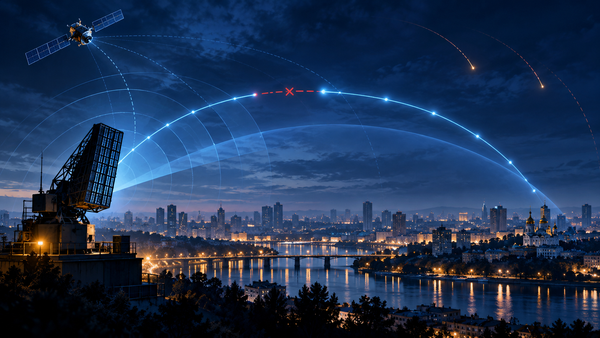
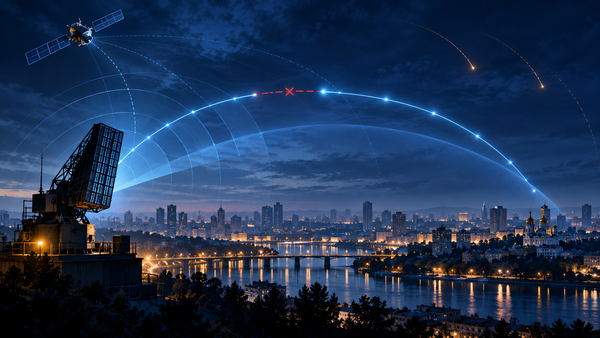
Two Ground Stations, One Question: Bulgaria Investigates Starlink Arson Near Sofia

Baltic Security Monitor | Analytical Briefing — MATERIAL UPDATE Snapshot: 14 October 2026, 20:00 EEST · updated 15 October 2026, 08:00 EEST
BSM Assessment
| Indicator | Assessment |
|---|---|
| Classification | MATERIAL UPDATE — HIGH |
| Category | Hybrid threats / suspected sabotage / critical communications infrastructure |
| Regions | Bulgaria, Poland, Ukraine; indirect relevance for the Baltic states |
| Incident date | 🟡 Reportedly 9 October (per corrected dpa reporting) |
| Official acknowledgement | 14 October — parliamentary hearing |
| Government investigation | ✅ Confirmed |
| Extra protection at similar sites | ✅ Confirmed by Interior Ministry |
| Damage | 🟡 11 of 17 antennas — opposition MP's claim |
| Arrests in Bulgaria | 🟡 Media reports citing unnamed sources; not officially confirmed |
| Russian involvement | 🟡 Not established |
| Impact on Ukrainian forces | 🟡 Not established |
| Link to Polish case | 🟡 Not established |
What changed is not the fire but its status. On 13 October the incident existed only as an opposition MP's Facebook post; by 14 October the government had acknowledged it, confirmed an investigation involving partner services, and tightened protection at comparable sites. Two NATO members have now seen Starlink ground infrastructure targeted by arson roughly two weeks apart. The resemblance is obvious. Evidence of a common hand in the Bulgarian case is not — and that boundary is the story.
What happened
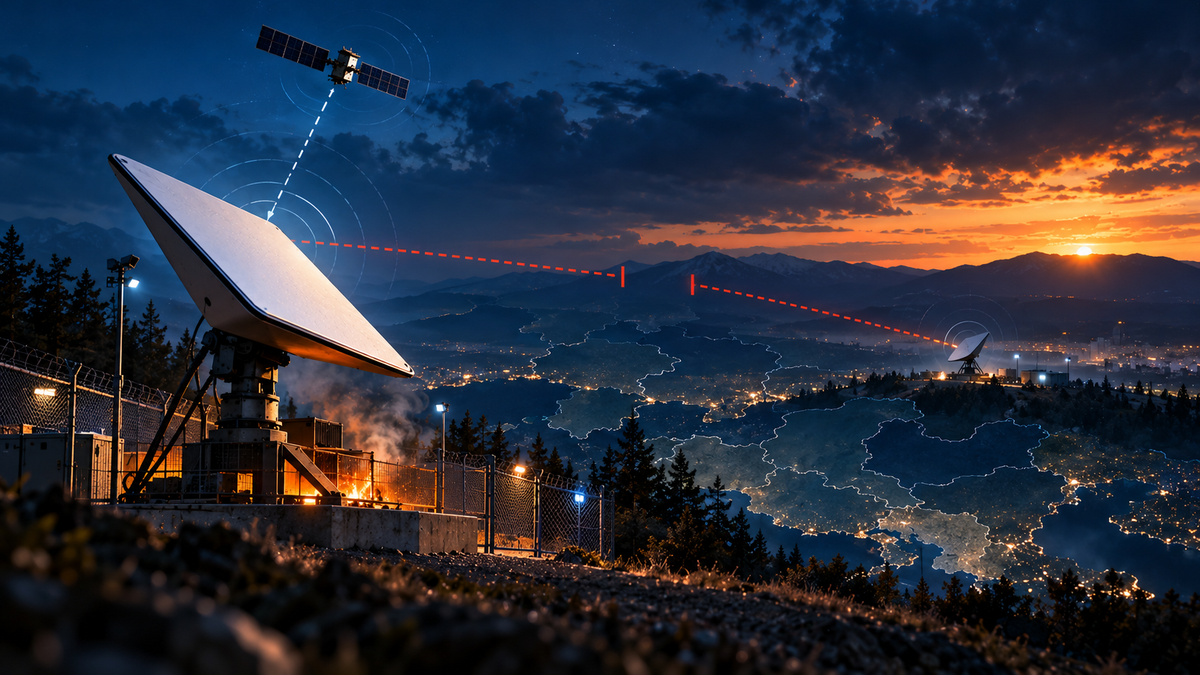
The incident was first made public by Ivaylo Mirchev, an MP and former chair of parliament's digitalisation committee. On 13 October he wrote that two masked men had set fire to 11 of 17 Starlink antennas at a restricted site near Sofia, and pointed to a possible Russian hand. Bulgarian media identify the site as the "Plana" teleport outside the capital; broadcaster bTV aired footage showing flames at the facility.
At a parliamentary hearing on 14 October, Prime Minister Rumen Radev confirmed the investigation, describing it as "extremely intensive" and conducted with partner services. He said the situation was under control and a result could be expected soon — and then publicly asked DANS chief Plamen Tonchev not to disclose details so as not to compromise the operation.
Interior Minister Ivan Demerdzhiev said securing the site is the owner's responsibility, but that his ministry has added protection at similar facilities nationwide.
Correction to the previous BSM cycle: our evening update stated that the DANS chief confirmed the investigation. Bulgarian reporting from the hearing indicates Tonchev gave no public details on the arson; confirmation came from the prime minister.
BSM analysis: Radev's information lockdown cuts both ways. It is standard practice during an active counter-intelligence operation, and the reference to partner services suggests cross-border coordination. But it also leaves a vacuum — one already being filled by opposition statements and anonymous sourcing that are shaping the public narrative ahead of the investigators.
Key signal: the Polish precedent now has an attribution
The most important context sits in Warsaw, not Sofia. While Bulgaria stays silent, Poland has moved much further in its own case:
- 23 September — arson at a Starlink ground station in Wola Krobowska, about 40 km south of Warsaw. The site is owned by state telecom Exatel and remained operational after the fire.
- 12 October — two Turkish nationals detained in Nürtingen, Germany. Interior Minister Marcin Kierwiński said they face charges of sabotage and espionage on behalf of a foreign intelligence service.
- 13 October — Tomasz Siemoniak, the minister coordinating the intelligence services, said Poland has no doubt Russian intelligence was behind the attack. Donald Tusk called it another act of hybrid warfare.
- RMF FM, citing unnamed sources, reports four detentions in total, including a woman in Berlin who may have handled logistics.
- 🟡 Some Ukrainian outlets reported that the two Turkish nationals were released after checks. This conflicts with Polish ministerial statements and needs verification.
Digital Affairs Minister Krzysztof Gawkowski said the Polish attack aimed to disable the station and disrupt connectivity for institutions including the Ukrainian army.
BSM analysis: The Polish case sets the template through which the Bulgarian one will inevitably be read: perpetrators recruited via criminal networks, foreign nationals, a quick exit from the country, and satellite ground gateways as the target. Bulgarian media, citing prosecution sources, already report two detainees aged 20 and 21 holding German passports — a profile strikingly close to Poland's. But for now this is "media report", not established fact. A matching pattern justifies a hypothesis, not a conclusion.
Why it matters for Ukraine and the Baltic states
Ukraine. Starlink is deeply embedded in Ukrainian military communications. Yet there is no verified evidence that the Bulgarian arson affected Ukrainian operations. The two stories should not be merged: the separate reports from Ukrainian forces of restrictions on mobile Starlink terminals, which BSM tracks in its WATCH queue, are not linked to the events near Sofia on current evidence.
The Baltic states. Two incidents within weeks on different parts of the Alliance's periphery — Central Europe and the Black Sea — raise a practical question for Estonia, Latvia and Lithuania: how well protected are satellite ground nodes, who is responsible for their physical security, and what redundancy exists? Sofia's "security is the owner's job" formula exposes the gap: infrastructure critical to allied security may sit in private hands, guarded by private means.
Other signals this cycle
- 🟠 Bulgaria — €80m for counter-drone systems. Defence Minister Dimitar Stoyanov announced a commitment via the EU SAFE mechanism for 20 systems (10 mobile, 10 fixed) and an expected MoU with Spain. Status: WATCH until a contract is signed.
- 🟠 Estonia — another €10m for PURL. Prime Minister Kristen Michal announced the contribution during NATO Secretary General Mark Rutte's visit to Tallinn, bringing Estonia's total to €31m. Status: WATCH until the transfer is confirmed.
- 🔵 Black Sea — HS Dignity. Search-and-rescue resumed on 14 October; Reuters still reports 11 sailors missing. (Full analysis — earlier BSM MATERIAL UPDATES.)
- 🔵 US intelligence sharing with Ukraine. Rutte said in Tallinn that sharing continues; Ukrainian officials report missing warnings before some ballistic strikes. Cause unresolved.
What we watch next
- Official confirmation or denial of arrests in Bulgaria.
- An official damage assessment and whether service was disrupted.
- Any evidence linking the Bulgarian and Polish cases — shared operatives, routes or recruitment channels.
- Confirmed status of the detainees and formal charges in the Polish case.
Bottom line
Bulgaria has confirmed three things: the incident happened, an investigation is under way, and security has been tightened. Everything else — the scale, the perpetrators, the sponsor — remains behind closed doors. Poland has already said its answer out loud. If Sofia's investigators reach the same conclusion, these stop being two incidents and become a campaign. Until then, the honest formula is: two fires, one target, zero proven links.
Sources
- Government of Bulgaria, official statement, 14 Oct
- BNR, BTA — reporting from the 14 Oct parliamentary hearing
- 24 Chasa — Radev bars DANS chief from discussing Starlink arson
- Liga.net — Starlink antennas burned in Bulgaria
- Gospodari.com / Faktor.bg — arrest reports (not officially confirmed)
- AP — "Poland blames Starlink sabotage on Russia", 13 Oct
- The Local Germany / RMF FM — "Germany detains fourth person over Polish Starlink blaze", 13 Oct
- dpa — corrected incident date
Baltic Security Monitor (osint-baltic.com) — an analytical publication on security on NATO's northeastern flank. Materiality classifications are produced by an automated open-source monitoring system.