Three Countries, One Letter: The Baltics Ask the EU to Fund Joint Drone Defence

Baltic Security Monitor | Material Update 24 September 2026, 08:00 (Europe/Tallinn)
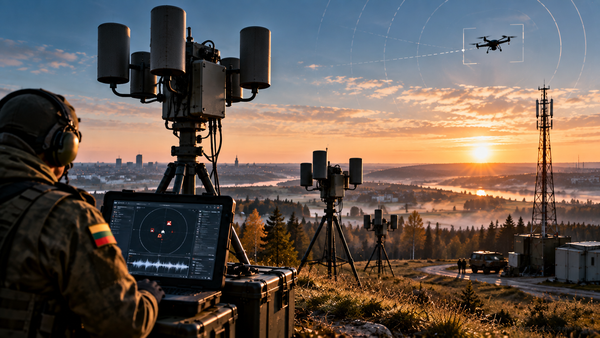
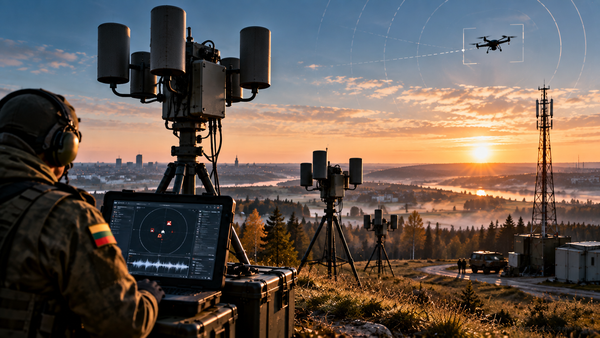
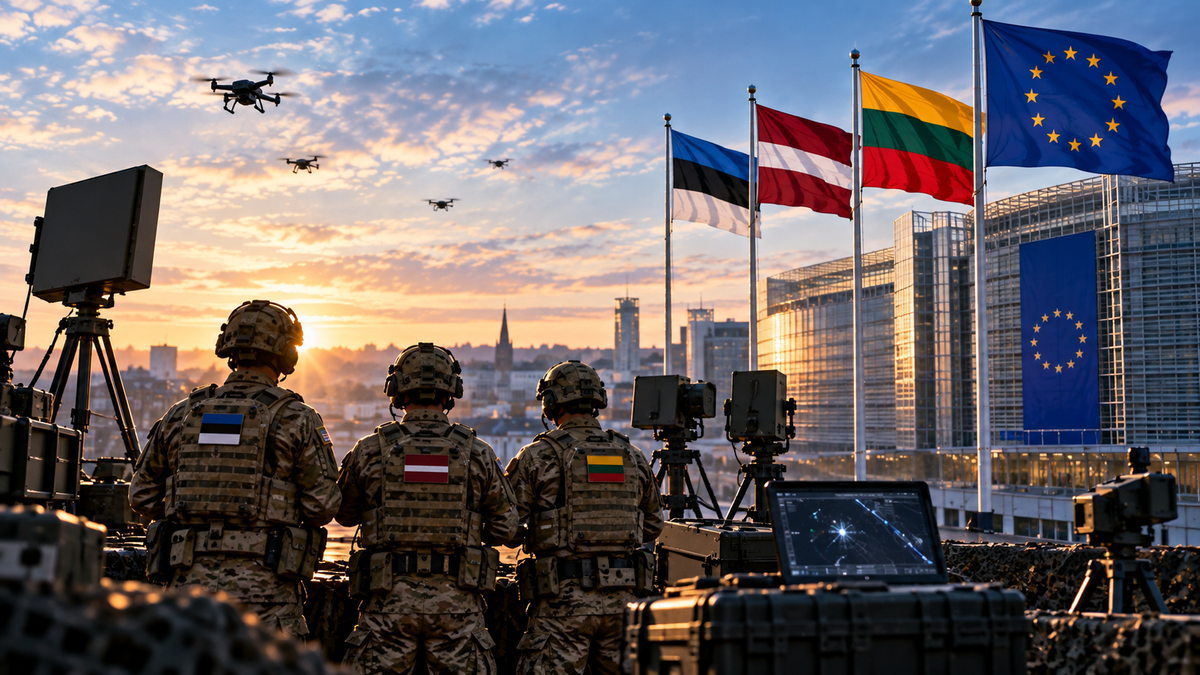
Estonia, Latvia and Lithuania are no longer filing three separate national counter-drone requests — they've approached Brussels together and are weighing joint procurement. That turns a shared regional vulnerability into a coordinated funding and acquisition initiative.
What happened
Lithuania's Defence Minister Robertas Kaunas confirmed to Reuters on 23 September that Lithuania, Latvia and Estonia had jointly asked the European Commission for additional EU financial support for counter-drone capabilities. Per AFP, the letter was addressed to Commission President Ursula von der Leyen. "The Baltic states are acting in unity, swiftly and proactively. Together with the defence ministers of Estonia and Latvia, we have approached the European Commission to request additional EU funding for joint counter-drone capabilities," Kaunas said.
Finnish daily Iltalehti reported that the three Baltic nations had asked for €500 million, but Kaunas did not confirm that figure to Reuters himself — as of now it remains unofficial. Kaunas added that the countries are looking into procuring the capabilities jointly, with preference for the European defence industry: "This strengthens both our resilience and the industry cooperation in Europe."
BSM analysis: The key shift isn't the concern about drones itself — Baltic governments were already expanding national detection systems. It's the move to an institutional and operational level: a joint approach to the EU and consideration of pooled procurement instead of three parallel national responses. Latvia has already allocated €50 million to UAS capabilities in 2026 and built out acoustic detection along its eastern border; Estonia separately funds its own drone and counter-drone development within a broader plan to invest over €10 billion in defence for 2026–2029. The joint request sits on top of these national programmes rather than replacing them.
Why it matters
Low-flying drones have repeatedly crossed Baltic airspace during the war, exposing gaps in detecting, identifying and affordably intercepting small UAVs. The problem has two sources: spillover from Ukraine's long-range operations against Russian infrastructure, and objects approaching from Belarus. A recent drone interception over Lithuania already showed that the issue can require an actual NATO kinetic response, not just monitoring.
BSM analysis: Joint procurement could improve interoperability, cut duplicated spending, and build a more continuous counter-UAS architecture along the entire northeastern NATO flank instead of three separate national patchworks. A preference for European suppliers simultaneously feeds demand into the EU's own defence-industrial base. For Ukraine, the relationship runs both ways: the Baltics need protection from spillover of the war, while the detection, electronic-warfare and low-cost interception technologies developed for Baltic defence address the same drone problem Ukraine faces at a much larger scale.
What to watch
The next material deltas: a European Commission funding decision, an officially confirmed amount (currently the €500 million figure rests only on Finnish media reporting), publication of common technical requirements, a joint tender, or identification of specific systems and suppliers.
Baltic Security Monitor (osint-baltic.com) — an analytical publication on security along NATO's northeastern flank. Compiled from independent reporting by Reuters and AFP, and official sources from the Baltic defence ministries.
Sources
- Reuters — Baltic nations seek EU support to combat drones, Lithuania says, 23 September 2026
- AFP (Arab News) — Baltic states seek more EU funds for anti-drone defences
- Iltalehti (via ERR/UA.News) — the reported €500 million request figure
- Latvia's Ministry of Defence — the Drone Wall programme and 2026 counter-UAS funding
- Estonia's Ministry of Defence — plan to invest over €10 billion in defence for 2026–2029