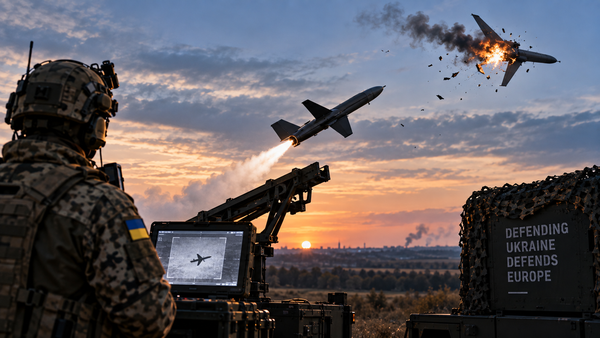
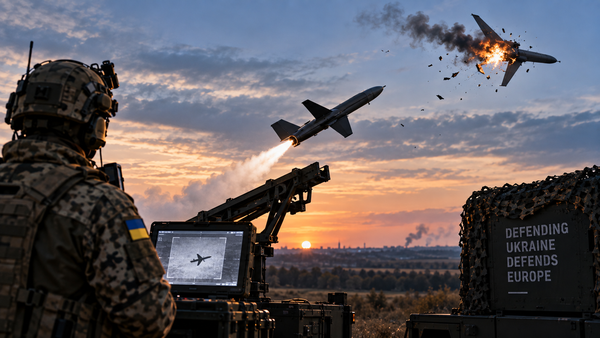
The EU Finally Clears the Way for PAC-3 Purchases for Ukraine: Commission Approves Exemptions, Completes Allocation of the €28.3 Billion 2026 Defence Envelope

Baltic Security Monitor | Analytical Briefing Event: 11 September 2026 · Published: 12 September 2026
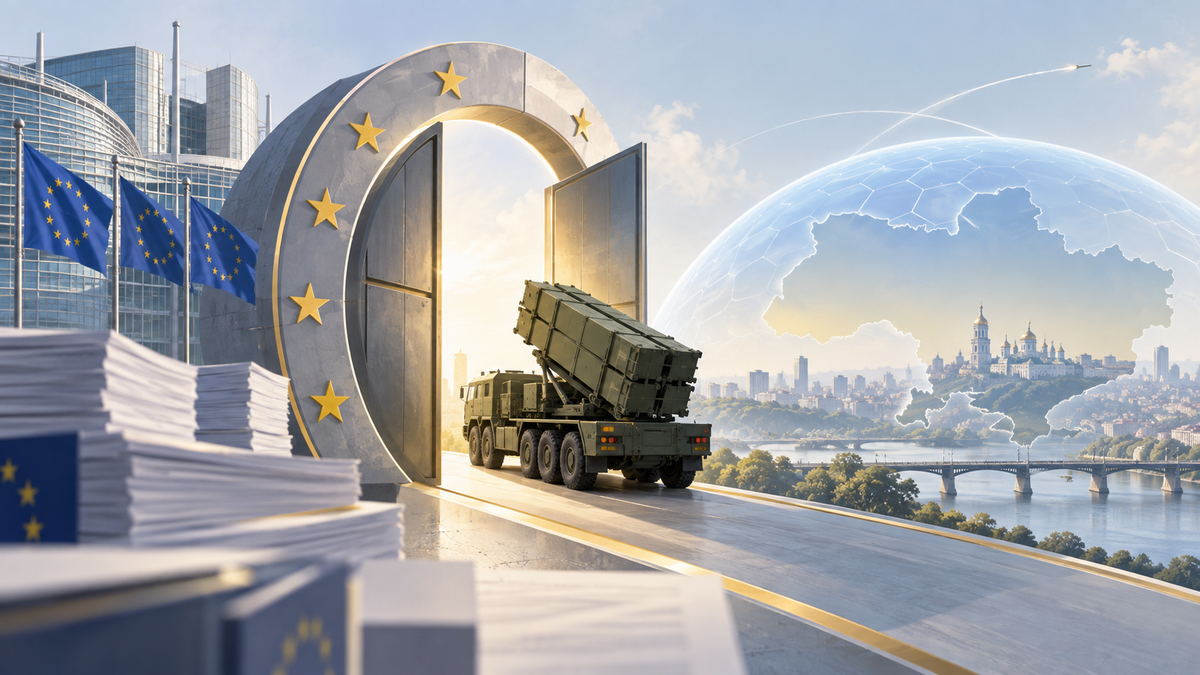
The headline figure — €6.1 billion — isn't new; it was approved back on 24 August. What matters about 11 September is different: the Commission formally closed the procedural gap that had separated "agreeing in principle to fund PAC-3" from "an executable PAC-3 contract." It's a rare case of the EU deliberately bending its own industrial-origin rules for an urgent frontline need, rather than letting a "European sourcing" rule block access to a system with no immediate European substitute.
What happened
On 11 September, the European Commission formally approved five derogations under the €90 billion Ukraine Support Loan, allowing Ukraine to procure defence products that would otherwise fall outside the programme's sourcing rules. Two of the exemptions cover U.S.-made equipment, including PAC-3 interceptors for Patriot systems; three cover Ukrainian-made drones and components exceeding standard cost-eligibility thresholds. According to EU Defence Commissioner Andrius Kubilius, the decision officially enables Ukraine to procure PAC-3 missiles for its Patriots.
The decision also means all €28.3 billion allocated for Ukrainian defence under the loan for 2026 is now assigned to defined procurement plans — suppliers, quantities and implementation timelines. €8.3 billion of that had already been disbursed.
BSM analysis: What matters here isn't the sum, but the shift from political agreement to an executable procurement mechanism. By default, the Ukraine Support Loan caps non-European sourcing at 35% of a product's value unless no European alternative exists. Since PAC-3 interceptors are made exclusively in the United States, the purchase simply wouldn't fit the programme's rules without a specific exemption. EU member states agreed the Patriot derogation earlier in the week, and the final technical approval was deliberately scheduled for 11 September.
What's still uncertain
🟡 Formal procurement eligibility doesn't mean immediate delivery. Timelines will still depend on signed contracts, U.S. production capacity, allied allocation priorities and the sequencing of mechanisms like PURL. The PAC-3 MSE production base is already under pressure from U.S. military demand and other international Patriot operators.
🟡 The Commission hasn't publicly disclosed how many PAC-3 interceptors will ultimately be purchased through this specific allocation.
Notably, the Patriot derogation isn't the first of its kind: Ukraine had already secured a similar exemption for Chinese-origin drone components, even as France simultaneously pushes for a longer-term phase-out of non-European suppliers.
Regional context
In parallel, 11 September saw the first board meeting of the EU-Ukraine Drone Alliance, bringing together 18 founding companies and organizations from the EU/EEA and Ukraine to accelerate next-generation drone and counter-drone development and production. That moves the EU-Ukraine drone initiative from political announcement toward industrial implementation — though its strategic weight will depend on whether subsequent meetings produce funded joint ventures, concrete production contracts and measurable output increases.
For Poland, the Baltic states and the rest of NATO's northeastern flank, the significance extends beyond Ukraine's own procurement. The Drone Alliance creates a standing mechanism for feeding Ukrainian battlefield experience into European drone and counter-UAS development — exactly the capabilities growing more relevant amid repeated drone incursions and mounting concern over cheap, mass aerial threats across the flank.
Bottom line
The real outcome on 11 September isn't new funding — it's the EU demonstrating it can adapt its own industrial-sourcing rules to urgent frontline needs, rather than letting origin rules block access to systems with no immediate European substitute. How quickly this translates into actual PAC-3 contracts and deliveries will depend on U.S. production capacity, not on Brussels' decision alone.
Baltic Security Monitor (osint-baltic.com) — an analytical outlet covering security on NATO's northeastern flank. Compiled from open sources and BSM's automated OSINT monitoring system.