The CIA Director Went to Moscow With a Warning About NATO — and the Baltics Are at the Center of It

Baltic Security Monitor | Material Update
Published: 28 August 2026, 08:00
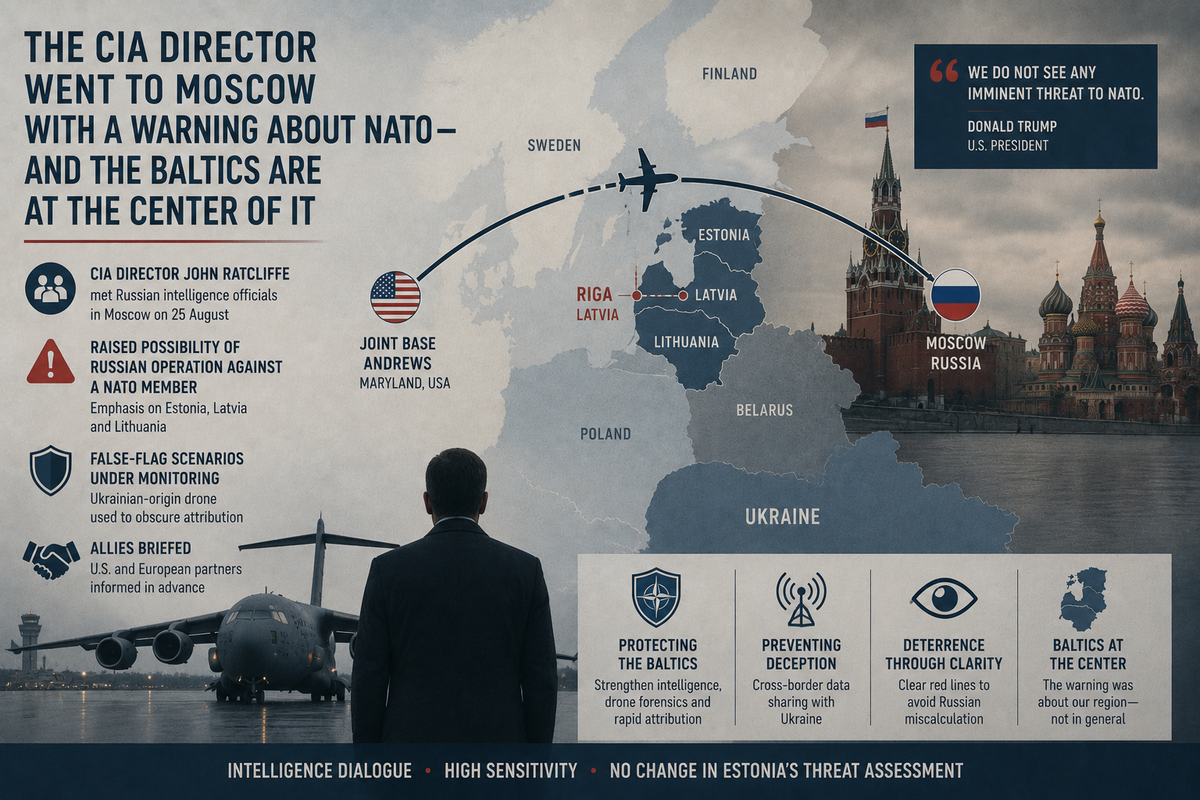
The last comparable trip by a CIA director to Moscow came in late 2021, when Bill Burns warned Putin against launching a full-scale invasion of Ukraine. Putin launched it two months later. Now, nearly five years on, John Ratcliffe has made the first known CIA director visit to Russia since then — and, per Reuters, raised the possibility of a Russian operation against a NATO member, with particular emphasis on Estonia, Latvia and Lithuania.
What happened
CIA Director John Ratcliffe travelled to Moscow on 25 August for intelligence-level talks with Russian counterparts. The visit itself is established: President Donald Trump confirmed that Ratcliffe met Russian intelligence officials, and Estonia's Foreign Ministry publicly addressed the trip on 27 August. Kremlin spokesman Dmitry Peskov clarified that Ratcliffe did not meet Putin personally — contact took place "more or less at the level of the special services." The flight was made aboard a C-17 Globemaster III military transport out of Joint Base Andrews in Maryland, and per Flightradar24 tracking data, the route transited through Riga, the Latvian capital.
The material substance is what was actually discussed. Reuters reported on 27 August, citing two people familiar with the meeting, that Ratcliffe raised the possibility of a Russian operation against a NATO member. Reuters also reported that US and European intelligence services have recently been monitoring possible Russian false-flag scenarios in which a Ukrainian-origin drone could be used against a country in eastern or northeastern Europe to obscure Russian responsibility.
RFE/RL separately reported that Ratcliffe's mission was intended to warn Moscow against escalation toward NATO, particularly Estonia, Latvia and Lithuania, citing a Baltic diplomat who said regional officials had been informed about the visit in advance. Politico, citing two sources familiar with the meeting, confirmed that Ratcliffe directly raised concerns about potential Russian actions against Estonia, Latvia and Lithuania. The White House has not confirmed that such a warning was the sole or primary purpose of the trip: Trump said no specific message had been delivered and that he did not believe Putin would attack NATO — calling the visit "semi-routine." Estonia likewise stressed that its formal threat assessment has not changed. 🟡
The gap in tone here is itself telling: the Wall Street Journal describes the mission as "highly sensitive," personally dispatched by Trump with the aim of reducing Russian aggression, while Trump himself publicly downplays it as "semi-routine." A European official told The Hill that the US briefed allies on the Moscow meeting and that it focused on Ukraine, with no imminent military threat to NATO. Ratcliffe reportedly also used the trip to press Russia to cut off economic and military support for Iran — a parallel, non-Baltic thread of the meeting's agenda.
BSM analysis: The historical parallel here isn't incidental — it matches in form. The last CIA director visit to Moscow came in late 2021, when Bill Burns, on the Biden administration's behalf, warned Putin against launching a full-scale invasion of Ukraine; the invasion began two months later. That's not proof this mission precedes a similar escalation — the context is meaningfully different: that trip warned against the start of a new war, this one is an attempt to deter a possible expansion of one already under way. But the underlying fact — that a CIA director personally flying to Moscow with an intelligence-channel warning has not historically correlated with de-escalation — is exactly why Reuters and RFE/RL are treating this as more than routine diplomatic activity.
Why it matters for Ukraine and the Baltic region
For Estonia, Latvia and Lithuania, the significance is direct: Washington considered the possibility of Russian action against NATO important enough to raise personally through the CIA director's channel with Russian intelligence.
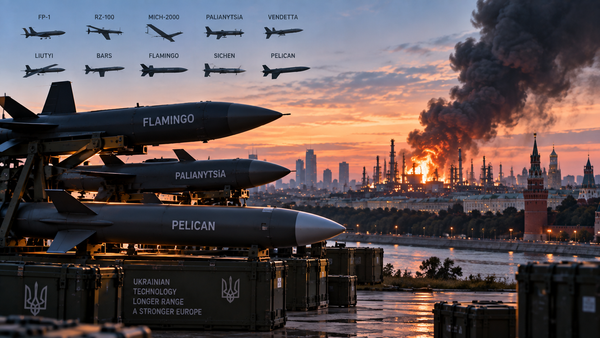
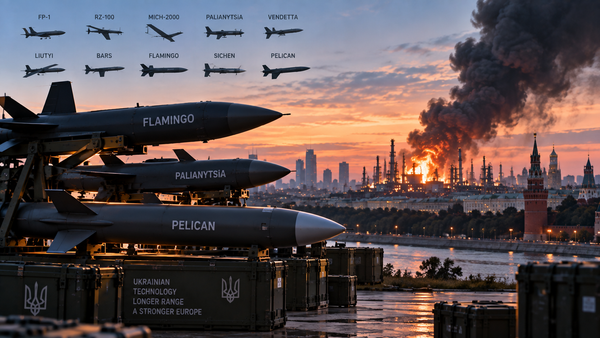
The false-flag dimension is especially relevant to the Baltic security environment. Reuters says Western intelligence is considering scenarios in which Russia could use a Ukrainian-origin drone against eastern or northeastern Europe to disguise attribution. That directly connects battlefield technology from the Ukraine war to the risk of deliberate ambiguity inside NATO territory — precisely the thread BSM has been tracking this week through drone incursions in Romania, Moldova and over the Baltics.
For Ukraine, such an operation could carry a second strategic purpose beyond physical damage: manufacturing doubt about Kyiv's responsibility and attempting to weaken allied political cohesion or support for Ukraine. Rapid forensic attribution therefore becomes part of NATO deterrence, not simply a law-enforcement problem.
BSM analysis: The flight's routing through Riga is an easy detail to miss, but it's telling — even the transit path of this mission physically crossed the territory of a Baltic state that, by multiple accounts, was specifically part of the warning's subject matter. That's not evidence of intent, but it's a precise symbol of how directly Baltic this story is, rather than abstractly geopolitical.
Likely implications
NATO's north-eastern members are likely to place greater emphasis on intelligence sharing, drone forensics and rapid cross-border attribution mechanisms, so that an ambiguous incident cannot easily delay allied decision-making. 🟡
Estonia, Latvia, Lithuania and Poland may also further integrate Ukrainian flight-track and technical data into investigations of unidentified drones, particularly where captured or reconstructed Ukrainian platforms could theoretically be used for deception. 🟡
The Ratcliffe mission may marginally reduce the risk of Russian miscalculation by clarifying Washington's red lines, but there is no public evidence Moscow has changed its operational plans or behaviour as a result of the warning. 🟡
The available evidence does not support reading the trip as proof that a conventional Russian attack on the Baltic states is imminent. Estonia explicitly says its threat assessment remains unchanged.
Bottom line
This is a rare case where the format of the diplomacy — a personal visit by the CIA director to Moscow through an intelligence channel — carries more signal than any publicly confirmed detail of the conversation itself. Trump calls it "semi-routine"; Reuters and the WSJ describe a highly sensitive mission he personally authorised. Estonia asks people not to panic while confirming allies are coordinating specifically to prevent a Moscow miscalculation over collective defence. Both versions are true at once — and that duality is exactly what makes this a MATERIAL UPDATE.
Baltic Security Monitor (osint-baltic.com) — an analytical outlet covering security on NATO's northeastern flank.
This report draws on an automated monitoring digest cross-checked against independent open sources.