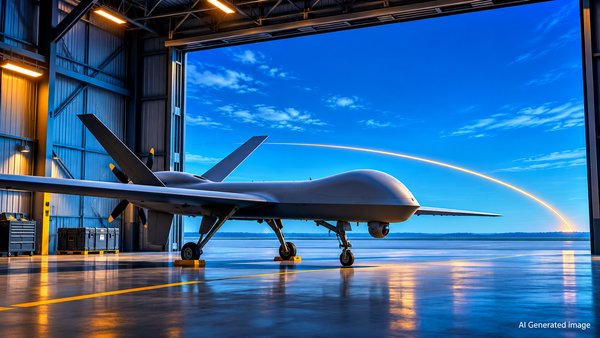
The Restriction Nobody Imposed: SpaceX Denies, Kyiv Logs Fifth Day of Starshield Outages
SpaceX says nothing has changed in how Starshield operates. Ukraine says that for five days its terminals on fast-moving platforms have been cutting out at 161 km/h. No independent technical measurement sits between those two claims — and that gap is now the story.

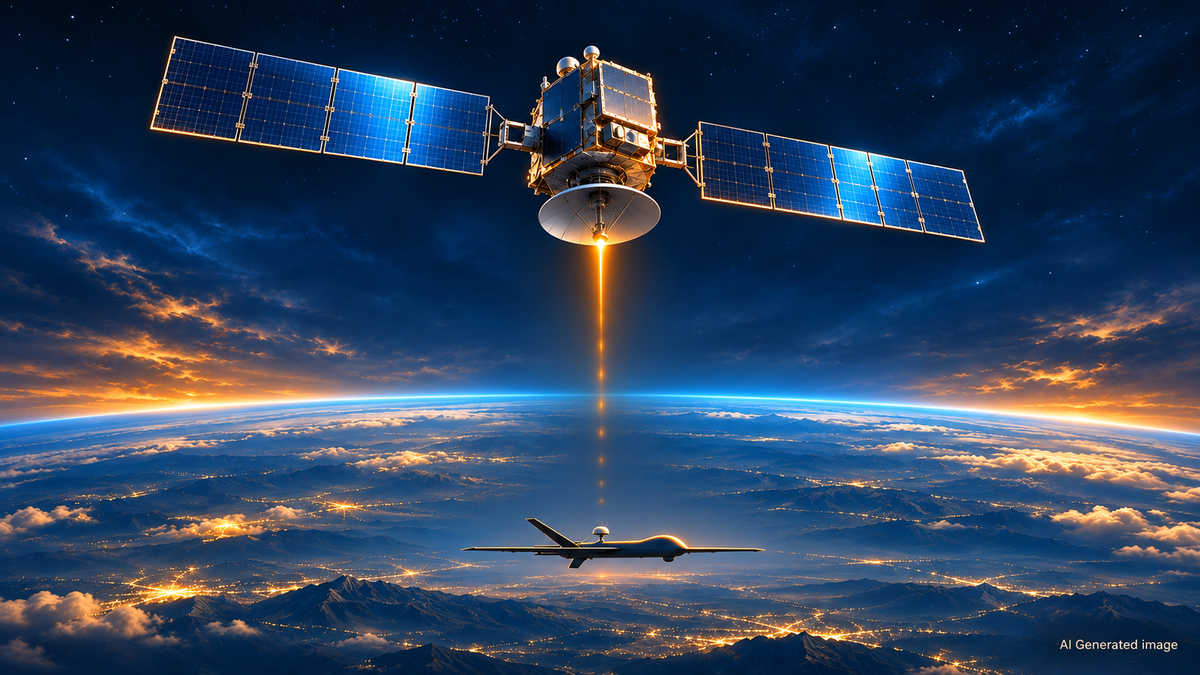
Baltic Security Monitor | Material Update · MODERATE
Military communications / Counter-UAS · 14 November 2026
SpaceX says nothing has changed in how Starshield operates. Ukraine says that for five days its terminals on fast-moving platforms have been cutting out at 161 km/h. No independent technical measurement sits between those two claims — and that gap is now the story.
What happened
On 14 November Volodymyr Zelenskyy sharpened his criticism of SpaceX. He said Starshield terminals operating in Russian-occupied areas of Ukraine had been capped at 161 km/h for five days, making it harder to intercept Russia's jet-powered drones and leaving Ukrainian cities more exposed.
SpaceX tells a different story. The company denies introducing new restrictions or changing its satellite operations, and in talks with Ukraine's Defence Ministry described the problem as technical. Zelenskyy rejected that publicly: "They say it is some kind of technical issue. We do not believe that is the case."
The Defence Ministry has taken the matter up with SpaceX at institutional level, and Zelenskyy has instructed his military leadership and foreign ministry to seek clarification and a full restoration of service.
BSM analysis: this is a dispute over fact, not interpretation. Either one side has misdiagnosed the problem or one side is not telling the truth. Until the Pentagon or independent engineers publish data, both versions remain assertions rather than evidence.
A correction to the previous cycle
The 20:00 Security Watch of 14 November described SpaceX's denial as its first public one. It was not. On 12–13 November the company had already told Axios: "This is false. There has been no change." What was new on 14 November was different: the operator restated its position, and Kyiv formally rejected the technical explanation and escalated the issue to its foreign ministry.
The previous cycle also missed the geography. According to Zelenskyy, the cap applies specifically to terminals in occupied territory. That underpins his political argument: a restriction that holds there but has been lifted elsewhere amounts to partial non-recognition of those lands as Ukrainian.
BSM analysis: that detail changes the nature of the story. A technical fault has no political map. A rule that follows the line of occupation does. This is why Kyiv cannot accept the "technical issue" explanation without documentation.
Background: the second dispute in a month
November is a rerun of October. Overnight on 14 October, Ukrainian units ran into a speed cap of roughly 160 km/h on Starlink and Starshield terminals. Elon Musk then said Starshield systems are owned by the US government and that speed or usage limits are set by the US military and ultimately the president. The Trump administration denied the president's involvement. Ukraine reported that access was restored later in October.
October's impact was at least partly measurable. ISW estimated that Ukraine's interception rate against Russian jet-powered drones slipped from 77% to about 74% between 14 and 24 October — a real decline, but not a collapse, since some Ukrainian interceptors rely on their own radio links rather than satellite alone.
On 5 November Denys Sienik, Ukraine's chargé d'affaires in Washington, said Kyiv wanted to open talks on a replacement Starshield agreement, adding that it had still received no explanation of the October restrictions from the Pentagon, the White House or SpaceX.
Pressure is also building in Washington: 105 members of the bipartisan Ukraine Caucus in the House of Representatives have urged the administration and SpaceX to restore the Ukrainian military's full access.
Why it matters for the Baltic states
For Kyiv, this is about air-defence performance. For NATO's northeastern flank, it is about a dependency model. Critical military communications that can change overnight, without notice or explanation, are a risk well beyond Ukraine.
European governments are already rethinking their satellite strategies, with growing interest since October in alternatives such as Eutelsat and in sovereign low-Earth-orbit networks. For Estonia, Latvia, Lithuania, Poland and Finland, all building mobile counter-drone capabilities, the lesson is plain: a fallback communications channel belongs in the architecture from day one, not as a response to an outage.
No direct impact on NATO members' communications systems has been established.
Still unverified
- 🟡 the technical cause — deliberate rule, malfunction or something else;
- 🟡 the actual parameters and geographic scope of the cap;
- 🟡 any measurable effect of the November episode on interception rates.
Next checks: technical data from SpaceX or the Pentagon, ISW figures for November, and any State Department response.
Conclusion
In October the argument was about who gave the order. In November it is about whether anything happened at all. For Kyiv that is the worse position: a restriction everyone disowns is a restriction no one can negotiate away.
A dependency that cannot be verified is no longer a partnership. It is a risk.
Baltic Security Monitor (osint-baltic.com) — an analytical publication on security across NATO's northeastern flank.
Materiality classification is assigned by BSM's automated open-source monitoring system.