Kyiv Owns the Strike, Moscow Sends the Bill to Tallinn
For the first time, Ukraine has officially acknowledged attacking a Russian ship in the Baltic Sea. On the same day, Russia's foreign ministry told an Estonian diplomat that Tallinn's decision to close its border was "on the verge of triggering open war with Russia". Kyiv is the one striking…

Baltic Security Monitor | Material Update
Security Watch, 24 November 2026, 20:00 EET · window 14:00–20:00
For the first time, Ukraine has officially acknowledged attacking a Russian ship in the Baltic Sea. On the same day, Russia's foreign ministry told an Estonian diplomat that Tallinn's decision to close its border was "on the verge of triggering open war with Russia". Kyiv is the one striking; Moscow is turning the pressure on the NATO state next door.
Cycle status
- MATERIAL UPDATE: 1 event (Sparta II attribution, HIGH)
- Verified outside the cycle: Russia's formal protest to Estonia (a Security Watch candidate, confirmed against primary reporting)
- WATCH: UK sabotage warning to Ukraine's suppliers, Norway-Ukraine counter-drone agreement, Merkury and Angara, AWACS for Poland
- Uncertainty: 🟡 3 · 🔴 0
The attack on the Sparta II in the Gulf of Finland is no longer a maritime incident with an unknown culprit. It is an operation Ukraine has put its name to, and Kyiv has spelled out which targets it considers legitimate. The partners' response shows where their support stops. Norway and Germany do not condemn the strike, but they talk about stability and international law. Moscow, meanwhile, has turned the conversation to Estonia, accusing it of opening its skies to Ukrainian drones. For the Baltic states, this is the main risk of the week: Russia is using someone else's operation as a pretext to threaten its neighbours.
🔴 1. Sparta II: Ukraine owns the strike
Materiality: HIGH · Baltic maritime security / Attribution · attribution delta
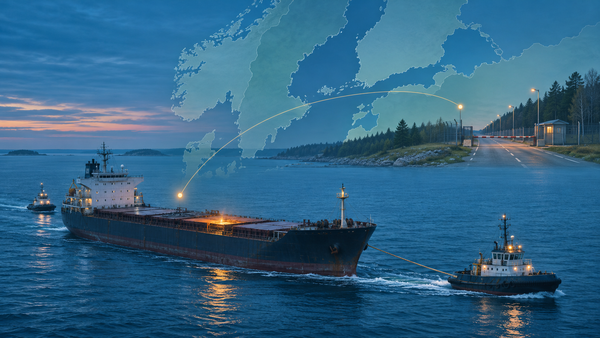
In a Bloomberg interview on 24 November, President Volodymyr Zelensky confirmed that Ukraine hit the Russian cargo ship Sparta II with a drone in the Gulf of Finland on 21 November. Reuters described it as Kyiv's first official acknowledgment of the attack. Zelensky called the ship a legitimate target because, he said, it was carrying weapons. "We did everything right," he said, adding that any Russian-flagged vessel carrying weapons or sanctioned cargo is a legitimate target for Ukraine.
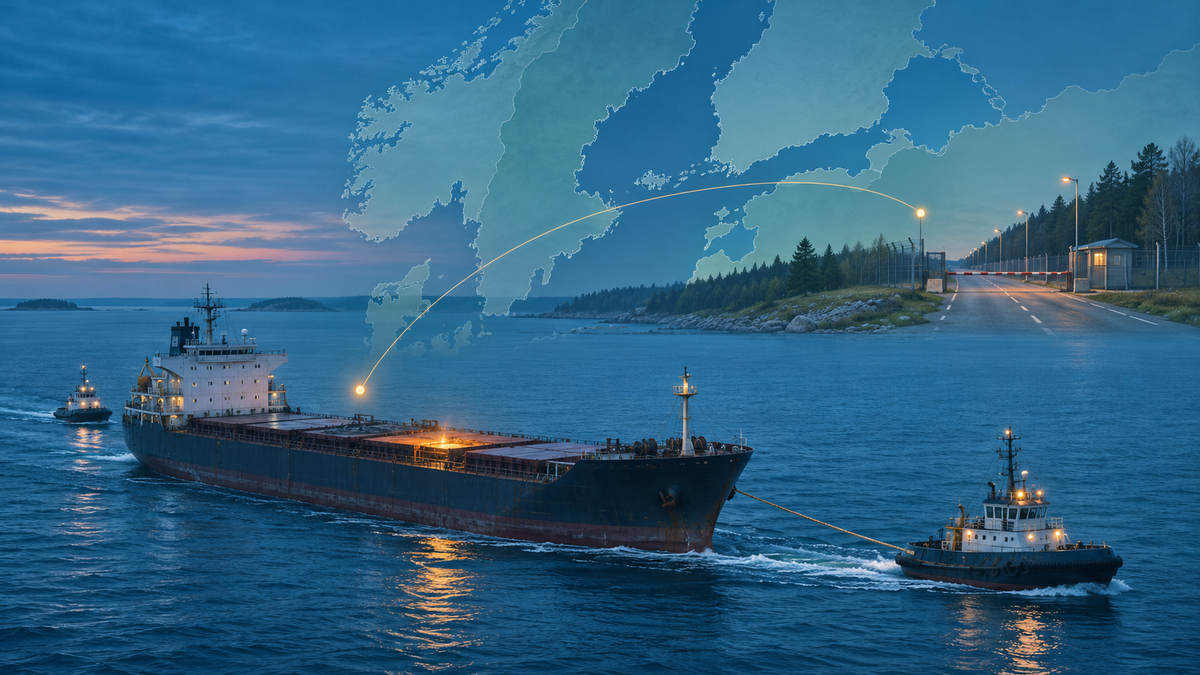
The ship belongs to Oboronlogistika, the Russian defence ministry's logistics arm, and was heading for Kaliningrad. After the strike it caught fire and drifted into Finnish waters. On Tuesday, Russia's transport ministry said it had been towed to St Petersburg.
Accounts of where the strike happened differ. Zelensky says the ship was hit in Russian territorial waters. The Finnish Defence Forces say it happened in international waters west of Gogland island. The cargo has not been independently identified.
Zelensky acknowledged that the operation may have worried some allies and said he had told officials and the military to coordinate more closely with them. Ukrainian foreign ministry spokesman Heorhii Tykhyi said Russian warships, military cargo ships and shadow fleet tankers can be legitimate targets when they support the war, and that Ukraine's actions are aimed at Russia, not at third countries.
BSM analysis
The acknowledgment changes the status of a whole series of incidents in the Gulf of Finland. On 11 November, Finland detected an explosion aboard the Russian corvette Naro-Fominsk near Gogland, and the SBU said it had hit a Baltic Fleet ship. Now Kyiv is openly claiming a strike on a defence ministry ship bound for Kaliningrad as well. The rule it has stated, a Russian flag plus weapons or sanctioned cargo, covers a large share of Russian traffic in the Baltic. The dispute over location is not a technicality either. If Finland is right, the strike took place in international waters on one of Europe's busiest shipping lanes, and the fire and drift have already pulled the incident into a NATO member's waters.
Partners: support with conditions
Norway's defence minister Tore Sandvik said that "all attacks would stop immediately if Russia stopped this war," but that Ukraine "must do this within the rules of international law." He called the dialogue with Kyiv constructive and stressed "the need for stability in our near areas." The same day in Oslo, Sandvik and Ukrainian defence minister Yevhenii Khmara signed a counter-drone cooperation agreement.
German government spokesman Stefan Kornelius said Berlin has "no interest in seeing an escalation in the Baltic Sea region." Asked whether Kyiv had been told not to widen the conflict, he said Berlin had expressed concern about stability and left it there. In the Kremlin, Dmitry Peskov called the Baltic strike "a very dangerous trend" of expanding "terrorist activity."
BSM analysis
No partner condemned the strike, but each one drew a line. Norway and Germany, both with direct stakes in the Baltic and northern Europe, are signalling that a naval war off their shores has limits. It is telling that Oslo signed a counter-drone deal on the same day it publicly reminded Kyiv about international law. Support for Ukraine continues, but operations in the Baltic will now be judged separately.
🟠 2. Russia to Estonia: "on the verge of open war"
Verified · Estonia / Diplomatic escalation · new entry
Russia's foreign ministry handed a formal protest to Estonia's chargé d'affaires in Moscow, Marek Uhtegi, over Tallinn's decision to close its road border crossings. The diplomat was told the move was "on the verge of triggering open war with Russia", and Moscow said it reserves the right to respond. Russia also accused the Estonian government of "tacitly" allowing Ukraine to use its airspace to attack Russia.
Estonia's foreign ministry replied that the country "has never allowed, and will never allow" its territory to be used for military operations by another state. Foreign Minister Margus Tsahkna called the accusations baseless and said Moscow is the one creating the real security threats in Europe.
Estonia will close all three road crossings with Russia, at Narva, Koidula and Luhamaa, from 1 December for at least six months. The decision followed Tallinn's accusation that the GRU ordered an arson attack on the drone maker Threod Systems. Latvia, Lithuania and Poland are keeping their road crossings with Russia open for now.
BSM analysis
Harsh diplomatic language is not, on its own, evidence that Russia is preparing to attack Estonia. But the combination of two claims is worth recording. The first casts a border decision as a step towards "open war". The second accuses Estonia of lending its airspace to Ukrainian strikes. That second claim is useful to Moscow, because it hands it a ready-made explanation for any future airspace incident over Estonia. Ukraine's naval strikes in the Baltic are Kyiv's doing, but Moscow is pressing its claims on Tallinn. That asymmetry makes Estonia the region's most exposed point over the coming weeks.
WATCH
- United Kingdom. Reuters reports a warning from the Ministry of Defence and the NPSA to companies supplying Ukraine about the risk of Russian sabotage, with closed briefings for defence-industry and critical-infrastructure executives. The original NPSA document was not checked in this cycle. The issue matters for the Baltic states after the Threod Systems case.
- Norway / Ukraine. A counter-drone agreement was signed in Oslo. Funding, the number of systems and the link to the DESNA system still need confirming.
- Benghazi. The Merkury's final status and the fate of the Angara. (Full analysis: 24 November, 14:00 edition.)
- Poland. The AWACS actually arriving, and the National Security Committee's decisions. (Full analysis: 24 November, 08:00 edition.)
Bottom line
In a single day, the war in the Baltic got an official author and an official target for threats, and they are not the same country. Kyiv owned the strike in the Gulf of Finland, and Moscow warned Tallinn of "open war". Estonia closes its border in seven days.
At sea there are two sides. On the shore there are more.
Baltic Security Monitor (osint-baltic.com) is an analytical publication covering security on NATO's northeastern flank.
Materiality assessments are generated by an automated open-source monitoring system and independently verified.