Cleared to Fire, Holding Fire: A Drone over Lublin and an AWACS for Poland
Poland got two authorisations on Monday night. In Brussels, NATO cleared the forward deployment of an AWACS aircraft after three Russian Kh-101 missiles came down on Polish soil. Hours later, Poland's operational commander cleared his crews to shoot down a Russian drone that had crossed in from…

Baltic Security Monitor | Material Update
Security Watch, 24 November 2026, 08:00 EET · window 23 November 20:00 – 24 November 08:00
Poland got two authorisations on Monday night. In Brussels, NATO cleared the forward deployment of an AWACS aircraft after three Russian Kh-101 missiles came down on Polish soil. Hours later, Poland's operational commander cleared his crews to shoot down a Russian drone that had crossed in from Ukraine. Nobody fired, because the drone turned back east. Both decisions are about the same thing: how NATO sees, and controls, the sky over its eastern border.
Cycle status
- MATERIAL: 2 events (new Polish airspace violation, HIGH; NATO AWACS decision, MODERATE)
- WATCH: reported strikes on Russian vessels off Libya, Baltiysk damage claims, Sparta II salvage wrap-up, 12 background lines
- Uncertainty: 🟡 6 · 🔴 0
- Verification: both MATERIAL items confirmed beyond Reuters (Polish military statements, defence trade and regional media)
In five days, Russia's strikes on Ukraine have spilled into Poland twice: three cruise missiles on 20 November and a reconnaissance drone on 23 November. The second breach came on the very day the North Atlantic Council agreed to send Poland an AWACS. Warsaw no longer treats these incidents as accidents. The open question is no longer whether there will be another one, but who decides to pull the trigger, and under what rules.
🔴 1. A Russian drone over the Lublin region: cleared to engage, but no shot
Materiality: HIGH · NATO airspace / Cross-border security · new entry
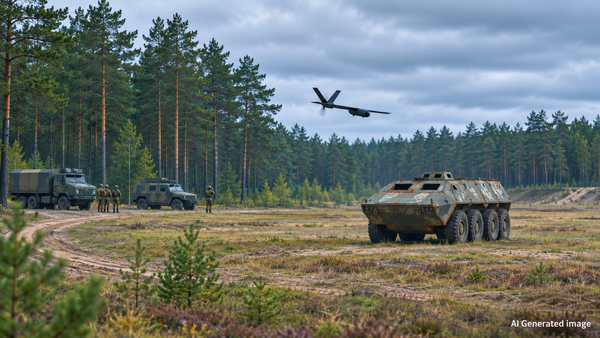
At about 23:40 on Monday, 23 November, Poland's Operational Command (DORSZ) reported a brief violation of Polish airspace by a Russian unmanned aircraft during a Russian attack on targets in western Ukraine. Military radar tracked the flight throughout. The operational commander authorised a shoot-down, but once the drone turned east the military held fire because of the risk to civilians.
According to PAP, citing sources close to the defence ministry, a Russian jet-powered reconnaissance drone spent several minutes in Polish airspace near Dorohusk. Some Polish outlets report that it flew a loop reaching the Chełm area. That route has not been officially confirmed.
Deputy Defence Minister Stanisław Wziątek said the object was a reconnaissance drone that was probably gathering data on the infrastructure that defends Polish airspace. He called it both a provocation and genuine intelligence-gathering. He warned that a shoot-down over a built-up area could cause serious debris damage, and said future engagement decisions should be taken nationally and within NATO together. Fellow deputy minister Paweł Zalewski said Warsaw assumes the incursion was deliberate, and that anything entering Polish airspace is treated as potentially armed.
Defence Minister Władysław Kosiniak-Kamysz said the Council of Ministers' National Security Committee would discuss airspace protection on Tuesday, 24 November.
BSM analysis
This is a separate incident, not an update on 20 November. The signal is the gap between authorisation and action. For the second time in five days, Polish forces were cleared to engage and did not: on 20 November because bad weather made visual identification impossible, on 23 November because of the risk to civilians. Each decision is defensible on its own terms. Together, they hand Moscow useful data. A reconnaissance drone that enters NATO airspace and leaves again tests procedures as much as radars. Wziątek's idea of taking shoot-down decisions jointly with NATO may add political cover, but it also adds a link to a chain whose reaction time is measured in minutes.
🟠 2. NATO confirms forward deployment of AWACS to Poland
Materiality: MODERATE · NATO operational posture · confirmation delta
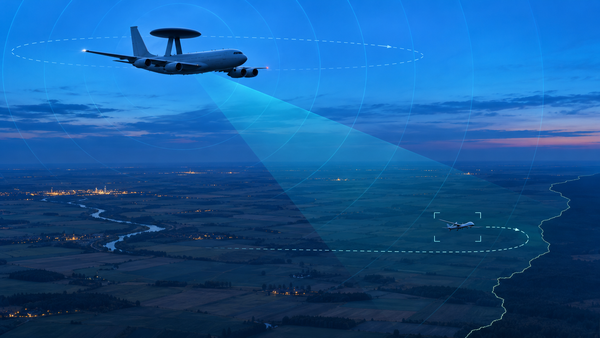
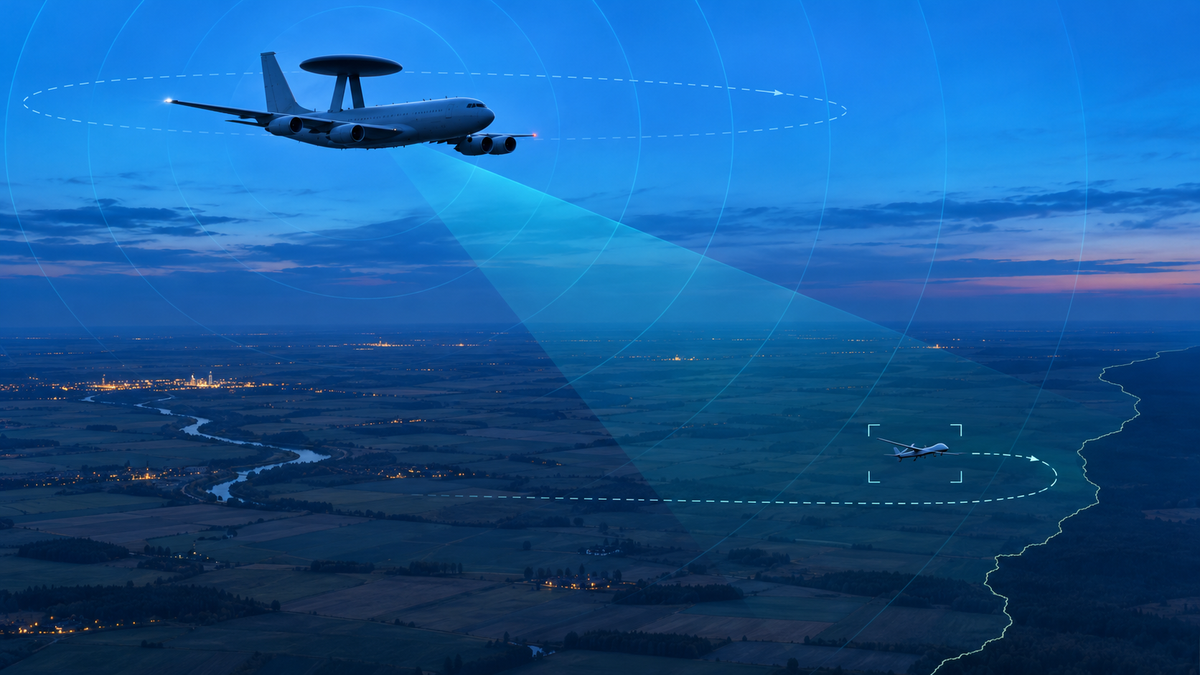
After a North Atlantic Council meeting in Brussels on Monday, 23 November, Paweł Zalewski said an AWACS early-warning aircraft would be made available to Poland. A NATO spokesperson later confirmed that the Supreme Allied Commander Europe, General Alexus Grynkewich, had authorised its forward deployment.
The Council granted only part of what Warsaw asked for. Poland wants additional NATO fighter jets and stronger air defences. Its other proposals on defence and deterrence go to NATO foreign ministers when they meet next week. Zalewski said every ambassador at the table expressed "full solidarity with Poland" and none questioned that Russia had acted deliberately.
The trigger was 20 November. On 22 November, prosecutors in Lublin established that all three objects that fell in eastern Poland were Russian Kh-101 cruise missiles. Officials had first counted two missiles and a drone. Preliminary findings date the missiles to the fourth quarter of 2026, so they were only weeks old when launched. Prime Minister Donald Tusk called the strike a premeditated provocation timed to coincide with military exercises nearby.
BSM analysis
AWACS flying over Poland is not new in itself. NATO E-3As have patrolled the eastern flank since 2022. What is new is a formal SACEUR decision to forward-deploy one for Poland specifically. The scale is modest: one aircraft out of a fleet of 14 based at Geilenkirchen. That improves the radar picture but does not add a new layer of air defence. The real test comes at next week's ministerial: whether the "understanding that NATO should strengthen its air-defence capability" turns into actual jets and batteries.
What changed since the 23 November, 20:00 edition
- The drone breach happened at about 23:40 on 23 November, after the previous edition was issued. It is a new event, not a repeat.
- The drone type is now partly established. A deputy defence minister and PAP describe a reconnaissance drone, probably jet-powered. Security Watch had listed the type as unknown.
- On AWACS, the change is confirmation of a NATO command decision, beyond the earlier Polish ministerial remarks about stepped-up allied surveillance.
Why it matters for the Baltic states
Poland's problem is the whole northeastern flank's problem. Lithuania, Latvia and Estonia face the same set of questions: detecting small, low-flying targets, rules of engagement over populated areas, and how fast a decision can be made inside NATO. If Warsaw's proposal for joint national and NATO shoot-down decisions becomes practice, it will shape procedures for Baltic skies too. The other thing to watch is whether next week's ministerial discusses reinforcement for Poland alone or for the whole eastern flank under Eastern Sentry.
WATCH
- Libya. Ukraine says it hit the Russian corvette Merkuriy and the cargo ship Angara off Benghazi on 22 November. The extent of the damage has not been independently confirmed at the time of publication.
- Baltiysk. No new confirmed damage to Baltic Fleet facilities. Recycled reports about 21 November are not independent verification.
- Sparta II. The salvage phase is closing. The attack investigation, the vessel's condition and its cargo remain on watch.
- Poland. The National Security Committee's decisions on 24 November, original DORSZ statements on the drone's route, and the outcome of the NATO foreign ministers' meeting.
Bottom line
In one week, Polish forces were cleared to fire twice and fired neither time: first because of the weather, then because of the risk to people on the ground. Each decision can be explained on its own. Together, they show that Russia can probe NATO's border at no cost. An AWACS will help Poland see the next target more clearly. Whether anyone shoots it down is not something radar can decide.
An order to fire that is never carried out is also a message. The question is who reads it more carefully: Warsaw or Moscow.
Baltic Security Monitor (osint-baltic.com) is an analytical publication covering security on NATO's northeastern flank.
Materiality assessments are generated by an automated open-source monitoring system and independently verified.