Second Night Running: Moldova Starts Hardening Its Border Crossings With Ukraine

Baltic Security Monitor | Material Update Event: 20–21 August 2026 · Published: 22 August 2026, 08:00
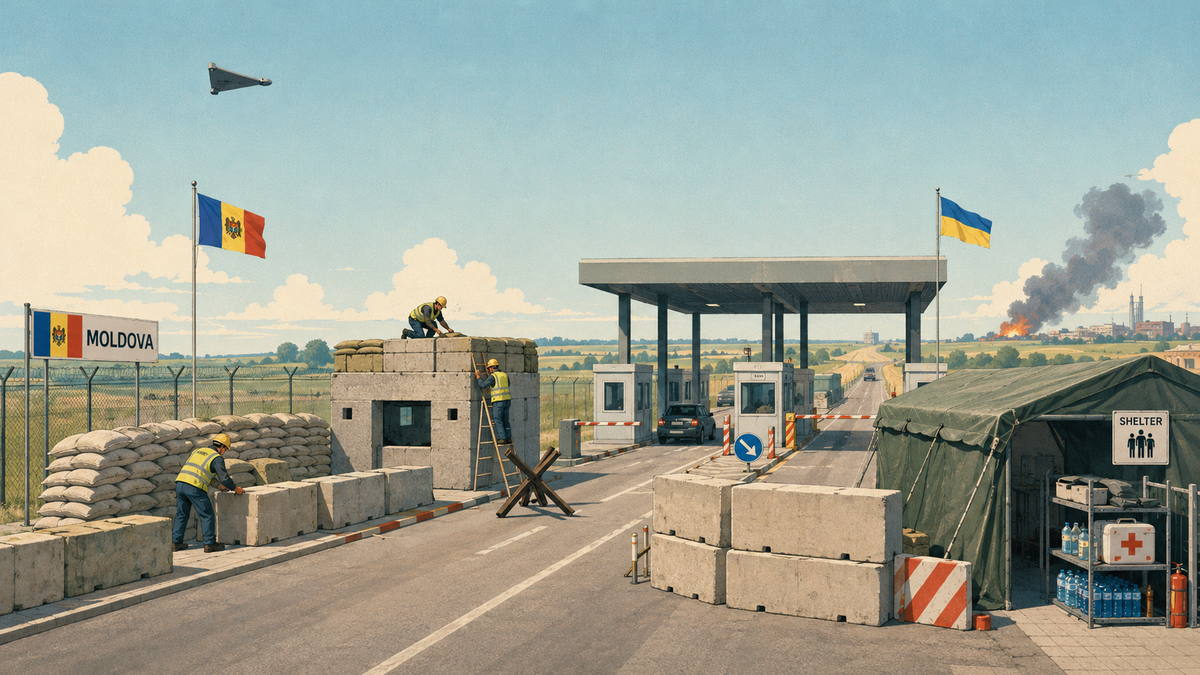
Moldova has moved from verbal condemnation to physical hardening of its own border infrastructure: shelters, protective structures at crossings, evacuation protocols, relocated fuel stocks, and direct coordination between the Interior and Defence ministries on early detection of airborne threats. The decision was not pre-emptive — it followed a second consecutive night in which a Russian strike reached border infrastructure only a few hundred metres from Moldovan territory. It is the same pattern BSM tracked yesterday in Romania: infrastructure war no longer stays on the other side of the border.
What happened
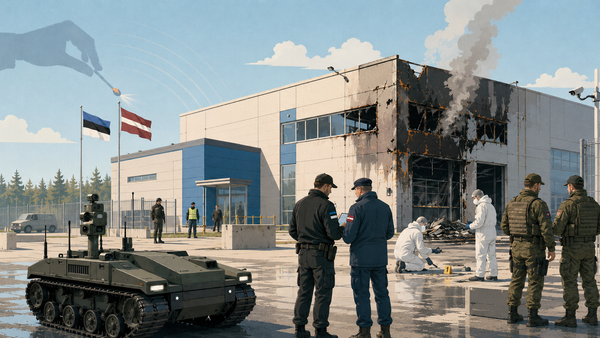
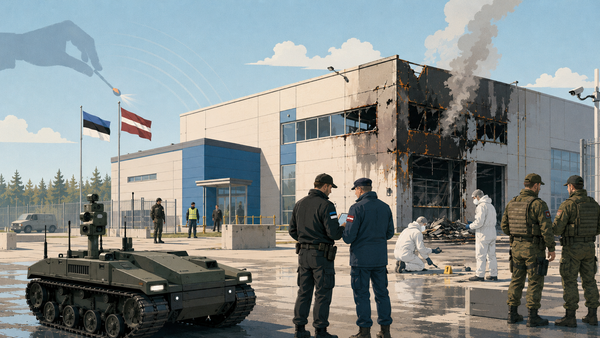
Overnight on 21 August, a Russian attack drone damaged buildings and infrastructure at Ukraine's Tabaki border crossing, opposite Moldova's Mirnoe, roughly 300 metres from the state border. Ukraine suspended passenger and vehicle traffic through the checkpoint and diverted it to alternative crossings. Moldovan border patrols observed the explosions from their side of the line, and Ukraine's State Border Guard Service confirmed the damage. It was the second consecutive night a Russian strike reached the border zone: the previous night's target had been the neighbouring Reni–Giurgiulești crossing, hit during a mass overnight attack on Kyiv.
Separately, on 20 August, Moldova recorded a Shahed-136/Geran-2 attack drone entering its airspace during a Russian strike on the Ukrainian port of Reni, along with additional explosions near the Giurgiulești–Reni border sector.
In response, Moldova's Interior Ministry announced on 21 August a package of physical hardening measures for vulnerable crossings: protected locations for border guards and customs officers, emergency shelters for personnel and travellers, evacuation and suspension procedures, relocation of fuel stocks away from exposed areas, additional medical equipment, and cooperation with the Defence Ministry on early-warning and detection solutions. Work has already begun at several checkpoints assessed as most vulnerable, with further sites to follow based on risk assessment. The ministry stressed the crossings continue to operate as usual and that the measures are preventive rather than restrictive.
BSM analysis: The material shift here is not another debris find or a single explosion near the border — it is the move from after-the-fact response to systematic infrastructure hardening. Moldova is building permanent protocols rather than one-off fixes for individual attacks: shelters, evacuation procedures, fuel logistics, and inter-agency threat detection. That signals Chișinău no longer treats border spillover as isolated incidents but as a persistent operational risk requiring standing response infrastructure.
Wider context
This event is a direct continuation of the story BSM covered yesterday: a day before Moldova's announcement, a Romanian F-16 destroyed an explosive-laden maritime drone near the Neptun Alpha platform in the Black Sea. Both cases stem from the same Russian strike campaign, whose effects are now surfacing almost simultaneously in Moldova and in NATO member Romania. Romania has already moved from monitoring incursions to live fighter engagement and protection of offshore infrastructure; Moldova is now hardening fixed facilities on land. Together, the two episodes trace a single line of war spillover reaching border states and NATO's southern flank infrastructure.
Ukraine's border crossings are part of its wartime logistics network for civilian trade, humanitarian traffic and links to European markets. Repeated Russian strikes capable of shutting a crossing raise the risk that border infrastructure itself becomes a recurring vulnerability, rather than incidental exposure from strikes on ports.
BSM analysis: The operational lesson for the Baltic states and Poland is the same one BSM drew yesterday for offshore assets, now applied to land border infrastructure: facilities immediately behind NATO's external border need protection not only against ground penetration or sabotage, but against inexpensive long-range unmanned systems — shelters, warning networks, evacuation procedures, and distributed counter-UAS detection.
Likely implications
If Russian strikes on Danube and border infrastructure continue, Moldova is likely to extend protective construction to additional crossings near the Odesa region. 🟡
Closer technical integration between Moldova's Interior and Defence ministries may produce more systematic local drone-warning coverage around vulnerable border and transport nodes, rather than reliance on national-level radar alone. 🟡
Repeated disruption of crossings could push Ukraine and Moldova toward greater logistics redundancy — routing commercial and humanitarian traffic through alternative crossings before attacks occur, rather than only after a crossing is damaged. 🟡
Bottom line
The Moldovan case is not an isolated incident but the second half of the same border story BSM began covering yesterday out of Romania. The difference is in the response: Romania, as a NATO member, answered with a live air engagement at sea, while Moldova, outside the alliance, is building shelters on land. Both responses point to the same underlying fact — states on the periphery of Russia's strike campaign can no longer treat distance from the front as protection.
Baltic Security Monitor (osint-baltic.com) — an analytical outlet covering security on NATO's northeastern flank. This report draws on an automated monitoring digest cross-checked against independent open sources.