Russian Drone Strikes SBU Headquarters in Central Kyiv: Zelenskyy Says the Target Was the Chief's Office, Orders a "Mirror" Response

Baltic Security Monitor | Analytical Brief As of 5 September 2026, 08:00 EEST
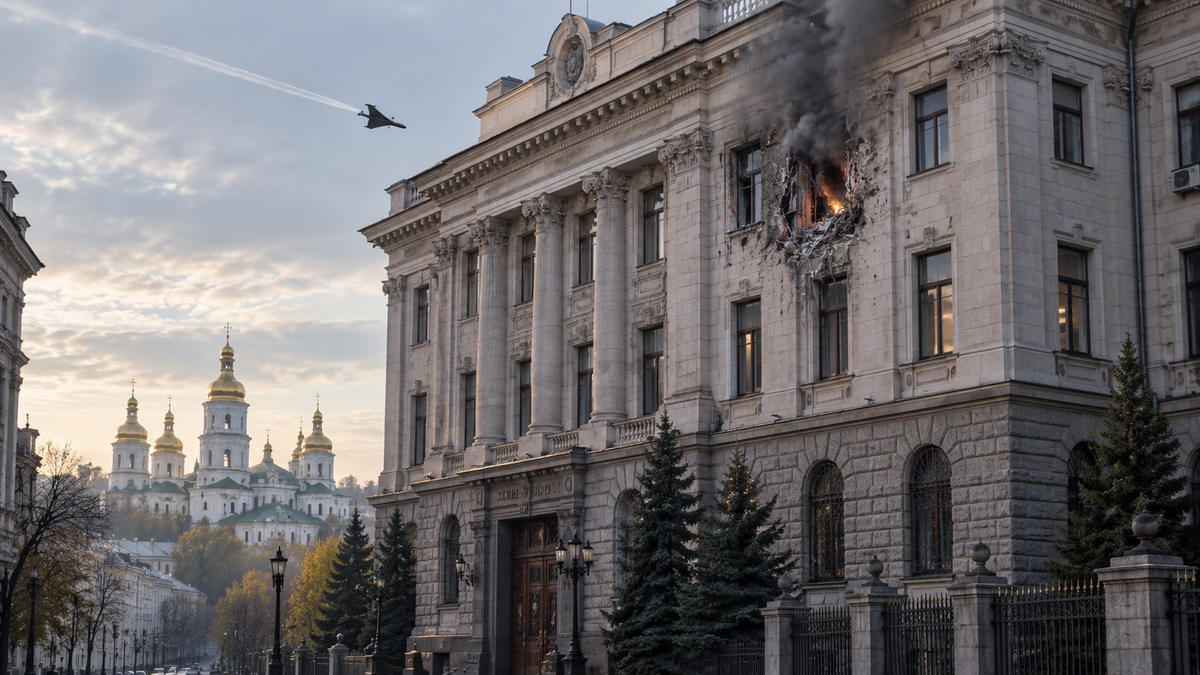
At around 3:30 p.m. local time on 4 September, a Russian attack drone struck the central building of Ukraine's Security Service (SBU) on Volodymyrska Street in Kyiv, opposite St. Sophia Cathedral. President Volodymyr Zelenskyy said the drone was directed specifically at the office of acting SBU chief Oleksandr Poklad: "The drone was directed precisely at the office of the head of the Security Service in this building." Poklad himself was not in the office at the time of the strike and was unharmed. Reuters, AP, and the Financial Times independently confirmed the attack. Ukraine's Foreign Minister Andrii Sybiha called it a major escalation of the war.
Zelenskyy said he had instructed Poklad to prepare an "adequate, tangible, and where possible, mirror" response against Russia once everything is ready, with Ukraine's armed forces supporting the operation. The SBU has been linked to some of the war's highest-profile operations against Russia, including the 2022 strike on the Kerch Bridge and the 2025 "Spiderweb" drone operation targeting Russian strategic bombers — making the choice of this particular building unlikely to be incidental, and suggesting a probable motive of retaliation on Moscow's part.
The injury count from the broader attack on Kyiv that day climbed over several hours: Kyiv Mayor Vitali Klitschko initially reported at least 7 injured, AP later put the figure at 12, and by the evening of 4 September, the Kyiv City Military Administration said the total had risen to 15. That same day marked Ukraine's tenth consecutive day of Russian drone strikes; authorities said at least 53 people have been killed and 134 injured in Kyiv city and the wider region since the near-nonstop campaign began last month. Overnight, Russia reportedly launched 273 drones nationwide, including a large number of newer types, and one person was killed by debris from a downed drone.
The notable part isn't another strike on Kyiv — BSM has already logged dozens this week. What's new is that a drone hit such a sensitive state-security target for the first time — and, according to the president himself, was aimed specifically at the SBU chief's office, not just at the building or the district. This is a qualitative shift, not another quantitative one: from a campaign against energy, logistics, and civilian infrastructure to a direct strike on the leadership of a national security service.
BSM analysis: the timing's symbolism and a likely motive of retaliation
The timing itself is notable: the strike came literally on the eve of an expected visit by US Special Envoy Steve Witkoff and Jared Kushner to Moscow, and then to Kyiv. One Ukrainian lawmaker speculated the attack could have been a signal from Moscow that President Putin has no intention of negotiating; in his assessment, Witkoff and Kushner would most likely now travel to Kyiv by land rather than fly, as originally planned. Meanwhile, Berlin is reportedly considering a substantial expansion of its military and intelligence support for Ukraine, in the wake of the drone incident near Leipzig/Halle Airport that German authorities have already attributed to Russia.
The SBU's involvement in operations like the Kerch Bridge strike and Spiderweb gives grounds to read this attack not simply as another attempt to wear down air defenses, but as a targeted response to specific Ukrainian intelligence operations conducted deep inside Russia. At the same time, it's too early to speak of a systematic doctrine: a single strike doesn't establish a pattern of deliberately targeting the leadership of Ukraine's security and intelligence agencies — additional similar attacks would be needed to demonstrate that.
Why it matters for Ukraine and the Baltic region
For Ukraine, the attack demonstrates that Russian long-range systems can reach a heavily protected government-security facility in central Kyiv. That has implications for how scarce air-defense assets are allocated around intelligence, command, and leadership facilities. It also underscores an already-known problem posed by faster drones and smaller daytime attack waves: AP has documented that Russian strikes on Kyiv increasingly occur around the clock rather than predominantly at night, compressing warning and interception time.
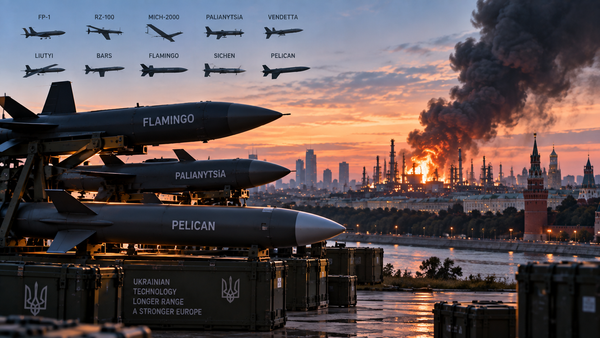
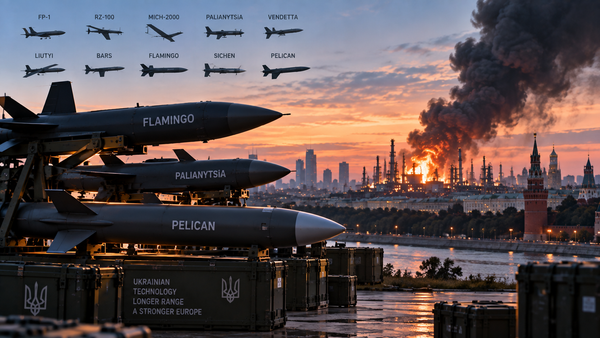
For the Baltic states and NATO's eastern flank, the lesson applies directly to protecting national command centers, intelligence headquarters, airbases, and critical infrastructure against small, fast targets capable of penetrating conventional defensive layers. The escalation dimension also matters: Zelenskyy's public order to prepare a "mirror" response raises the probability of a retaliatory Ukrainian strike against a Russian security-service, command, or comparably high-value state facility — though no specific target or timeline has been announced.
Bottom line
The next indicator to watch is whether Ukraine follows through on its promised "mirror" response, and against what target, as well as whether similar targeted strikes against the leadership of Ukrainian security agencies recur — which would turn this from an isolated incident into a confirmed pattern. It's also worth watching whether the speculation about a connection to the planned visit by US envoys holds up: if the strike really was a signal of Moscow's reluctance to negotiate, that could shape the format and timing of upcoming diplomatic contacts.
Baltic Security Monitor (osint-baltic.com) — an analytical publication covering security on NATO's north-eastern flank. All OSINT indices are calculated by an automated indexing system based on open sources.