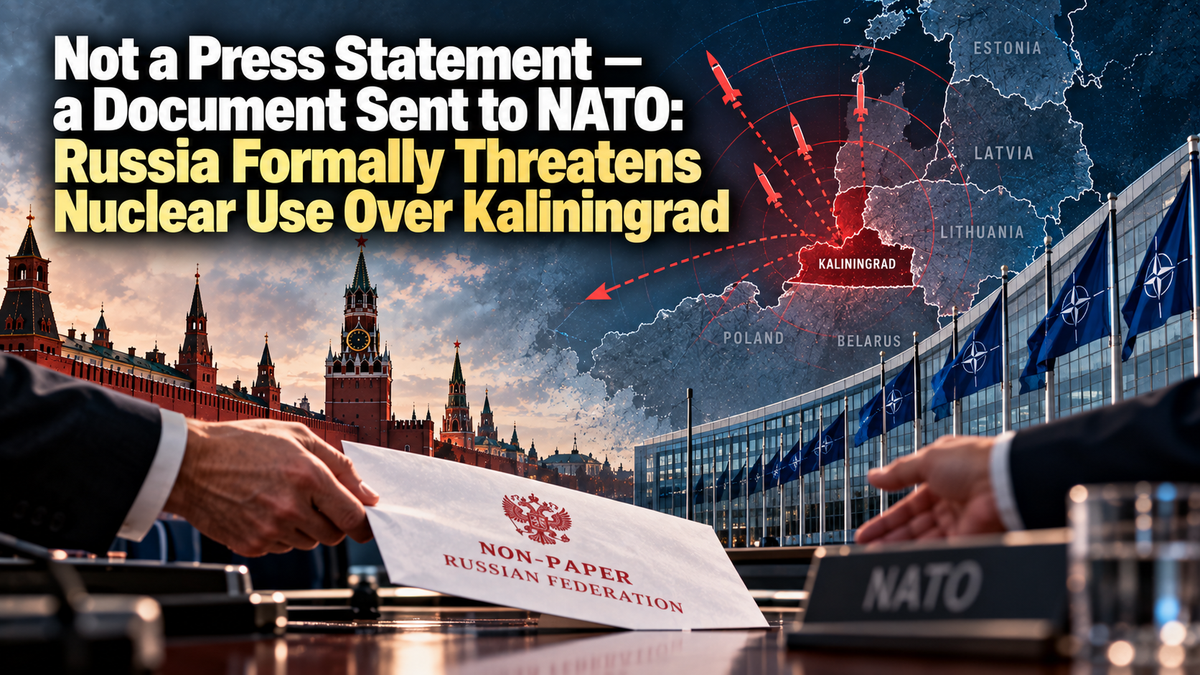
Not a Press Statement — a Document Sent to NATO: Russia Formally Threatens Nuclear Use Over Kaliningrad

Baltic Security Monitor | Analytical Brief Snapshot: 30 September 2026, 14:00 (Europe/Tallinn) · Material OSINT Update
Threats to use nuclear weapons over Kaliningrad have come out of Moscow for years — but always as an official's remark, never as a document sent directly to the alliance. On 29 September that changed: Russia delivered a formal non-paper to NATO, and NATO headquarters confirmed receipt and responded.
Assessment
| Indicator | Value |
|---|---|
| BSM assessment | MATERIAL UPDATE |
| Category | Nuclear signalling / NATO-Russia relations / Baltic security / military posture |
| Materiality | High |
| Uncertainty flags | 🟡 1 · 🔴 0 |
| Cycle note | Event occurred 29 September, missed in the 20:00 snapshot — caught late, not a new event on 30 September |
The materiality here isn't the nuclear rhetoric itself, which is routine — it's the channel. This is the first time content of this kind has been delivered directly to NATO through a diplomatic channel, rather than voiced publicly by an official or an embassy.
What happened
According to Reuters, which saw the document, Russia accused NATO of a "dangerous and reckless course" carrying "high risks of the outbreak of a direct armed conflict." The text, classified as a "non-paper" — diplomatic jargon for an informal document — states: "Russia will be ready to use the entire arsenal of forces and capabilities at its disposal, including nuclear weapons, in order to defend its territory should NATO countries undertake any attempt aimed at isolating the Kaliningrad Region from the rest of the country."
The document also raises the possibility of Russian strikes "against decision-making centers in the alliance's member states right from the outset of the conflict" — meaning the warning extends beyond defending Kaliningrad itself to an escalation scenario that could potentially reach NATO capitals.
NATO spokesperson Allison Hart confirmed receipt of the non-paper without disclosing its contents, saying the alliance "strongly denounces the threat of force, including any irresponsible nuclear rhetoric." NATO stressed it is a defensive alliance, that none of its activities or exercises pose a risk to Russian territory, and that Russian pressure will not affect continued support for Ukraine.
Confirmed versus outstanding
| Claim | Status |
|---|---|
| Russia sent NATO a non-paper with a nuclear warning over Kaliningrad | ✅ Confirmed by Reuters, which saw the document |
| NATO formally confirmed receipt and responded | ✅ Statement from spokesperson Allison Hart |
| The document raises possible strikes on NATO member decision-making centres | ✅ Confirmed by Reuters |
| Russia formally denies intent to attack NATO countries | ✅ Stated in the same document |
| The precise diplomatic and intelligence context behind the timing | 🟡 Not publicly disclosed |
| An actual change in Russian nuclear posture or employment plans | 🔴 No evidence — this is a warning, not a documented behavioural change |
BSM analysis: threat or escalation-management signal
What matters for the assessment is form, not content. Moscow has made "nuclear response" statements over a hypothetical Kaliningrad isolation for years, including through officials such as Nikolai Patrushev as recently as 2025. But a verbal threat from an official and a formal diplomatic document sent directly to NATO sit at different levels of communication. A non-paper is a recognised diplomatic format precisely for conveying a position without formal treaty status, while still letting a state later say "we warned you officially" if the situation escalates.
A diplomat cited by Reuters described it as just another attempt to intimidate Europeans, while calling NATO's response firm and responsible. That matters: none of the NATO or European defence officials Reuters spoke with read the document as evidence of preparation for actual nuclear use. The assessment is intimidation, not an operational shift.
BSM analysis: There is no evidence NATO is preparing any attempt to isolate or blockade Kaliningrad — the scenario Moscow claims to be responding to is hypothetical. This is a classic pre-emptive nuclear-signalling structure: state the red line before anyone approaches it, to deter action that isn't currently planned. At the same time, the document raises the stakes around any future military activity in the Baltic Sea — exercises, flights, patrols — because any Kaliningrad-related discussion now happens against the backdrop of a freshly disclosed nuclear warning.
Kaliningrad as a friction point
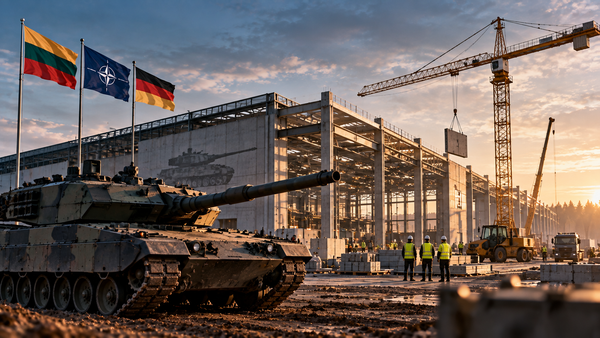
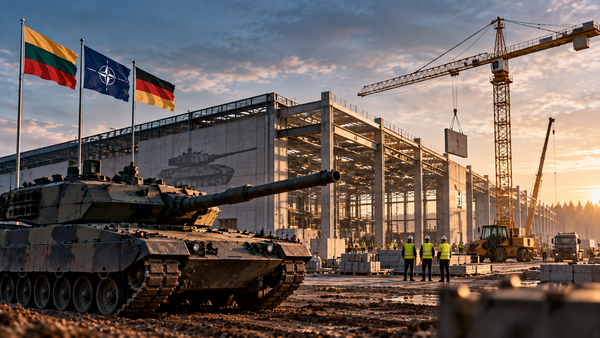
Kaliningrad is a heavily militarised Russian exclave between Poland and Lithuania, central to NATO's defence planning for the Baltic states. The presence of nuclear-capable systems there, including Iskander missile complexes, has been documented for years — this is background, not new information, and it's what gives the document its weight. That Moscow chose to formalise its position now, in writing through a diplomatic channel, rather than simply repeating a verbal threat, points more toward locking in a position ahead of a possible future escalation than toward preparation for immediate action.
What it means for Ukraine and the Baltic states
For the Baltic states, the document formalises something already baked into defence planning for years — the Kaliningrad scenario remains a sensitive NATO-Russia flashpoint. No practical shift in Alliance posture has been recorded so far.
For Ukraine, the link is direct: NATO explicitly tied its response to continued support for Kyiv, stating that Russian hybrid pressure and threats will not shake that support. It also fits the broader picture of the day: the same day this document surfaced, Estonia publicly attributed the Milrem Robotics sabotage to Russia, and Belgium confirmed a concrete timeline for transferring F-16s to Ukraine. The nuclear warning can be read as an attempt to raise the perceived cost, for Kyiv's allies, of continuing that support.
Conclusion
This is a warning, not a documented behavioural change. The next material delta would be considerably weightier than further rhetoric: a change in Russian nuclear readiness or deployments, movement of nuclear-capable systems, a NATO posture response, concrete Kaliningrad transit restrictions, or an operational military measure from either side.
Next checks: whether individual NATO states (Poland, Lithuania) issue their own public responses to the document; whether the Alliance changes its language on nuclear readiness; whether Moscow repeats this position publicly at a higher level.
A threat delivered through a diplomatic channel is no longer rhetoric for a domestic audience. But for now it's words on paper, not movement on the map.
Baltic Security Monitor (osint-baltic.com) — an analytical publication on security on NATO's northeastern flank. All OSINT assessments are produced by an automated monitoring system using open sources.