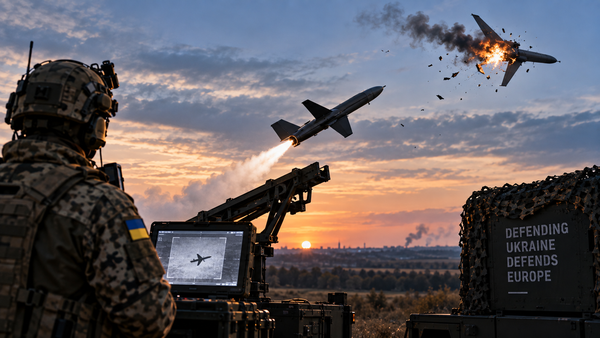
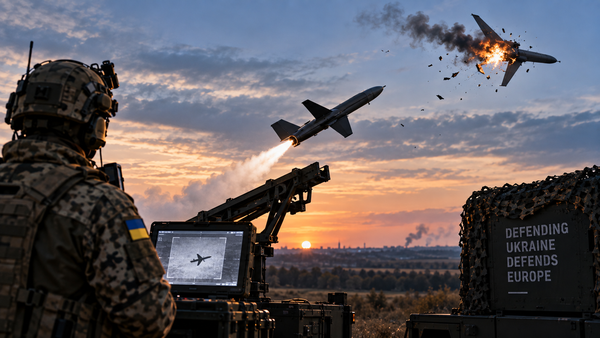
Russia Scales Jet-Powered Drones to Thousands a Month: Ukraine Puts August Launches Above 2,800, Interception Around 60%

Baltic Security Monitor | Analytical Brief As of 2 September 2026, 14:00 EEST
Ukrainian Air Force spokesperson Yurii Ihnat said on 1 September that Russia launched more than 2,800 jet-powered attack drones in August — four to five times the July total and nearly tenfold the June figure. Ihnat said overall interception of conventional, piston-driven Shahed-type drones remains at 90–95%, while the rate against jet-powered variants has fallen to roughly 60%. That's an official Ukrainian estimate rather than an independently audited figure, but the scale and pace of growth are corroborated by several independent sources: presidential technology adviser Serhii Beskrestnov put Russia's June jet-drone use at only around 300, rising to about 1,500 in July. On 1 September alone, during a daytime attack of 99 drones, 72 were jet-powered, and 57 of those were intercepted or suppressed; 82 of the 99 total drones were neutralized that day.
Reuters independently documented the broader picture: strikes on Kyiv and its region have continued for a sixth consecutive day, with the latest wave killing 12 people and hitting residential buildings, rail, and energy infrastructure. According to the BBC, the attack pattern itself has also shifted: instead of large once- or twice-weekly barrages, smaller waves of 3–4, sometimes up to 10, jet-powered drones now arrive roughly every half hour. On 27 August, Kyiv recorded 13 air-raid alerts totaling 15 hours — a record since the start of the full-scale invasion; interception that day stood at 88%, falling to just 79% by 31 August.
The strikes also carried a border-logistics dimension: overnight into 1 September, Russia struck the Orlivka international ferry crossing on the border with Romania using Shahed drones, damaging a building and the surrounding area; crossings were temporarily suspended and traffic redirected. President Volodymyr Zelenskyy accused Russia of deliberately targeting Orlivka to disrupt freight traffic; border guards noted this was not the first such strike on the crossing. The prime ministers of Ukraine and Romania discussed the strike's consequences, crossing logistics, and air-defense needs on 1 September.
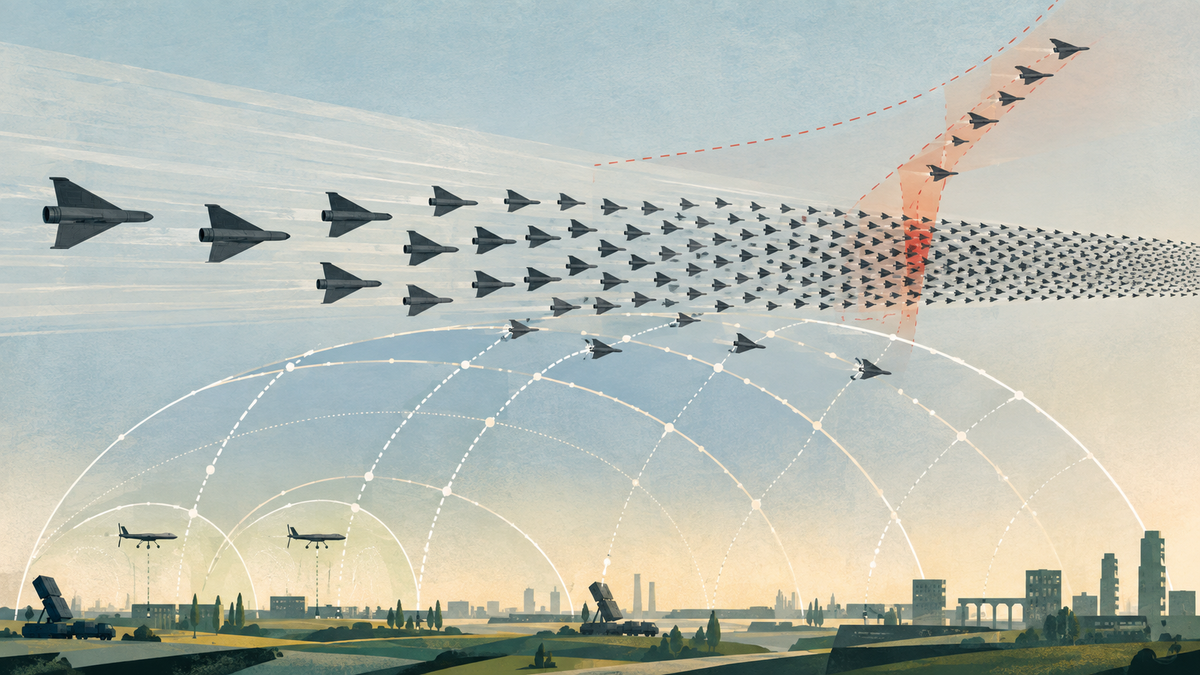
The notable part isn't that jet-powered drones are being used more — BSM has already covered that trend. What's new is the scale: jet-powered drones have moved from a rapidly growing component of individual strike packages into a mass-use capability operating at several thousand launches per month, with interception rates continuing to slip week over week.
BSM analysis: a structural problem, not a temporary one
Ihnat describes the jet-drone problem as structural: Ukrainian interceptor drones fly at roughly 300 km/h and physically cannot catch targets moving faster at an altitude of about 5 kilometers — beyond the reach of mobile fire teams and portable air-defense systems that have proven highly effective against slower Shaheds. Former Commander-in-Chief Oleksandr Syrskyi warned back in June that jet-powered drones could reach half of all strike UAVs, and August's numbers bear that out: by some estimates, production of jet-powered Geran variants has already overtaken piston-engine output.
At the same time, the overall interception rate has held up relatively well despite the growing jet-drone share, suggesting Ukraine is already fielding partial countermeasures. Come Back Alive spokesperson Taras Tymochko said the organization now supplies interceptor drones to 90 units, with more than 3,000 Russian drones downed since the project began a year ago — nearly half of those in the last two months. Sources in Ukraine's defense industry told the BBC they expect an effective countermeasure against jet-powered drones within the coming month; an unnamed Ukrainian official told the Wall Street Journal that interceptors capable of downing the newest Geran models already exist, but only in the hundreds — far short of the thousands needed.
Why it matters for Ukraine and the Baltic region
For Ukraine, the core issue is defensive economics and reaction time: faster jet-powered drones compress the interception window and don't fit the mobile-fire-group architecture that worked so well against slower Shaheds. That raises demand for fighter jets, interceptor drones, electronic warfare, and potentially expensive missile-based air defense. The six-day campaign also shows Russia's ability to sustain continuous, not episodic, pressure on civilian life, rail logistics, and air-defense crews.
For NATO's eastern and Baltic flank, the development matters because regional counter-UAS planning increasingly has to account for targets moving substantially faster than conventional Shaheds. Recent drone spillovers into Estonia, Latvia, Finland, and Romania make warning time, radar coverage, and low-cost rapid interception directly relevant well beyond Ukrainian airspace.
Bottom line
The August figure of 2,800-plus launches doesn't by itself prove Russia can sustain or keep growing that rate indefinitely — engine production, components, and operational stockpiles remain real constraints. The next indicator to watch is whether Ukraine can field effective countermeasures at a scale of thousands within the coming month, as defense-industry sources suggest, and whether weekly interception rates keep declining. For the Baltics, the lesson is already clear: counter-UAS architecture built around slow-moving targets no longer matches the real speed of the threat — and that isn't a problem confined to Ukrainian skies.
Baltic Security Monitor (osint-baltic.com) — an analytical publication covering security on NATO's north-eastern flank. All OSINT indices are calculated by an automated indexing system based on open sources.