Quiet Night, Busy Orbit: Security Watch, 7 November, 08:00
The morning cycle produced nothing that cleared the threshold for a standalone story. The main signal sits above the front line: Ukrainian military intelligence says Russia is already using its own low-orbit constellation, Rassvet, to communicate with drones. There is no independent confirmation…


The morning cycle produced nothing that cleared the threshold for a standalone story. The main signal sits above the front line: Ukrainian military intelligence says Russia is already using its own low-orbit constellation, Rassvet, to communicate with drones. There is no independent confirmation yet.
Baltic Security Monitor | Security Watch
Slot: 7 November 2026, 08:00 EET · NO MATERIAL UPDATE · MATERIAL 0 · WATCH 7 · uncertainties 🟡 1 · 🔴 0
Monitoring window: 6 November 20:00 – 7 November 08:00, with a 24-hour lookback.
The night of 7 November left the operational picture on NATO's northeastern flank unchanged. The hoax-threat wave found no new targets, and Rzeszów produced no new details. The cycle's most important report is about a capability, not an event: according to Ukrainian intelligence, Russia is building its own answer to Starlink. If that holds up, the drones working over Ukraine today will be harder to jam tomorrow, and that bears directly on the airspace of the Baltic states and Poland.
🟡 1. Rassvet: Russia's Starlink over Ukraine
Status: WATCH · potentially MATERIAL · new platform
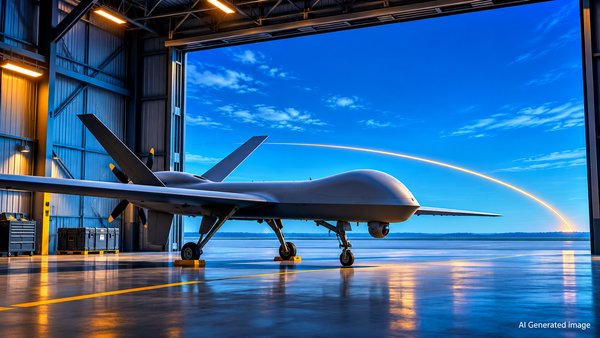
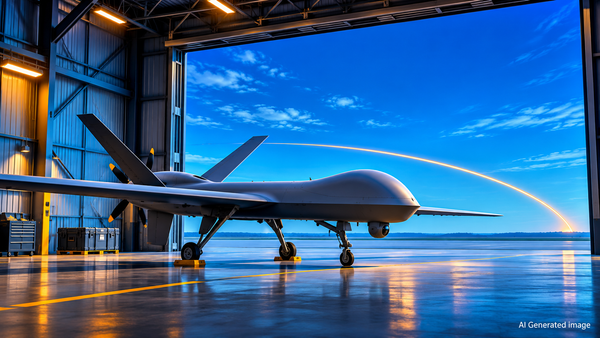
Ukraine's military intelligence agency (GUR) says Russia is already using the Rassvet low-orbit network for military communications over Ukraine. The aim, according to GUR, is to make strike drones more accurate and harder to jam. The system reportedly allows two-way data links: reconnaissance drones stream imagery in real time, and operators can reroute attack drones mid-flight.
GUR says Russia launched 32 satellites this year in two batches, in March and July. Moscow said last month it had launched more than 30. The project is coordinated by Bureau 1440, which plans more than 900 satellites by 2035. Starlink, by comparison, has more than 10,000.
The constellation is still too small for continuous coverage. Kyiv-based analyst Mykola Zientsev estimates Russia gets at least two good communication windows a day, each lasting over an hour. Russia's defence ministry and Bureau 1440 did not respond to Reuters.
The backdrop matters. Russian forces relied on grey-market Starlink terminals until Kyiv got them switched off earlier this year. And last month Ukrainian commanders ran into unexplained speed limits on Starshield, SpaceX's military service, which forced some drone-interception missions to be called off. The limits have since been lifted, with no official explanation.
BSM analysis: The launches themselves are not in doubt; Moscow acknowledges more than 30 satellites. What remains unproven is whether the system works in combat, what terminals the drones carry and how reliable the link is. All of that currently rests on claims from one side of the war, which is why BSM keeps this at WATCH rather than MATERIAL. The direction of travel, though, is clear. A drone steered via satellite rather than a ground radio link is harder to jam and can be flown further from the front. For Latvia, Lithuania, Estonia and Poland, all of which have already dealt with drone incursions, that erodes electronic warfare as the default answer. There is a second lesson about Ukraine's own dependence: the Starshield episode showed that a critical communications channel can be throttled by a decision taken on another continent.
Next check: independent technical evidence on terminals, coverage and confirmed combat use.
On watch
- Hoax threats to aviation and media. No new targets and no state attribution overnight. Police findings awaited. (Full analysis: Security Watch, 6 November, 20:00.)
- Rzeszów-Jasionka. The French system and confirmation of the 1 January 2027 handover are still unannounced. (Full analysis: Security Watch, 6 November, 20:00.)
- Latvian drones. Attribution not finalised; technical examination of debris continues.
- Black Sea, Patriot / PURL. Open lines with no new operational decisions this cycle.
Bottom line
The quietest cycles sometimes show best where the threat is heading. Nothing happened over the Baltic region last night. But in orbit, according to Ukrainian intelligence, a network is already in place that is meant to make Russian drones less dependent on anything that can be jammed on the ground. Thirty-two satellites against Starlink's 10,000. For now.
Baltic Security Monitor (osint-baltic.com) — an analytical publication on security along NATO's northeastern flank.
Materiality assessments are produced by an automated open-source monitoring system.