Poland Warns of a New Russian Strategy: Intelligence Expects "Accidental" Drone and Missile Strikes on NATO States

Baltic Security Monitor | Analytical Briefing Event: 17 September 2026 · Published: 18 September 2026
What matters here isn't the warning itself — it's how much more specific it has become. Tusk had previously spoken about the risk of the war "spilling over" onto Polish territory in general terms. Now he's publicly attributing to intelligence services — Polish, NATO, Ukrainian and American — an assessment of a specific Russian concept: deliberately launching drones or missiles into NATO territory, then presenting it as an "accident" to test whether Article 5 is "more theoretical than practical." This isn't a scenario of the war accidentally spilling over anymore — it's a described intent to weaponize attribution ambiguity itself against alliance cohesion.
What happened
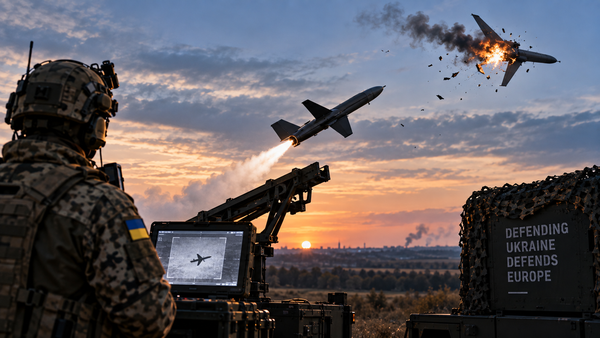
On 17 September, Polish Prime Minister Donald Tusk told the Sejm that, according to intelligence assessments, Russia's plan in the war against Ukraine includes hybrid strikes using drones and missiles against countries supporting Kyiv, including Poland. He said there was a "real risk" that drones or other projectiles could fall on the territory of one or several NATO eastern-flank states and even cause destruction, after which Moscow's official narrative would be that it was an "accident" — with no grounds, therefore, for a NATO response. Tusk described the intelligence assessments as increasingly consistent and convincing, and tied the threat to an expected Russian winter escalation against Ukraine.
The same day, 16 September (a day earlier in Moscow time), Russian Foreign Ministry spokesman Sergey Lavrov publicly stated that Russia has no intention of attacking Western countries and has "no interest" in doing so. The gap between these two statements — Poland's assessment of intent and Russia's official denial — is the core of this story: Warsaw is publishing an intelligence assessment, not a proven operational order, and the underlying assessment itself remains undisclosed in detail.
BSM analysis: According to Tusk, intelligence considers late autumn and winter, through early spring, the most critical period. He also gave a more concrete assessment of the expected Russian campaign against Ukraine: very high-frequency strikes against six major Ukrainian cities, railway infrastructure, logistics and supply stocks, combined with growing use of jet-powered UAVs that fly faster and higher and are harder to intercept. The same day, 17 September, a Russian attack drone crashed near the Polish border in Volhynia — another, less prominent episode in the same pattern BSM has been tracking in recent days.
What's still uncertain
🟡 The underlying intelligence hasn't been published. Tusk's statement establishes that the Polish government holds this assessment; it doesn't independently prove Moscow has issued an operational order for a specific strike on NATO territory.
🟡 If Russia actually adopts the strategy Tusk described, the central deterrence problem would be deliberately engineered ambiguity: causing limited physical damage while keeping each individual incident below the political threshold at which all allies readily agree an armed attack occurred.
Regional context
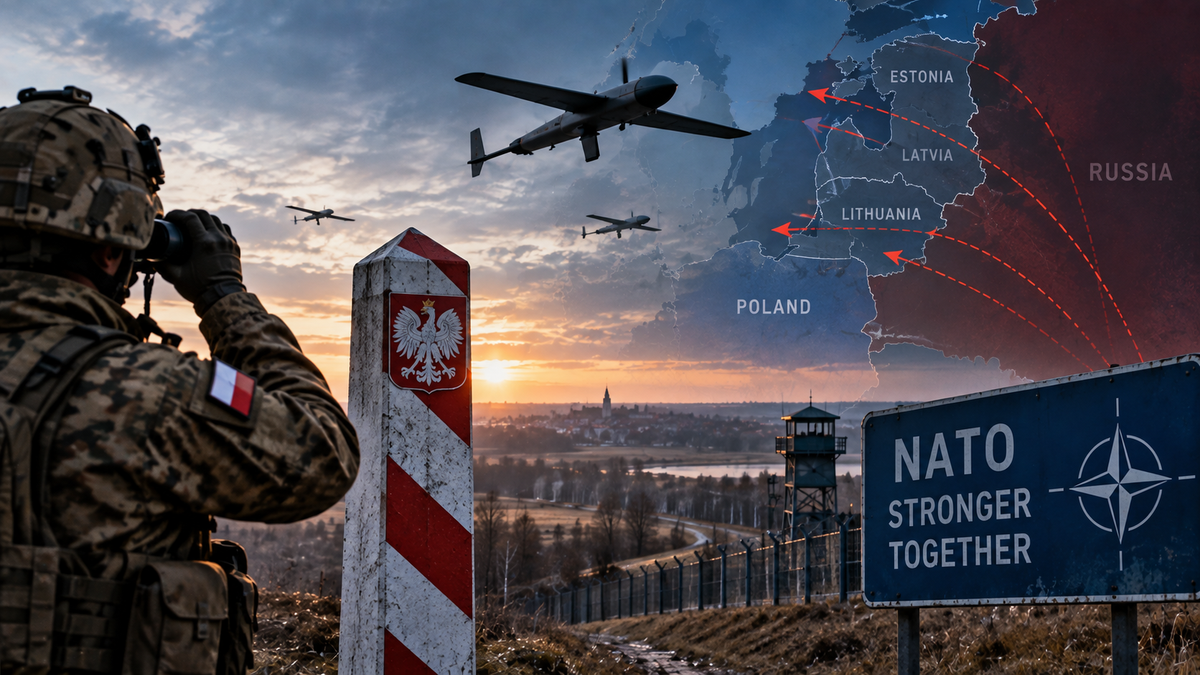
This assessment concerns the wider NATO eastern flank, not Poland alone — Tusk explicitly referred to one or several eastern-flank states. That makes the scenario particularly relevant to Estonia, Latvia and Lithuania. The recent Gerbera-type drone incidents in Lithuania and Poland have already shown how difficult attribution can become when UAVs used by Russia against Ukraine cross NATO borders during attacks. A deliberate strategy exploiting precisely that ambiguity would create a political problem as much as an air-defense one.
A telling one-year benchmark: exactly a year earlier, on 10 September 2025, Poland and NATO shot down Russian drones over Polish territory for the first time in alliance history, and Tusk called the situation "the closest we have been to open conflict since World War Two" — that incident launched NATO's Operation Eastern Sentry to reinforce eastern-flank posture. The current warning logically extends that same line, now at the level of a described intent rather than a single incident.
For Ukraine, Tusk directly linked the NATO risk to Russia's campaign against logistics: he said four attacks occurred near the Polish-Ukrainian border over the preceding week, and warned that destroying crossings would make it substantially harder for Warsaw to sustain Ukraine during a winter campaign against its energy and transport infrastructure. That echoes directly the physical reinforcement of three border crossings Poland has already begun — a story BSM covered separately.
Bottom line
Poland is likely to accelerate coordination with Ukraine on countering jet-powered UAVs — Tusk announced he would travel to Kyiv to discuss cooperation with President Zelenskyy, including Ukrainian capabilities relevant to the anti-ballistic coalition. The next significant marker to watch will be corroboration of this assessment by another NATO government, disclosure of a specific target or operational plan, preventive NATO action based on the assessment, or an actual incident matching the described scenario.
Baltic Security Monitor (osint-baltic.com) — an analytical outlet covering security on NATO's northeastern flank. Compiled from open sources and BSM's automated OSINT monitoring system.