Poland Formally Joins the Ukraine-Led Anti-Ballistic Coalition: NATO's Eastern Flank Enters Joint Missile-Defence Development

Baltic Security Monitor | Analytical Briefing Digest: 18 September 2026, 20:00 (Europe/Tallinn)
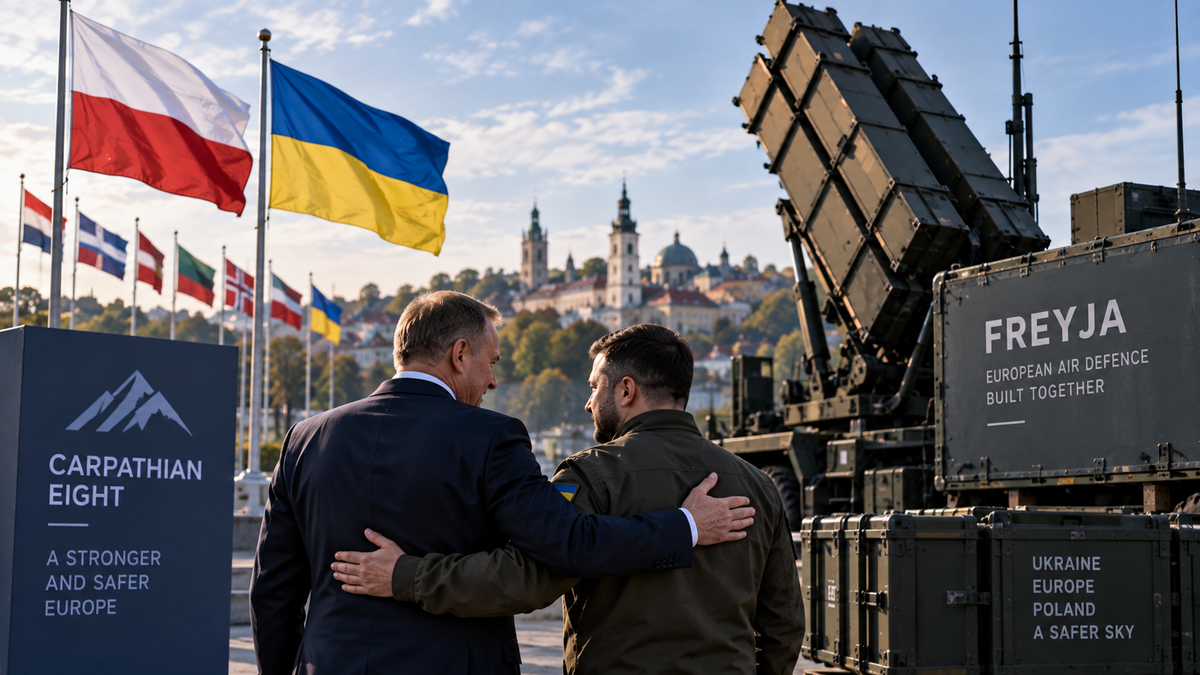
Poland moved from "we'll consider it if our industry can offer something suitable" in July to "as of today, we're part of this project" on 18 September — and it did so not in Brussels or Warsaw, but at the inaugural Carpathian Eight summit in Lviv, standing next to Zelensky. That's not a technical footnote; it's a political signal. NATO's largest eastern-flank army is now publicly and personally tying itself to Ukraine's missile-defence model, not just to the American Patriot system.
The lead event: Poland is in
Polish Prime Minister Donald Tusk announced on 18 September, during a visit to Ukraine, that Poland has formally joined the anti-ballistic missile coalition — a group of European countries jointly developing an integrated air and missile defence system for the continent. Tusk said the forms and frameworks of cooperation had been agreed during talks with President Volodymyr Zelensky. Reuters independently confirmed the announcement.
The move came at the inaugural summit of the "Carpathian Eight" — a new regional grouping convened by Zelensky comprising Ukraine, Romania, Serbia, Poland, Slovakia, the Czech Republic, Austria and Hungary.
Tusk also said Poland has prepared a new "significant" military-aid package for Ukraine, without disclosing details. Zelensky thanked Poland for the package.
BSM analysis: This is a material shift, not a rhetorical one. In July, Tusk had made Polish accession conditional on Polish defence firms presenting a workable industrial offer — and Warsaw had bristled at being left out of the original group of ten founding countries. On 18 September, Tusk himself acknowledged there had been "a certain misunderstanding" at the time; the matter is now closed. Poland is a participant, not an observer.
Context: the coalition and Freyja
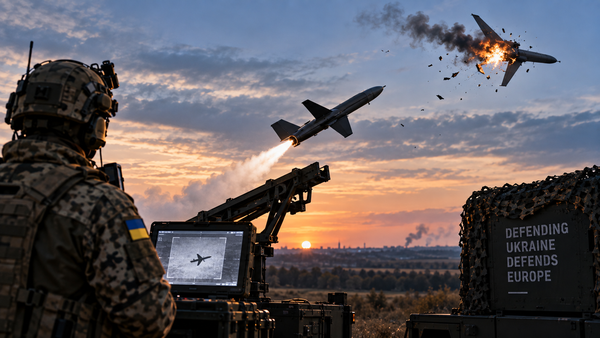
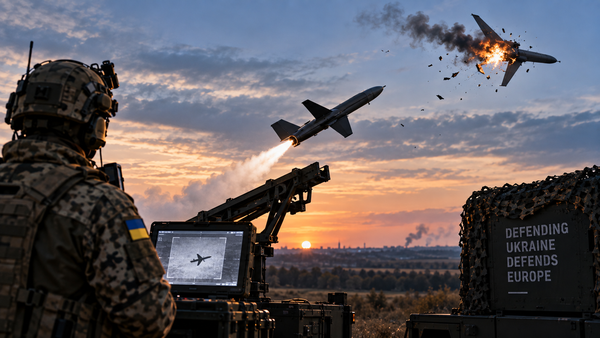
The coalition was launched in July by Ukraine and nine European countries to jointly develop a new anti-ballistic missile system — a cheaper complement or alternative to the US Patriot architecture. The prototype, codenamed Freyja, has Ukrainian arms manufacturer Fire Point as its lead industrial partner, with Kyiv originally targeting a working prototype in the first half of 2027.
This is the second consecutive day the missile-defence track has moved from political declaration to concrete step: BSM tracked the EU-level Freyja framework commitment on 17 September, and now a formal accession by a key NATO frontline state on 18 September.
Correction: the Lithuania airspace episode is walked back
A separate thread that entered the previous cycle as a WATCH item deserves a clear update. Italian media (ANSA) reported late on 17 September that two Russian military jets had allegedly violated Lithuanian airspace, prompting Italian Eurofighters to scramble from Šiauliai Air Base. ANSA's sourcing was anonymous — attributed only to "informed sources."
Subsequent reporting shows the Lithuanian side has disputed that framing. Lithuanian armed forces spokesperson Aleksandras Seliukas told LRT radio that Italian media accounts did not fully reflect reality: the Russian aircraft were flying from Kaliningrad into international airspace and did not cross into Lithuanian territory.
BSM analysis: This is a useful reminder that initial "airspace violation" reports over the Baltic require verification against the relevant national authority, not just aviation media or anonymous sourcing. The episode should be reclassified from a possible incursion to a routine intercept-and-escort of Kaliningrad traffic — a fact that lowers, rather than raises, the tension reading for 17–18 September. At the same time, the sheer frequency of these Šiauliai scrambles (this is at least the third in a month, alongside two drone shoot-downs earlier in September) confirms a persistently high operational tempo for Baltic air policing, independent of how any single episode is ultimately classified.
Regional context
Poland's accession strengthens the coalition's industrial logic: the project is no longer only a Ukrainian requirement backed by distant partners, but increasingly a capability-development effort involving a frontline NATO state with its own urgent air-defence needs.
2026 regional defence budgets:
| Country | 2026 defence budget (% of GDP) |
|---|---|
| Poland | 4.8% (highest in NATO; alliance-wide target is 5% by 2035) |
| Lithuania | ~4.0% |
| Latvia | ~3.7% |
| Estonia | ~3.4% |
For Estonia, Latvia and Lithuania, Poland's role matters directly: any future European-Ukrainian missile-defence architecture would have direct applicability on the north-eastern flank, where ballistic, cruise-missile and increasingly sophisticated drone threats are now a central planning problem.
Bottom line
The next phase should clarify which Polish companies, technologies and financing mechanisms will take part, and how the coalition relates technically and institutionally to Freyja and other European air-defence programmes. The separate Polish aid package remains undisclosed and could become a standalone material development once its contents are revealed.
Baltic Security Monitor (osint-baltic.com) — an analytical publication on security along NATO's north-eastern flank. Prepared from open sources (Reuters, ANSA, Notes from Poland, TASS, PAP) and an automated monitoring system.