One Front Line, Six Directions: A Security Day in Review


Baltic Security Monitor | Analytical Briefing 16 September 2026
BSM's baseline cycle for 16 September registered "NO MATERIAL UPDATE" — none of the open threads (Trump's proposed energy-strike truce, the unresolved Lithuania drone, the Bulgaria EMCO depot fire) crossed the materiality threshold overnight. But the wider information picture for the same day gives enough material for a cross-cutting look at the six directions this desk tracks daily.
There's no single inflection point today — rather a synchronized tightening of pressure across all six tracks at once: rising density of Russian assault attempts near Dobropillia and the still-unresolved identification of the Lithuanian drone, the procedural advance of the Graham sanctions bill in the House, and Iran's third claimed downing of a US drone over Hormuz within 24 hours. No single thread is decisive on its own, but together they sketch the shape of the week.
1. The Baltic states
Estonia is in talks with France to join its enhanced nuclear deterrence initiative. Prime Minister Kristen Michal told AFP on the sidelines of the European Arctic Summit in Rovaniemi that this "is not the kind of initiative you simply join" — it requires certain capabilities and readiness, but since France already stations troops in Estonia in support of its independence, deepening cooperation in the nuclear field looks like a plausible next step. France's newly appointed ambassador to Estonia confirmed to Postimees that Paris is shifting toward forward nuclear deterrence and that dialogue with Tallinn on the matter is already underway.
Latvian Prime Minister Andris Kulbergs told Euronews that Brussels is finally starting to listen to Baltic warnings about the threat from Russia — the comment came days after a Russian drone struck a passenger train two kilometres from the Polish border on 13 September (see Ukraine section below) and after Germany attributed an attempted drone attack on Leipzig/Halle Airport to Moscow.
BSM Analysis: Neither item is a new development in itself — both confirm an already-tracked trend: Baltic states diversifying security guarantees (a French nuclear umbrella alongside NATO's) while simultaneously stepping up political pressure on Brussels to treat the regional threat as systemic rather than local.
2. Ukraine
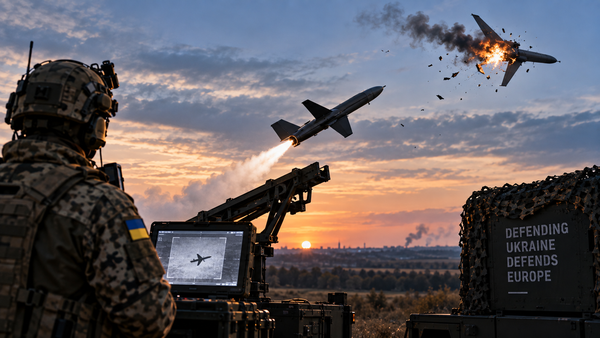
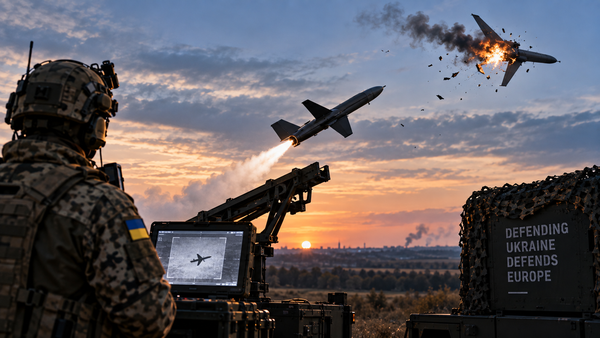
On the Pokrovsk axis, Ukrainian forces repelled 38 Russian assaults on 15 September — an estimated 66 occupying troops killed and five wounded, with 12 vehicles, one artillery system and a drone command post destroyed. Separately, Ukrainian military sources report a "huge increase" in Russian assault groups attempting to break through to Dobropillia, echoing August 2025 infiltration tactics (small groups on quad bikes and motorcycles); Ukrainian officers say Russia's capacity to scale this up is limited, since a single drone operator cannot simultaneously support 20-30 assault groups across multiple axes.
On 13 September, a Russian drone struck the locomotive of a passenger train two kilometres from the Polish border in Volyn — minutes after a diplomatic train carrying former UK PM Boris Johnson, former Swedish PM Carl Bildt and EU security advisers, returning from the Yalta European Strategy security conference in Kyiv, had passed through the same station; a separate train carrying former CIA Director David Petraeus was still there when the strike hit. Ukrainian Railways said the diplomatic train, which had departed earlier than scheduled, was the likely intended target. No casualties were reported.
These facts directly contradict Trump's claim of an already-operative reciprocal energy-strike truce between Ukraine and Russia (see the previous BSM cycle): Reuters reports both sides continued striking energy-related targets on 15 September, and Zelensky conditioned Kyiv's readiness on guarantees that Russian attacks would genuinely stop.
BSM Analysis: A strike on the exact route several NATO countries' senior officials had just travelled, combined with mounting pressure near Dobropillia, sends two distinct signals from the same underlying strategy: demonstrating reach near the alliance's border while retaining battlefield initiative despite a claimed diplomatic pause.
3. NATO
Italian fighters under the Baltic Air Policing mission carried out the alliance's first lethal engagement against an airborne target over a member state's own territory, shooting down an unidentified drone over Lithuania overnight into 15 September (see previous BSM cycle); the operator and purpose remain unconfirmed. NATO Secretary General Mark Rutte joined the Ukraine Defence Contact Group, chaired by Germany and the UK, on 8 September, and told Germany's annual Heads of Mission Conference in Berlin on 10 September that Europe has entered a new phase of security readiness. On 15 September, the North Atlantic Council met in KFOR format with troop-contributing partners to discuss the situation in Kosovo.
BSM Analysis: No dramatic new alliance-level event in the past 24 hours — the structural trend holds steady: eastern-flank reinforcement, continued Ukraine support via the Contact Group, and parallel attention to other peripheral theatres such as Kosovo.
4. The Persian Gulf
The US-Iran standoff in the Strait of Hormuz remains active: Iran's Revolutionary Guard Corps claims its air defences shot down a third US MQ-1 reconnaissance drone over the strait within a 24-hour window on 14-15 September — claims that cannot currently be independently verified, and to which the US has not responded. Separately, a planned meeting between Iran and Gulf Cooperation Council states in Oman on Strait of Hormuz shipping arrangements has been postponed indefinitely: Saudi Arabia demanded the delay over concerns about Tehran's proposed toll provisions, which would let Iran selectively apply charges to "hostile" states, while Bahrain declined to attend. Brent crude rose roughly 2% amid the uncertainty.
BSM Analysis: The repeated pattern of claimed drone downings (now three in one day) with no US confirmation points either to an escalating war of claims or to a genuine strengthening of Iranian air defences — the two scenarios can't currently be distinguished without independent verification. The Oman meeting's collapse, driven by a split within the Gulf states themselves (Saudi Arabia against Oman's position), is a separate signal: there is no regional consensus on managing the strait even among Arab states.
5. The United States, as a NATO and Ukraine partner
On Tuesday evening, the US House of Representatives cleared the final procedural hurdle for the late Senator Lindsey Graham's Russia and Iran sanctions bill, voting to place it on the calendar, with final passage scheduled for Wednesday (today). The Senate passed the bill in August, 86-11. In the House, the measure has drawn opposition from some Democrats over a provision authorizing tariffs of up to 100% on the largest buyers of Russian oil — resistance rooted in reluctance to grant Trump additional tariff powers; pro-Ukraine Democratic leaders (Meeks, Neal, Beyer) called the provision harmful despite their continued support for Ukraine itself. Republican Michael McCaul urged Democrats to set aside partisan differences to help end the war. If the House doesn't vote this week, the next opportunity comes only after November's midterms.
BSM Analysis: The split runs along attitudes toward expanding presidential tariff authority, not along support versus opposition to Ukraine — a procedural rather than geopolitical fault line worth tracking separately from the "pro-Kyiv" rhetoric surrounding it.
6. China, through the lens of European security
No direct delta in the past 24 hours, but the structural backdrop is worth noting: the EU Institute for Security Studies' 2026 report moved the risk of a cross-strait military conflict over Taiwan into the high-risk tier of Europe's threat matrix — higher than last year, even as experts rate a direct US-China war as the least likely of the 30 scenarios assessed. Think tank Merics has previously flagged concern among Baltic and Central European states over Chinese naval exercises near the region and deepening China-Russia cooperation.
BSM Analysis: China remains a background rather than an acute factor for the Baltic region — expert assessments deliberately keep it separate from the Russian threat in terms of probability, though the linkage through China-Russia cooperation continues to concern Eastern European capitals.
Conclusion
The day's formal status is "no material update" by BSM's criteria. But the combined picture across six tracks shows simultaneous strain on several distinct deterrence mechanisms at once: military (Dobropillia, Lithuania), diplomatic (US Congress, Oman), and rhetorical-escalatory (the Strait of Hormuz). No single thread shifts the region's composite assessment on its own, but their simultaneity is itself worth flagging.
Baltic Security Monitor (osint-baltic.com) — an analytical publication on security along NATO's northeastern flank. Prepared from open sources; part of the factual base draws on automated OSINT monitoring.