A Warship at Sea, a Link on a Limiter: The Gogland Strike and Renewed Starshield Caps
Two material updates this cycle. Finland and Estonia have officially confirmed an explosion aboard a Russian warship in the Gulf of Finland, roughly 40 km off the Finnish coast. On the same day, Kyiv said Starshield speed limits were back, again hampering the interception of Russian jet-powered…

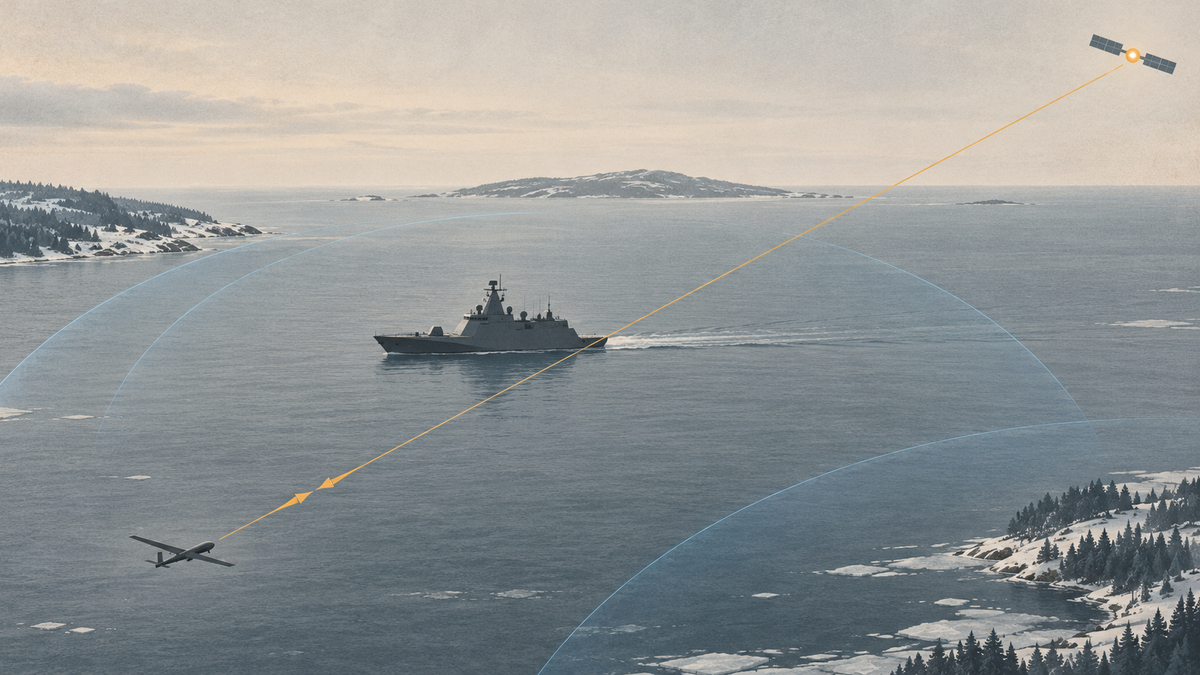
Two material updates this cycle. Finland and Estonia have officially confirmed an explosion aboard a Russian warship in the Gulf of Finland, roughly 40 km off the Finnish coast. On the same day, Kyiv said Starshield speed limits were back, again hampering the interception of Russian jet-powered drones.
Baltic Security Monitor | Security Watch — 2 Material Updates (HIGH, HIGH)
Snapshot: 12 November 2026, 20:00 (EET)
Gogland: explosion confirmed, ship not identified (HIGH)
In an emailed statement to Reuters, the Finnish Defence Forces said they had detected "a strike" on a Russian warship in the Gulf of Finland area on 11 November and were monitoring the situation. Finland, they said, faces no immediate military threat. The military declined to say where or when the incident happened, or how it was detected.
A senior Finnish official quoted by Yle placed it near Gogland (Suursaari), a Russian-held island about 40 km south of Finland and 55 km north of Estonia. As a precaution, the Finnish Defence Forces imposed temporary restrictions on a maritime area and airspace in the eastern Gulf of Finland.
Estonian Defence Minister Martin Herem told ERR that an explosion had occurred aboard a Russian warship and that the vessel then headed for St Petersburg. Estonian media described it as a small Russian navy ship.
Ukraine's SBU said its drones struck the Project 21631 Buyan-M small missile ship Naro-Fominsk early on 11 November, calling it a special operation. Ships of this class carry Kalibr cruise missiles. The Telegram channel Exilenova+, citing a source, reported possible crew casualties; this is unverified. No official comment from the Russian Defence Ministry could be found at the time of writing.
What changed
Earlier BSM cycles on 11 November covered drones in Baltic airspace and the fire at the port of Ust-Luga. Estonia, Latvia and Lithuania told residents to take shelter, and NATO scrambled jets. The new element is official confirmation from two NATO states that a separate combat incident involved a naval vessel. (Ust-Luga and the airspace violations: 11 November cycles.)
BSM analysis
Until now, Ukraine's 2026 strikes on the Baltic Fleet shared one feature: the target was alongside a pier. On 25 March the icebreaker Purga was damaged at Vyborg, the first known successful strike on a Russian military vessel in the Baltic. On 3 June drones hit the corvette Boikiy in a Kronstadt drydock. At the time, Naval News noted it remained to be seen whether Ukraine could hit mobile targets in the Gulf of Finland rather than a stationary ship in drydock.
Gogland is neither a base nor a dockyard. If it is confirmed that the ship was under way rather than anchored off the island, this is a different kind of operation: finding, tracking and hitting a target in waters crossed daily by merchant traffic and watched continuously by Finnish and Estonian radar. The fact that Finland's own forces detected the strike shows how closely that stretch of water is observed.
For Tallinn and Helsinki the signal cuts two ways. The war has come right up to their maritime boundaries, yet the official language is deliberately calm: "stable", "no immediate threat". Both capitals confirm the fact without giving anyone grounds to speak of an attack on NATO territory. The temporary restrictions in the eastern gulf are a practical hedge against debris, downed drones or navigation errors.
Still unknown 🟡
- the ship's exact identity (the SBU names Naro-Fominsk);
- the nature and extent of the damage, and whether its weapons were disabled;
- crew casualties;
- the weapon used and the precise location;
- any response from the Russian navy command.
Starshield: the limits are back (HIGH)
President Volodymyr Zelenskyy said on 12 November that for several days Ukrainian units along the front line and in occupied areas had again faced restrictions on Starshield, the military satellite communications service. According to him, equipment moving faster than about 161 km/h cannot reliably stay connected. That hits Ukraine's high-speed interceptor drones, built to chase Russian jet-powered Shaheds flying at around 400 km/h.
Ukraine's deputy chief of mission in Washington confirmed the ongoing limits to Reuters, and Kyiv is seeking clarification from the United States. SpaceX declined to comment; the Pentagon and the White House had not responded when Reuters published.
What changed
This is a recurrence. The first restrictions appeared without warning on 14 October, and service was reportedly restored on 24 October. Responsibility was never settled. Elon Musk wrote that Starshield systems are owned and controlled by the US government, with limits decided by the US military and ultimately the president. Reuters reported that the White House ordered the restrictions; The Wall Street Journal reported that Musk personally ordered the slowdown; the Trump administration denied a role. Zelenskyy called it a "planned operation" at the time, noting that Ukrainian terminals taken to the EU for testing showed no such cap.
BSM analysis
The core question is political rather than technical: who controls the limiter, and why. The cap has returned while talks continue in Abu Dhabi and Ukrainian drones keep hitting northwest Russia. In that setting, a speed limit becomes a lever, one that can dial Ukraine's air-defence performance up or down without formal decisions or public explanation.
For NATO's eastern flank this is a lesson in communications sovereignty. Poland, Lithuania, Latvia, Estonia and Finland are all building counter-drone defences, and some of those systems also rely on commercial satellite networks. Back in October, Polish Foreign Minister Radosław Sikorski publicly asked Musk whether he was "playing politics with your products again", warning that European customers were watching. The EU revived talk of bringing Ukraine into its GOVSATCOM government satellite network at the same time. A second episode moves that debate from theory to procurement.
No comparable restrictions have been reported in the Baltic states.
Still unknown 🟡
- who imposed the restrictions and why;
- how many systems are affected and what that has meant for interception results;
- when service will be restored.
WATCH: open lines
- 🟡 Ust-Luga. Ukraine claims five fuel tanks damaged. Satellite imagery and export data needed.
- 🟡 Drones over the Baltic states. Origin and routes not established; forensic findings not yet released.
- 🟡 Prisoner exchange (Abu Dhabi). An agreement is reported, but no completed transfer or final numbers.
- Zaporizhzhia NPP. No new IAEA reporting of changes to backup power.
- Kirishi refinery. Actual downtime and throughput unconfirmed.
- 🟡 Black Sea shipping. Individual incidents still need vessel identification and attribution.
- 🟡 Rassvet. No independent technical evidence of military use.
- Poland, ABW. New court and prosecutor findings in the sabotage case pending.
- Klaipėda. Grain cargo controls: implementation from 16 November.
- EU Black Sea Maritime Security Hub. Legal formalisation of funding.
- Rzeszów–Jasionka. Actual deployments, not announced plans.
- Threats to European aviation. New official investigation findings.
The European Political Community summit on 12 November was not raised to MATERIAL: the discussions produced no new binding decisions.
Bottom line
Both stories of 12 November turn on control of space. Ukraine is showing it can reach the Russian fleet in the Gulf of Finland, next to the waters of two NATO states. Yet over its own front line it depends on someone else's speed limiter.
Reach is growing. Freedom of action is not.
Sources
- Reuters / Defense News — Finland says it detects strike on Russian warship in Baltic Sea, 12 Nov 2026
- Yle — Finnish and Estonian official confirmations, 12 Nov 2026
- Reuters — Zelenskiy says Starshield speed limited again, 12 Nov 2026
- Kyiv Independent — Icebreaker Purga hit at Vyborg, 25 Mar 2026
- Naval News — Ukrainian drones strike corvette Boiky at Kronstadt, Jun 2026
- Kyiv Independent — Zelensky calls Starlink limits a "planned operation", 17 Oct 2026
- The Next Web — Starshield speed cap timeline
- Reuters — Abu Dhabi talks, 11 Nov 2026
Baltic Security Monitor (osint-baltic.com) is an analytical publication on security on NATO's northeastern flank.
Materiality assessments are generated by an automated open-source monitoring system and checked against independent sources.