From Stockpiles to Assembly Line: The $20.7 Billion AMRAAM Contract and the Limits of Air-Defence Support

Baltic Security Monitor | Analytical Brief Material OSINT Update — 29 September 2026, 20:00 (Europe/Tallinn)
Event status
| Parameter | Value |
|---|---|
| Classification | MATERIAL UPDATE |
| Materiality | High |
| Category | Defence industry / air defence / military sustainability |
| Event time | Late 28 September (inside the 24-hour lookback) |
| Verification flag | 🟡 partial: funding scope and missile quantities unconfirmed |
This is an off-cycle update, not a daily digest. The input carries no Composite, Force Posture, Logistics, Info/Cyber or Border/Air/Maritime values and no event scores, so BSM publishes none. The item is treated as a late catch: the 14:00 run missed it, but an event time before the snapshot does not make it stale.
What happened
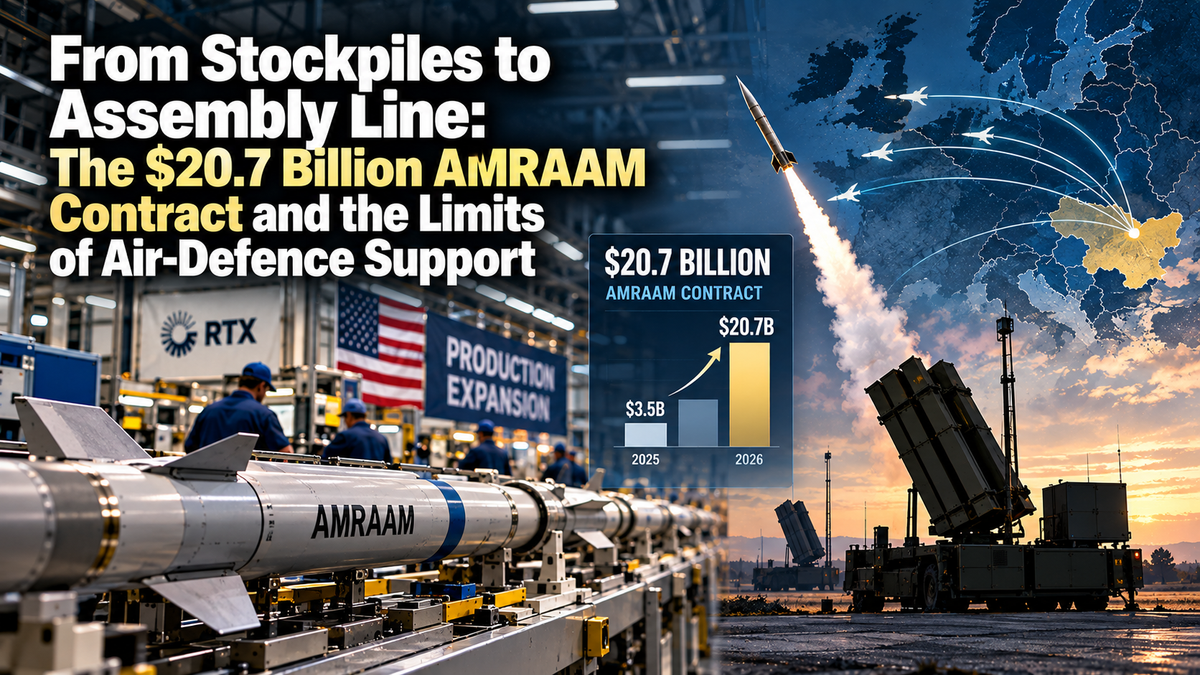
The Pentagon has awarded Raytheon, an RTX business, a five-year multiyear AMRAAM production contract with two option years, worth up to $20.7 billion. Defense News reports that this dwarfs the previous record AMRAAM award, a $3.5 billion contract from July 2025. The Department says the deal will nearly double production, and presents it as part of its "Arsenal of Freedom" campaign.
The contract follows five framework agreements Raytheon signed in February, which set long-term production targets ahead of formal awards. RTX had earlier set an annual goal of at least 1,900 AMRAAMs and says it nearly doubled output in 2025 against 2024.
BSM analysis: the operative word is "contract". Until now the story was intentions and frameworks; now there is a formal ordering structure. But between the headline and the assembly line sits a budget question, and that question decides how much this news actually weighs.
The caveat that matters more than the number
Reuters describes the award as provisional: Congress has not yet appropriated the funding needed for the full multiyear commitment. The $20.7 billion is therefore a ceiling on potential value, not money already available for production. Industry executives quoted by the agency warn that contractors may not be able to invest at scale in components and facilities until lawmakers act.
There is a second gap. Neither the Pentagon nor RTX has disclosed how many missiles the contract buys or what annual rate it implies, and nothing specifies how many additional AMRAAMs will ultimately reach Ukraine. BSM's formula for this story: a strong signal of intent, not yet a proven production fact.
Why it matters for Ukraine
AMRAAM is not only an air-to-air weapon. It is the interceptor fired by NASAMS, which Ukraine operates, and Kyiv faces acute interceptor demand as Russia leans harder on ballistic missiles and fast jet-powered attack drones. According to the digest, President Zelenskyy and NATO Secretary General Mark Rutte discussed interceptor supplies again on 24 September (source: Office of the President of Ukraine).
The contract answers that demand with an industrial decision rather than a political pledge to "send more": a shift from drawing down existing Western inventories to substantially larger sustained output. Industrial capacity, not willingness to transfer weapons, has increasingly become the binding constraint on Western air-defence support.
Why it matters for the Baltic states and the eastern flank
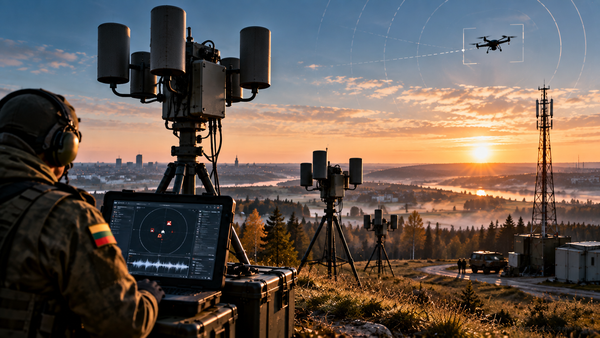
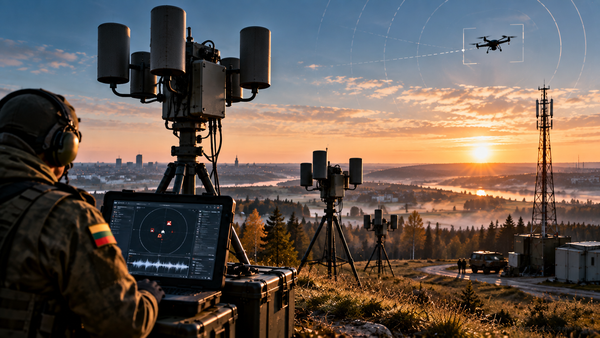
NASAMS is not only a Ukrainian story. Lithuania has operated it since 2020, signed a €234 million contract for additional systems in 2024, and reported receiving additional AMRAAM missiles for it in March 2026. It is also adding AIM-9X missiles that fire from the same launchers, and roughly a quarter of its 2026 procurement budget goes to air defence and airspace surveillance.
The same production base therefore serves allied air forces and NASAMS users alike. Higher AMRAAM throughput eases the tension between keeping NATO ready and supplying Ukraine, though it will not remove it in the near term: new capacity does not appear within a single budget cycle.
Context: air defence as a multi-year industrial problem
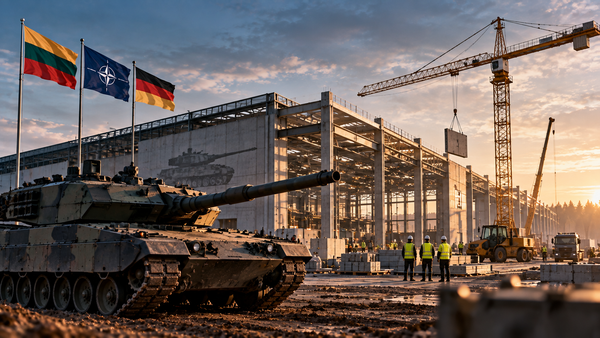
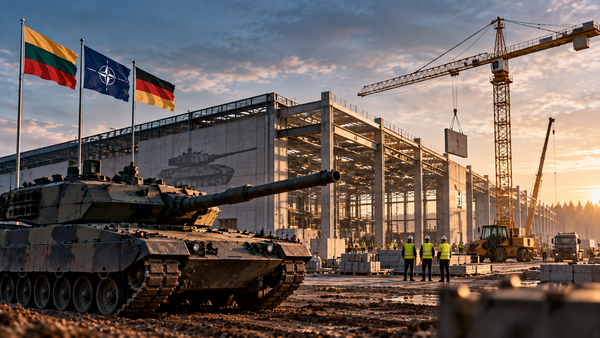
Reuters places the award in a series of large munitions deals. It follows the same pattern as the $58.6 billion Patriot interceptor contract Lockheed Martin received in July, a seven-year plan running through fiscal 2032. Two awards in a row show a shift in Washington's logic: interceptor shortages are no longer treated as a redistribution problem but as a multi-year industrial-base problem.
One further signal: Raytheon is exploring international co-production, per Defense News. For Europe, the open question is whether component production will eventually move closer to the eastern flank.
What did not change
The earlier Milrem Robotics sabotage story remains material but has not produced enough new delta since the 14:00 update. The Estonian government explicitly attributes the 15 August arson to Russian security services on the basis of KAPO intelligence, and later AP, Reuters and FT reporting corroborates that Estonia made this attribution. BSM does not repeat it as a new item.
Conclusion
The $20.7 billion contract is the strongest recent signal that the West sees interceptor shortages as structural rather than episodic. Its strength, however, depends on Congress. Until funds are appropriated, this is a ceiling, not a production line.
Three markers to watch: the funding decision, disclosure of a production rate, and any quantities earmarked for Ukraine and eastern-flank allies.
Baltic Security Monitor (osint-baltic.com) — an analytical publication on security on NATO's northeastern flank. All OSINT coefficients are calculated by an automated indexing system based on open sources.
Sources: Reuters (28 September), Defense News (29 September), RTX, Janes, Defence Industry Europe, The Defense Post, Office of the President of Ukraine.