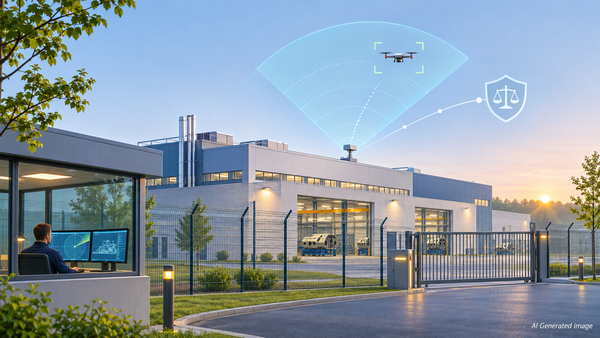
From Briefings to Barriers: Europe Starts Protecting Its Arms Factories With Rules, Not Warnings
The morning cycle produced no new MATERIAL event. Behind the quiet feed, though, sits a shift that matters more than any single incident: European governments are moving from warning about sabotage to building the legal and physical machinery to stop it. For the Baltic states, where ammunition and…

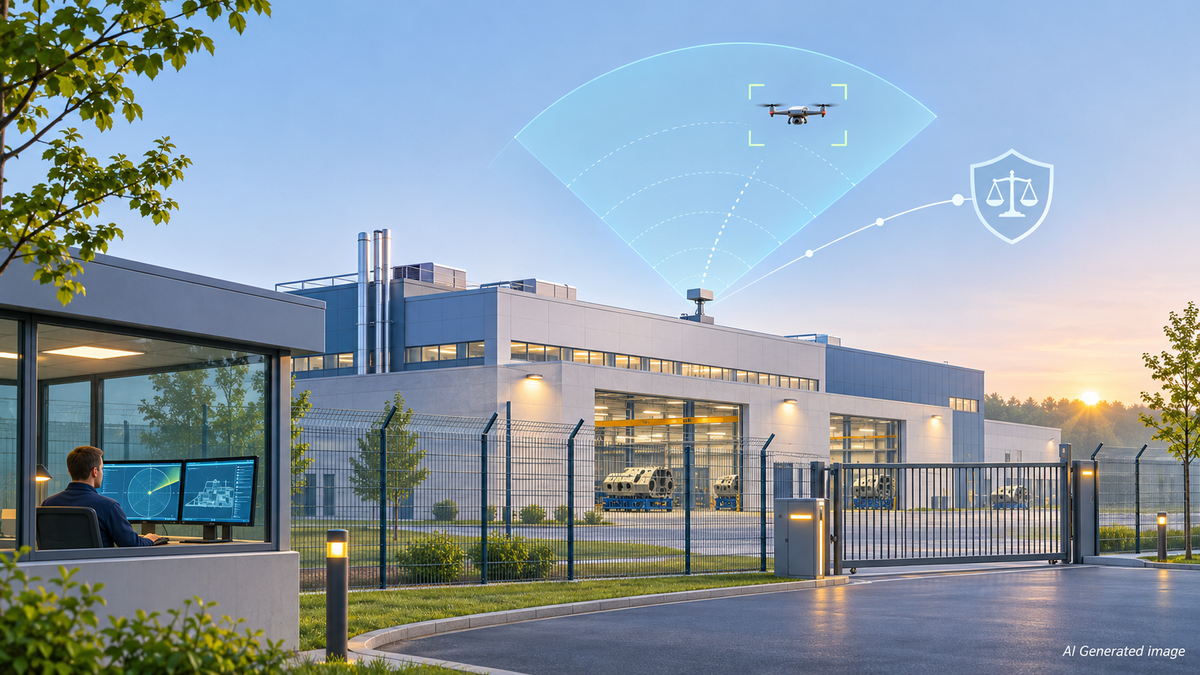
The morning cycle produced no new MATERIAL event. Behind the quiet feed, though, sits a shift that matters more than any single incident: European governments are moving from warning about sabotage to building the legal and physical machinery to stop it. For the Baltic states, where ammunition and drone production is only now coming online, this is a question for the next budget round, not the next decade.
Baltic Security Monitor | Security Watch
Cycle: 25 November 2026, 08:00 EET · window: 24 Nov 20:00 — 25 Nov 08:00 · 24h lookback
Cycle summary. New MATERIAL events — 0. Status — NO MATERIAL UPDATE, partial completion, partial monitoring coverage. Uncertainty — 🟡 4 · 🔴 0. MATERIAL candidate — French counter-drone rules (regulatory change).
Today's signal is a trajectory, not an event. Britain is running intelligence briefings for defence firms, France is letting private guards jam and neutralise drones over sensitive sites, and Poland has already fielded such systems. The threat has migrated from individual plants to people, supply chains and the airspace above the factory floor. Whoever writes the legal framework first stops reacting after the fact.
Key signal: protecting the defence industry becomes policy
🟠 1. United Kingdom: from closed-door warnings to a briefing system Status: Priority WATCH — corroboration strengthened
London's approach has been built in stages. Over the summer, the Foreign Office used a closed roundtable to warn executives of firms supplying weapons and drones to Ukraine that Russian services could target their management, staff and production sites. Several companies then tightened personnel vetting, site access controls and security for senior executives travelling abroad.
On 25 September the Cabinet Office and the Ministry of Defence announced a set of closed-door threat briefings: Security Minister Dan Jarvis for bodies representing critical national infrastructure, Armed Forces Minister Louise Sandher-Jones for defence industry groups. The government described Russia as an "enduring and significant threat" whose proxies deliberately target organisations vital to Ukraine's defence.
The current wave of reporting (AP, Financial Times) links a warning from the National Protective Security Authority and the MoD to sabotage investigations in Estonia and elsewhere in Europe. The original AP text could not be independently located during this cycle, so whether the November warning is genuinely new relative to September's announcement remains unestablished.
BSM analysis: Britain is building a permanent intelligence-to-industry channel rather than sounding a one-off alarm. What is still missing is any sign of mandatory requirements for companies — the main limit on this story. Nor is there a confirmed sabotage incident acting as a trigger.
🟠 2. France: private guards get counter-drone powers Status: MATERIAL candidate — regulatory change, entry-into-force date unconfirmed
The French parliament passed a law in August responding to a wave of drone flights over military and critical sites, including the Île Longue nuclear submarine base near Brest in December 2025. Article 14 of the updated military programming law lets operators of vital installations and their contractors jam or neutralise drones in the event of an imminent threat. Until now this was reserved for the armed and security forces, which are too thinly spread to cover roughly 1,500 sensitive sites nationwide.
The details — which categories of guards qualify, their training, the doctrine of use — are left to a Conseil d'État decree. During the parliamentary debate, left-wing groups tried to limit the powers to non-kinetic means such as jamming. According to Reuters, Paris wants an expanded list of vital sites equipped by 2027.
BSM analysis: The FT's report of an "authorisation" most likely refers to this mechanism rather than a fresh decision this week. MATERIAL status therefore hinges on a single fact: whether the decree has been published and from what date it applies. If it has, France becomes the first major European state to legally delegate drone defence of defence and critical sites to private security.
🔵 3. Defence executives in the crosshairs Status: background context
In October the FT, citing five European intelligence services, reported intensified Russian efforts to physically target senior defence-industry figures. Several executives have stepped up personal protection over the past six months, and one company moved a production site within Western Europe. The cases cited include an August episode in Sweden in which two young Russians pitched a tent near the home of Saab chief executive Micael Johansson; both were later released. Small drone makers, for whom security spending bites hardest, were singled out as the most exposed.
BSM analysis: The threat chain has lengthened — plant, then network, then people. Security is turning into a line item in production cost, and start-ups pay a disproportionate share of it.
What it means for the Baltic states
Poland is ahead of Western Europe here: infrastructure operators have already deployed counter-drone systems and train alongside military and police units. Germany, where counter-drone action remains a police function, is still reviewing how operators could be brought in.
The Baltic states sit between these models. The region's new ammunition and drone plants are exactly the small and mid-sized sites intelligence services describe as most vulnerable. France's model (delegated powers for private security under state oversight) and Poland's (joint training of operators with the security services) are two ready-made frameworks Baltic governments could adapt without a multi-year experiment. The open question is who pays — the state, the plant owner or the customer.
WATCH log
- UK / NPSA — Priority WATCH. Next: whether measures become mandatory.
- France / counter-drone — MATERIAL candidate. Next: decree publication and effective date.
- Estonia / border closure — WATCH, deduplicated (full analysis: BSM, 24 November). Next: Russian action beyond diplomacy.
- Sparta II — attribution closed (HIGH MATERIAL); technical inquiry WATCH. Next: cargo, damage extent, exact strike location.
- Italy / Libya — WATCH. Next: new operational measures.
- NATO AWACS / Poland — WATCH. Next: actual deployment.
- Norway / DESNA — WATCH. Next: signed funding commitments.
- Baltiysk / Kaliningrad — WATCH. Next: independent damage confirmation.
- Gdynia / Klaipėda / Rzeszów — WATCH. Next: investigation outcomes.
The rest of the queue (Merkury/Angara, Piorun, Starshield, Patriot, Novoshakhtinsk refinery, Tatarstan/Perm, Loviisa, Kaliningrad ferries, EU EPF, Zaporizhzhia NPP, Kerch Bridge/Moldova, BETUL 8, Gripen/PURL) was not individually re-checked this cycle; statuses carried over unchanged.
Conclusion
The quietest morning of the week revealed the month's most consistent trend. Europe has stopped asking whether its arms factories are under threat and started deciding who is allowed to bring down a drone over the production line. For a region building its defence industry almost from scratch, that answer is needed before the first incident, not after it.
A warning is a message. A rule is a defence.
Baltic Security Monitor (osint-baltic.com) — an analytical publication on security across NATO's northeastern flank.
Event statuses are assigned by an automated open-source monitoring system and independently verified.