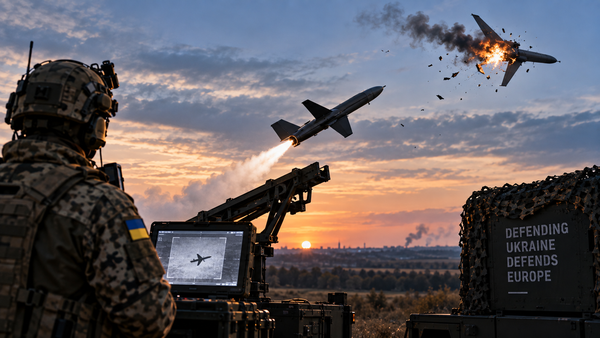
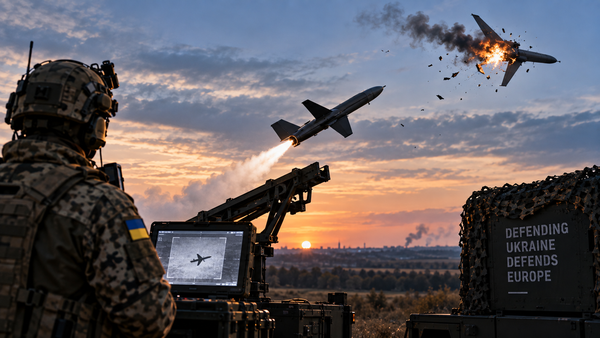
Denmark Answers a Baltic Sea Provocation by Accelerating Ukraine Aid: DKK 1.8 Billion, Mostly for Air Defence

Baltic Security Monitor | Analytical Briefing Digest: 19 September 2026, 08:00 (Europe/Tallinn)
The logic here is simple and telling: an attempt to intimidate Denmark produced not restraint but acceleration. On 18 September, days after a Russian frigate fired flares at a Danish helicopter, Copenhagen didn't just condemn the incident — it converted it into concrete funding for Ukrainian air defence. It's a "more pressure, more support" response, and it sets a political precedent for the wider Baltic.
The lead event: an accelerated DKK 1.8 billion package
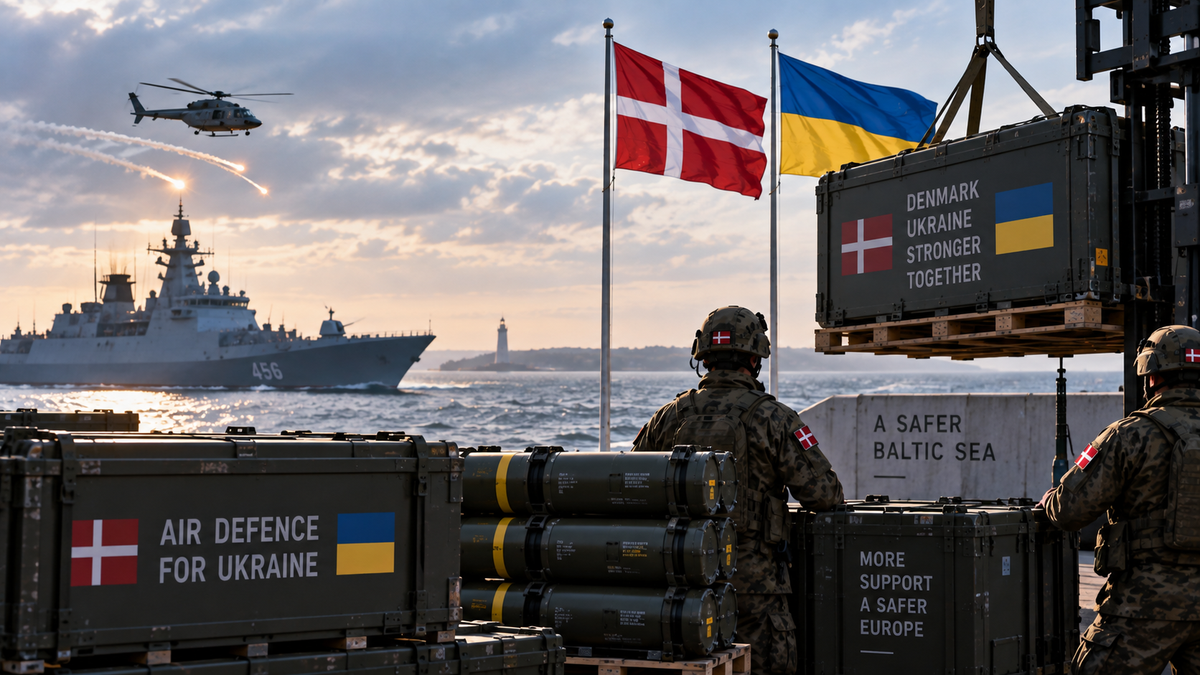
On 18 September, Denmark decided to accelerate and increase a planned military-support package for Ukraine to DKK 1.8 billion (about $276 million), directing most of the funding to air defence. Defence Minister Jeppe Bruus and Foreign Minister Lars Løkke Rasmussen announced the decision after consultations with parliament's Foreign Policy Committee. Reuters independently confirmed the decision and the amount.
Danish reporting adds a notable detail: most of the funding is intended for Ukrainian-produced air-defence capabilities — meaning the response finances Ukraine's own defence-industrial output, not only transfers of existing Danish equipment.
BSM analysis: This is the second consecutive layer of Denmark's response to the Baltic incident — first diplomatic (summoning the Russian ambassador, PM Mette Frederiksen's public condemnation of Russia's "reckless action"), now material. The ministers were explicit about the logic: attempts to intimidate Denmark into reducing support for Ukraine will instead accelerate that support. That distinguishes this package from Denmark's previous major tranche on 1 July (roughly DKK 4.4 billion for ammunition, weapons and training) — narrower in focus (predominantly air defence), but tied to a specific security incident rather than to a routine aid cycle.
Context: the frigate incident
The decision traces directly to the 14–15 September Baltic Sea episode: a Russian frigate fired two flares toward a Danish Fennec helicopter conducting routine photographic identification of the frigate in international waters off Gedser. Denmark says no radio warning preceded the firing, and one flare passed within metres of the aircraft. Defence Minister Bruus called the Russian conduct "deeply unprofessional seamanship." Russia, in turn, accused the Danish crew of "provocative actions."
PM Frederiksen tied the episode directly to a broader hybrid campaign, saying on social media that Russia wants to sow fear and division and that Denmark's answer is to stand closer together and strengthen its own and Europe's defence. Asked about Article 5 consultations, Bruus said the incident was being taken seriously but "we are not there."
Regional context
The episode fits a wider pattern: Denmark's defence intelligence service has reported that Russian warships have repeatedly sailed on collision courses with Danish vessels and pointed tracking radars and weapons at Danish helicopters in the straits linking the Baltic and North Seas. Denmark remains one of Europe's most consistent Ukraine donors, having earmarked DKK 64.8 billion ($8.6 billion) for military support to Ukraine over 2023–2028.
For the wider region, the significance goes beyond the DKK 1.8 billion figure itself: a dangerous encounter involving a Russian warship in international Baltic waters has produced an immediate material response from a Baltic NATO state, rather than diplomatic protest alone.
Bottom line
Key implementation questions remain open: which Ukrainian air-defence systems will be financed, in what quantities, and on what delivery timetable. Public reporting does not yet clarify how much of the DKK 1.8 billion represents genuinely new funding versus accelerated, previously planned spending. Still, the decision sets a useful political precedent: Russian attempts to intimidate European supporters of Ukraine can be answered by directly increasing Ukraine's military capacity rather than treating each incident as an isolated bilateral matter.
Baltic Security Monitor (osint-baltic.com) — an analytical publication on security along NATO's north-eastern flank. Prepared from open sources (Reuters, Ritzau/DK Nyt, Sermitsiaq, Danish government, Euronews, RTÉ) and an automated monitoring system.