Congress Sends Trump the Toughest Russia Sanctions Package of His Second Term: Bill Now Awaits His Signature

Baltic Security Monitor | Analytical Briefing
Event: 16 September 2026 · Published: 17 September 2026
What matters here isn't passage itself — it's that this is Washington's first major legislative breakthrough on Ukraine support in nearly two years of relative gridlock. The House approved the bill 262–159, and it now heads to Trump's desk. But congressional passage by itself doesn't impose a 100% tariff on China, India or anyone else — it only grants the president the authority to do so. The real weight of this package won't show up today; it will show up in how aggressively the administration chooses to use that authority.
What happened
Late on 16 September, the U.S. House of Representatives passed the Lindsey O. Graham Sanctioning Russia and Iran Act of 2026 by a vote of 262–159, completing the bill's passage through Congress after the Senate approved it 86–11 last month. The legislation, named for Republican Senator Lindsey Graham, who died unexpectedly in July after spending more than a year negotiating the bill, now heads to President Donald Trump, who is expected to sign it.
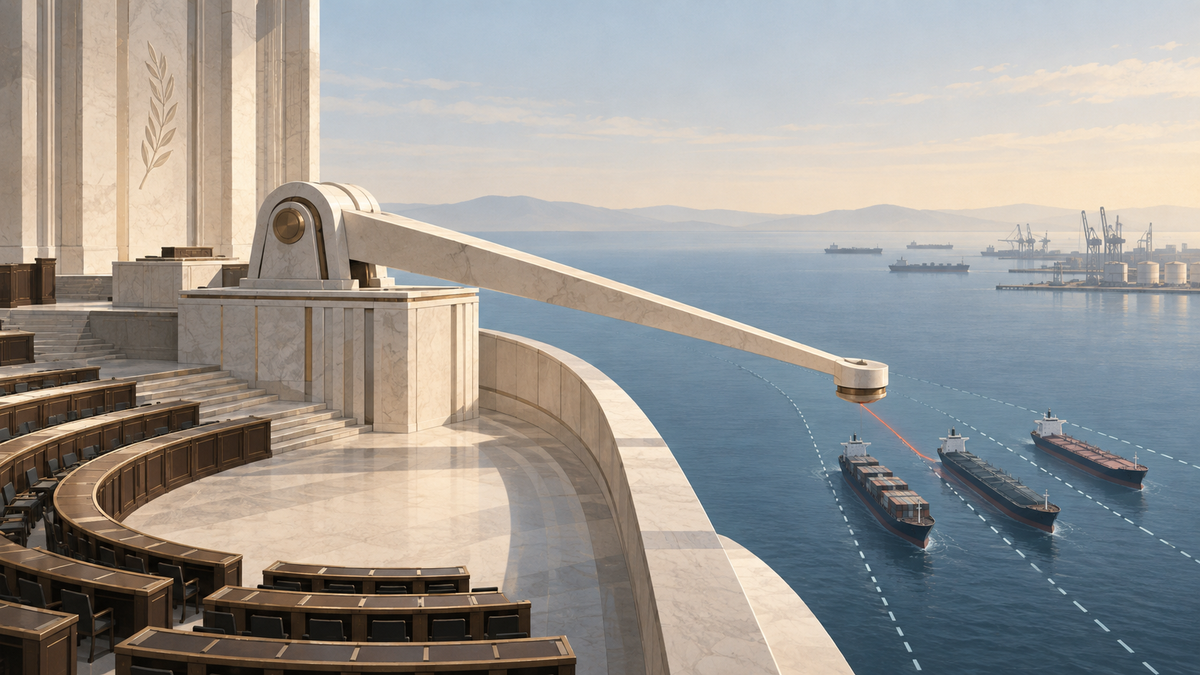
The bill targets Russian officials, banks, the energy and defense sectors, and Russia's shadow fleet of tankers sustaining energy exports despite sanctions. Its potentially most consequential provision gives the president authority to impose tariffs of up to 100% on the top purchasers of Russian oil and natural gas, aimed particularly at China and India. An exception applies to countries importing less than 15% of Russia's natural gas exports that have taken significant steps to reduce those imports; the legislation also includes presidential waiver mechanisms.
BSM analysis: Fifty-eight Democrats joined most Republicans to pass the bill. Republican Michael McCaul, who worked on the legislation with Graham, said on the House floor that it would force Putin to the negotiating table. Democrat Don Beyer of Virginia criticized the tariff authority as lacking guardrails, oversight or an expiration date — calling it a "loophole" that lets the president effectively define any country as a facilitator of sanctions evasion and hit it with tariffs up to 100%. Notably, roughly a dozen Republicans privately lobbied to strip the new tariff powers out of the bill, worried about inflation ahead of the midterms; Speaker Mike Johnson and his leadership team rejected those proposed changes.
What's still uncertain
🟡 The actual economic effect will depend heavily on how aggressively the administration uses the new tariff and waiver authorities. A statutory ability to impose 100% tariffs is materially different from actually applying those tariffs to China, India or other major Russian-energy purchasers.
🟡 Aggressive secondary-tariff implementation could materially alter Russian oil trade, but could also produce substantial U.S. trade friction with major economies and partners. That creates political incentives for selective enforcement, negotiated reductions in Russian-energy purchases, or waivers rather than immediate maximum tariffs across all eligible states.
Regional context
Russia's ability to sustain its war against Ukraine — and later regenerate forces relevant to NATO's eastern and northeastern flank — depends heavily on energy-export revenue and continued access to financial, shipping and procurement networks. This bill therefore attacks a different layer of Russia's military sustainability than weapons assistance to Ukraine: rather than adding battlefield systems, it tries to raise the economic cost of financing Russia's war and force third countries to choose between large-scale Russian-energy purchases and normal-terms access to the U.S. market.
For Ukraine, congressional passage also breaks nearly two years of relative legislative gridlock on major Ukraine-related measures in Washington. President Zelenskyy had personally pressed lawmakers to approve the bill.
Bottom line
The next significant marker won't be Trump's signature itself — it will be the first implementing sanctions or secondary-tariff decisions. Those will show whether this law becomes a real instrument of economic pressure on Russia or remains, in practice, a largely declarative authority the administration applies selectively.
Baltic Security Monitor (osint-baltic.com) — an analytical outlet covering security on NATO's northeastern flank.
Compiled from open sources and BSM's automated OSINT monitoring system.