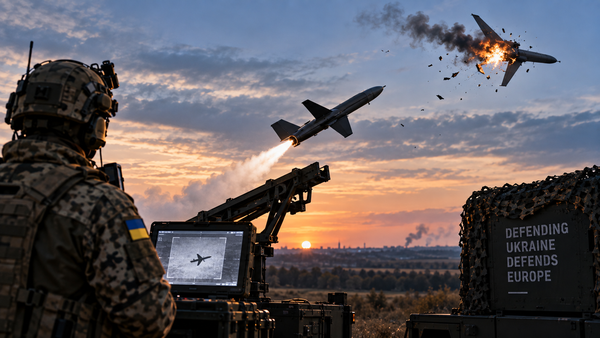
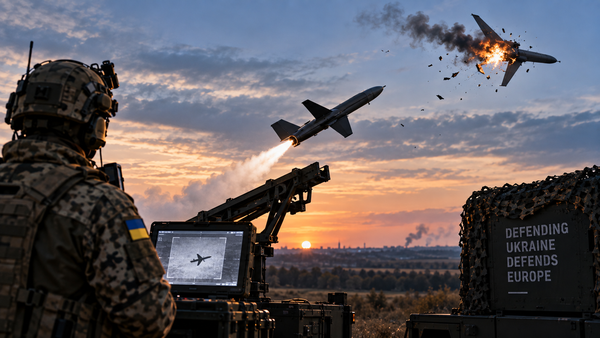
Cleared to Shoot, Except Over People

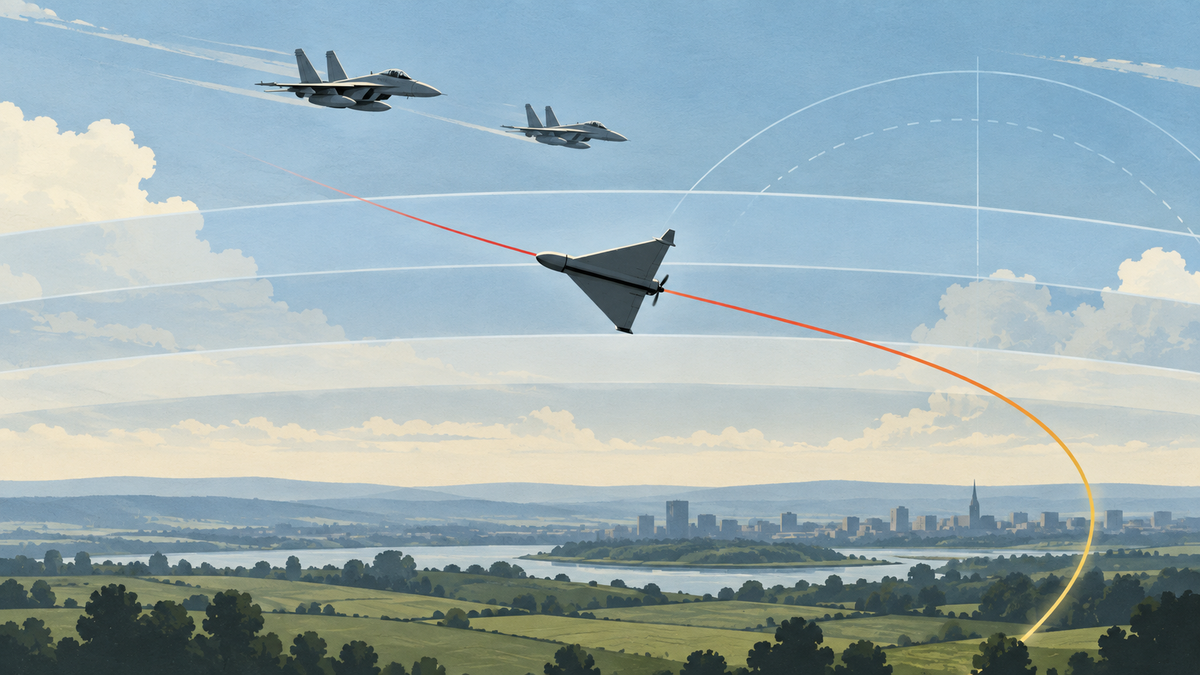
Baltic Security Monitor | Analytical review Material update snapshot: 9 September 2026, 08:00 Europe/Tallinn (processed 07:57:17–07:59:30)
Cycle indicators
| Indicator | Value |
|---|---|
| Cycle type | MATERIAL UPDATE (8 September event, caught inside the 24-hour lookback) |
| Category | Border / Air / NATO eastern flank |
| Materiality | medium-high |
| 🟡 WATCH signals | 3 |
| 🔴 WARNING signals | 0 |
| Composite / Force Posture / Logistics / Info-Cyber / Border-Air-Maritime | not computed in this cycle |
Romania has a law permitting the destruction of drones in its national airspace, and Romania uses it — three shot down in three days in July, a fourth by a Spanish F/A-18 in August. Yet on 8 September a Shahed-type aircraft ran from Iași deep inland to a point 18 km north of Roman and then left unhindered for Moldova. The difference lies neither in authority nor in aircraft. The earlier targets flew over the Black Sea and empty borderland; this one flew over towns. Permission to fire already exists across NATO's flank. What does not exist is a geography in which it can actually be used.
What happened
🟡 1. The track: Ukraine — Moldova — Romania — Moldova
Romania's Ministry of National Defence reports that an aerial target entered national airspace at 16:37 on 8 September, roughly 30 km southeast of Iași. The Moldovan account records the aircraft leaving Moldovan airspace near Zagarancea at that same hour, heading for Iași County.
Two Spanish F-18s based at Mihail Kogălniceanu under NATO Enhanced Air Policing scrambled at 16:39 — two minutes after entry. Between 16:47 and 16:48 Romanian radar held the target roughly 18 km north of the city of Roman, deep behind the border zone. RO-Alert warnings went out across Iași, Neamț, Suceava and Botoșani counties and northern Vaslui. Iași International Airport suspended take-offs and landings; airport director Romeo Vatră clarified that flights were not cancelled, only halted until the situation could be clarified.
Radar contact was lost after 17:00 and regained six minutes later inside Moldovan airspace. The aircraft came down near Mihăilenii Vechi in Moldova's Rîșcani district, some 25 km east of the Romanian border near Botoșani County. Moldovan police reported four small fires and no casualties. Moldova had temporarily closed its own airspace during the overflight.
BSM analysis: the decisive figure is neither 30 km from the border nor 25 km back across it. The decisive figure is 18 km north of Roman. Roman sits roughly 100 km from the Ukrainian frontier. This is interior Romania — towns, roads, a working civil airport nearby. The aircraft spent about twenty-five minutes inside NATO airspace, under allied fighter escort, and departed intact.
🟡 2. Why it was not engaged: the law exists, the geography does not
Romania is not a country that hesitates to shoot. Parliament passed the drone shoot-down law in February 2025 and the president signed it in May. In July 2026 Bucharest used it in earnest for the first time in its history — three aircraft destroyed in three days, after which Russia's ambassador was summoned over repeated violations. On 16 August a Spanish F/A-18 on Air Policing duty destroyed a drone that had crossed from Moldova about 24 km north of Galați; the full detection-to-kill sequence took seventeen minutes, and the pilot fired only after separate engagement authorisation. NATO spokesman Colonel Martin O'Donnell said afterwards the aircraft appeared to be Russian.
Now look at where all those successes happened: the Black Sea, north of Galați, empty borderland. Then set them against 29 May 2026, when a Russian drone struck a residential building on Romanian soil and air defences did not engage it. Romanian officials explained that outcome through two interlocking constraints — rules of engagement requiring positive identification and authorisation before firing over populated areas, and a capability gap in detecting and reliably intercepting low, slow Shahed-class airframes.
BSM analysis: 8 September reproduced the May logic exactly. While the target was over water or open field, it was destroyed. Once it stood over Iași and turned toward Roman, the kinetic option became politically and technically more expensive than letting it run. This is not Bucharest losing its nerve or NATO malfunctioning. It is the direct consequence of an alliance that still lacks harmonised counter-drone rules of engagement over populated areas. The authority is national, the risk is local, and the decision window is minutes long.
The practical conclusion is unpleasant and simple. An operator seeking to cross NATO airspace unpunished should not fly low or fast. He should fly over people.
🟡 3. The assurance and the track, same day
Also on 8 September, Yuri Ushakov said after an hour-long Putin–Trump call that, given speculation about Russia's supposed hostile intentions toward European countries, it had been underlined that Moscow has no aggressive plans regarding Europe. Judging by wire publication times, the statement landed some hours before RO-Alert messages went out over Iași.
The statement's own context is fresh: last week the German government attributed to Russia an attempted attack on Leipzig/Halle airport in August using an explosives-laden drone, after which Moscow closed the German consulate in St Petersburg in retaliation.
BSM analysis: BSM asserts no causal link between the call and the flight path — there is none and there cannot be. What matters is that the statement and the event fell inside the same twenty-four hours, which hands us a clean measuring instrument. "No aggressive plans regarding Europe" is now a claim testable in kilometres rather than intentions. On 8 September the figure was roughly one hundred, inland into NATO member territory, with a civil airport stopped along the way.
For the record: attribution is not publicly complete. Moldovan authorities classified the airframe as Shahed-type; operator and launch point have not been established forensically. BSM will not call this a Russian strike on NATO before that attribution exists — which is precisely why the accurate formulation is "a consequence of the Russian campaign against Ukraine," a phrase that holds regardless of what the forensics conclude.
Verification corrections to the update
The AP citation. The update presents an Associated Press item as independent confirmation of the Romanian incursion, but the URL given resolves to an AP war roundup headlined on Putin's assurances to Trump about Europe. The Romanian track is most likely mentioned inside that same roundup, but as a discrete confirming source it is weak. Firmer anchors: the Romanian MoD releases, the Moldovan MoD account, and Kyiv Independent's reporting.
The 26-versus-9 figure. The claim of 26 unauthorised penetrations of Romanian airspace during 2026 against nine in all of 2025 is sourced to the mapn.ro homepage rather than a specific document, and the exact count could not be independently confirmed. The direction holds: back in May 2026 Romania's Defence Ministry gave ABC News data showing 2026 on course to set records across four separate categories — fighter scrambles, airspace violations, munition-fragment recoveries and the intensity of Russian strikes near the NATO frontier. Keep the point, footnote the number.
Yesterday's Kyiv figures. For cycle completeness: the casualty count from the 8 September strike that the previous BSM item worked with — six injured — rose through the day, with Kyiv Independent reporting five killed and 29 injured. This confirms yesterday's standing rule against building analysis on strike composition or consequences inside the first six to eight hours.
Key signal: the same problem along the whole flank
Romania is not an exception here but the most experienced case. The task is identical for Poland and the Baltic states: detect, classify and decide within minutes the fate of a relatively slow unmanned aircraft entering alliance airspace while Russian strikes on Ukraine are under way.
Set three answers to one problem side by side.
Romania took the legal and kinetic route — and ran into the geography of populated areas. Poland, from 10 September, meaning tomorrow, shifts to an administrative solution: the three-month EP R134 restricted zone over the east of the country, ground level to three kilometres, giving air defence freedom of action without real-time coordination. The Baltic states, at presidential level in May 2026, asked NATO to move Baltic Air Policing from a policing posture to a full air defence mission with counter-drone capability — changing neither a law nor a map but a mandate.
BSM analysis: three countries are solving one problem with three different instruments because no shared alliance instrument exists. Romanian law does not operate over Lithuania, the Polish zone does not cover Botoșani, and the Baltic request for a mandate change remains a request. For now the flank has national answers to a cross-border problem, and every incident of this kind exposes the seams between them.
Regional context
- Capability. Poland and Romania are both fielding the American Merops interception system — a sign that both consider a fighter aircraft a disproportionately expensive instrument against an airframe costing tens of thousands of dollars.
- The 16 August precedent. That engagement was the fourth drone shot down over Romania this year, following three intercepts by Romanian F-16s in July.
- Diplomatic backdrop. Zelensky said the envoys brought Kyiv some genuinely worthwhile ideas and hopes to meet Trump around 20 September, alongside the UN General Assembly. Against the same backdrop Kyiv is asking partners for 300 Patriot missiles, 500 air-to-air interceptors and $2 billion for drones. Peskov, meanwhile, states that Russia believes itself close to winning and is not abandoning its military objectives.
Conclusion
8 September produced three findings that deserve to be held apart from one another.
First, depth. A hundred kilometres into NATO member territory, a civil airport stopped, RO-Alert across five counties — this is no longer debris on the border strip.
Second, the reason for non-engagement. It lies neither in mandate nor in aircraft but in the alliance's lack of rules for using weapons over populated areas. Romania has now demonstrated that gap twice: on 29 May and on 8 September.
Third, the calendar. A statement that Russia holds no aggressive plans toward Europe and forty minutes of fighter escort over Iași fit inside the same day.
Poland's EP R134 zone opens in one day. A possible Zelensky–Trump meeting is eleven away. Every country on the flank already has permission to fire. None of them has an agreed answer to the simple question of what to do when the target flies not over the sea but over a town.
Baltic Security Monitor (osint-baltic.com) — an analytical publication on security along NATO's northeastern flank. All OSINT coefficients are produced by an automated indexing system drawing on open sources. Every item above was verified independently of the digest.