Canada and Ukraine Launch a Long-Term Defence-Industrial Partnership: Ottawa Adds C$350 Million for Air-Defence Interceptors and Joins Project Freya


Baltic Security Monitor | Analytical Briefing Event: 10 September 2026 · Published: 11 September 2026
The headline number isn't the point — the shift in logic is. Canada and Ukraine didn't just sign another aid package; they signed a long-term framework for jointly producing drones, electronic-warfare tools and priority munitions, alongside a concrete, immediate contribution to air-defence interceptors. For regions that depend just as heavily on affordable, high-volume drone and missile interception — the Baltic states included — this is an industrial precedent worth watching regardless of the dollar figure.
What happened
On 10 September in Calgary, during Volodymyr Zelenskyy's official visit, Canadian Prime Minister Mark Carney and the Ukrainian president signed a package of documents that included a 100-Year Partnership Declaration, stating an intent to elevate relations to a Comprehensive Strategic Partnership, and a separate joint declaration on defence and security cooperation. Its core is a long-term framework for joint production of uncrewed systems, counter-drone technology, electronic-disruption capabilities and priority munitions, building on an August 2025 letter of intent and combining Ukrainian battlefield experience with Canadian manufacturing, software and AI capacity.
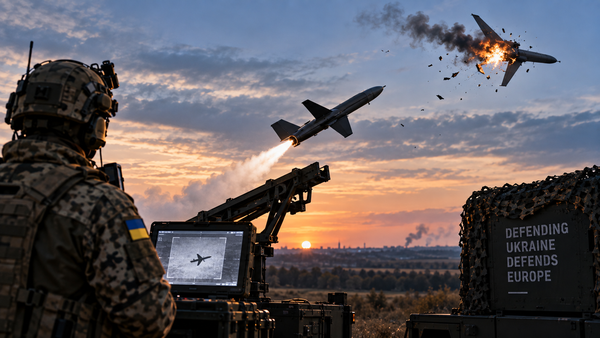
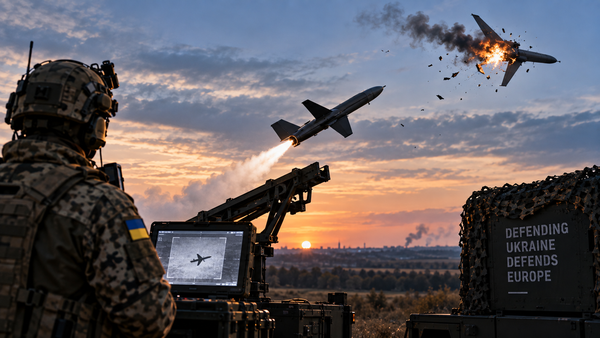
Separately, Carney announced roughly C$350 million for critical air-defence interceptors through the U.S.-run JUMPSTART mechanism, which lets third countries procure American equipment for transfer to Ukraine. Canada also confirmed a technological contribution to Project Freya (reported elsewhere as FREYJA) — Ukraine's pan-European effort to build a lower-cost, high-volume interceptor against Russian ballistic missiles. The broader package adds nearly C$435 million in new EBRD loan guarantees for Ukrainian energy security, including winter gas purchases.
BSM analysis: Canada's Defence Drone Initiative Marketplace, which has already qualified nearly 400 vendors and issued initial contracts worth up to C$50 million, creates an industrial mechanism that can scale toward Ukraine's needs over time. That's precisely the structural piece missing from previous support rounds, which relied mostly on drawing down existing allied stockpiles.
What's still uncertain
🟡 Project Freya/FREYJA could become significant if it actually delivers a substantially cheaper ballistic-missile interceptor at production scale — but Canada has not disclosed a deployment timetable, expected unit cost, or demonstrated performance.
🟡 The industrial agreement opens a path to larger production volumes, but it doesn't yet specify which systems enter serial co-production first, what share of output goes to Ukraine, or delivery schedules.
Regional context
The package was announced against a backdrop of sharply intensified Russian strikes on civilian infrastructure — at least four people were killed and more than 80 injured across Ukraine on the same Thursday, with the worst strike hitting a shopping center in Pavlohrad. That came after U.S. special envoys Steve Witkoff and Jared Kushner, who had spent the weekend shuttling between Kyiv and Moscow, departed the region. Zelenskyy has also been asking Norway and the UK for more air-defence support, citing a global shortage of air-defence systems and interceptor missiles.
For the Baltic region, the relevance isn't the dollar figure but the model. The same capabilities — affordable high-volume drone interception, electronic disruption, scalable uncrewed-systems production — are increasingly central to defence planning against Russian mass-UAS and hybrid threats on NATO's northeastern flank. If the Canada-Ukraine industrial framework actually delivers serial output, it becomes a template other allies bordering the Baltic Sea could replicate.
Canada has already provided over C$8.5 billion in military support and over C$750 million toward Ukraine's recovery since 2022, imposed over 3,500 sanctions, and extended its Operation UNIFIER training mission to 2029 — so this package slots into an already-established trajectory rather than a one-off gesture.
Bottom line
What distinguishes this announcement from earlier support rounds is the attempt to shift part of Ukraine's assistance from "hand over from stockpile" to "build joint production." Whether that actually produces serial output quickly — and whether Project Freya becomes a genuinely affordable, high-volume ballistic interceptor — will be shown over the next year, not by the Calgary announcement itself.
Baltic Security Monitor (osint-baltic.com) — an analytical outlet covering security on NATO's northeastern flank. Compiled from open sources and BSM's automated OSINT monitoring system.