Twenty-Eight Blackouts: Zaporizhzhia Back on Diesel
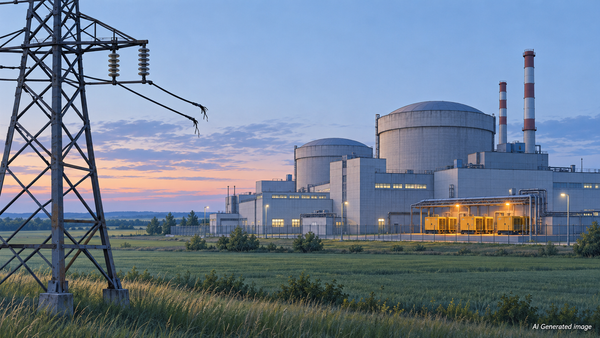
Europe's largest nuclear power plant has once again lost every external power connection. The IAEA is negotiating with Ukraine and Russia over a ninth localised ceasefire to repair the single line the plant had been relying on. There is no accident, but the safety margin is once more counted in…

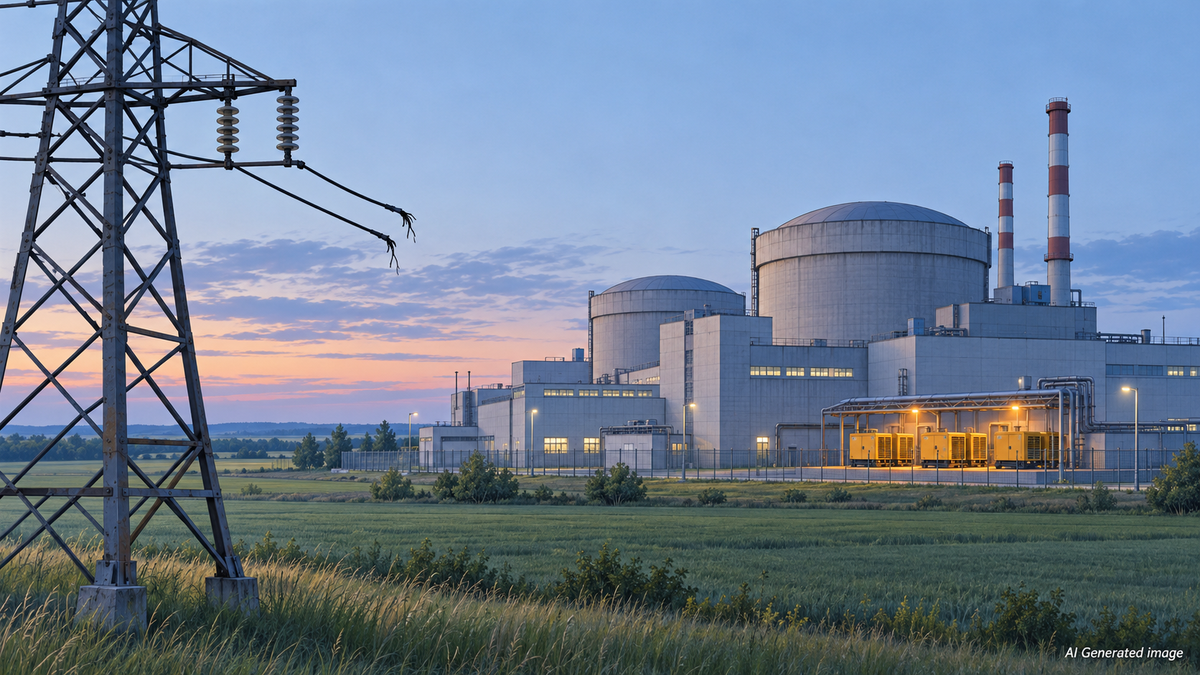
Baltic Security Monitor | Material Update
27 November 2026
Europe's largest nuclear power plant has once again lost every external power connection. The IAEA is negotiating with Ukraine and Russia over a ninth localised ceasefire to repair the single line the plant had been relying on. There is no accident, but the safety margin is once more counted in days.
What happened
According to IAEA Update 377, published on 26 November, the Russian-occupied Zaporizhzhia plant lost its link to its last remaining external line, the 330 kV Ferosplavna-1, at 05:28 local time on 25 November. The cause was reportedly military activity.
Emergency diesel generators on standby started automatically. The agency estimates there is enough fuel to run two generators in their current configuration for more than ten days. UPI reports that on-site heating has been suspended.
This is the 28th complete loss of off-site power at the plant since the war began.
IAEA Director General Rafael Grossi described the plant's off-site power as extremely precarious, given its dependence on one line and its position on an active front. He urged both sides to stop military activity against electrical infrastructure and allow Ferosplavna-1 to be repaired.
BSM analysis: "one line plus a front line" means every reconnection is only a pause before the next outage. Nine IAEA-brokered local truces are not a record of progress. They show a problem with no technical fix in the absence of a political one.
A familiar script
This autumn's script is close to a rerun. On 20 August the plant lost the same Ferosplavna-1 line and spent more than two weeks on diesel, with the IAEA warning towards the end that fuel stocks were running low. Power returned on 7 September, after Ukrainian engineers repaired the line under a local ceasefire.
Now the cycle has restarted: line lost, generators running, the IAEA brokering a window of quiet for repair crews.
Why it matters for the Baltic states
For Estonia, Latvia and Lithuania, Zaporizhzhia is not a distant Ukrainian story. It tests whether international nuclear-safety mechanisms can function during a war waged by a nuclear-energy state on NATO's doorstep. The IAEA remains one of the few channels through which Moscow and Kyiv agree on anything practical, and each new truce shows how narrow that channel is.
There is also a civil-protection dimension: radiation monitoring and nuclear-incident response already feature in Baltic contingency planning, and repeated blackouts at the plant keep that agenda live.
Running on emergency generators does not mean a radiological accident. It means the plant is operating without the backup its safety systems were designed around.
What to watch
- Whether a ninth local ceasefire is agreed, and how quickly.
- Diesel fuel levels on site.
- The status of the second, 750 kV Dniprovska line, which the plant has effectively stopped relying on.
Conclusion
Twenty-eight blackouts have turned an emergency into a schedule. That is exactly why it must not become routine: nuclear safety that hangs on one wire and the next truce is not a system. It is luck that has held so far.
A nuclear plant on the front line has no backup plan. It has a fuel reserve.
Baltic Security Monitor (osint-baltic.com) — an analytical publication on security across NATO's north-eastern flank.
Based on automated open-source monitoring with independent verification.