War in Ukraine, August 2026: Why Russia's Missiles Aren't Winning the War

Baltic Security Monitor | Analytical Brief Period: mid-August 2026
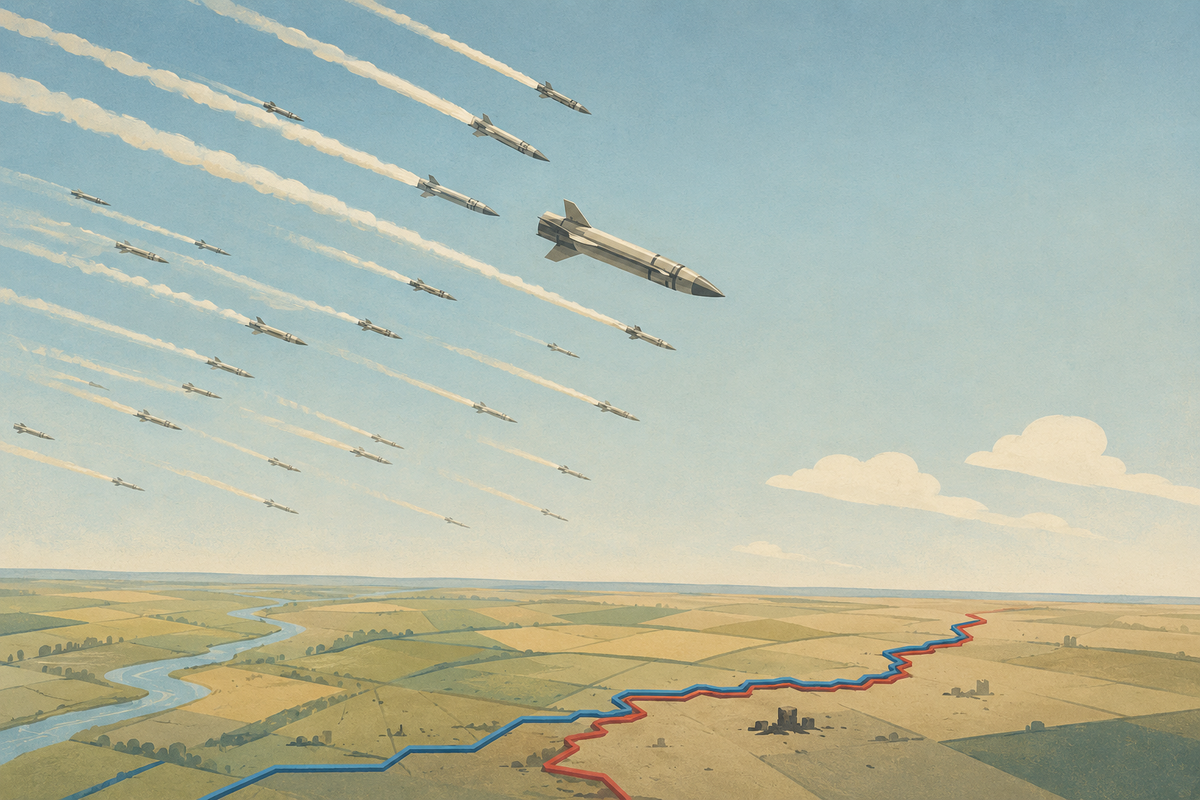
Russia can reportedly launch up to 100 ballistic and hypersonic missiles a month without significantly depleting its stockpiles, and it is building reserves for a winter campaign against Ukraine's power grid — an impressive number on its own. But it answers the wrong question. What matters isn't the size of the salvo, it's whether that volume converts into operational results on the ground. So far, it largely doesn't.
Strike volume versus results on the ground
Ukrainian intelligence assesses that Russia can fire up to 100 ballistic missiles a month without meaningfully drawing down its arsenal, and is stockpiling for a large-scale winter campaign against energy infrastructure — last winter's equivalent campaign caused an estimated $70 billion in damage. (The New Voice of Ukraine / Ukrainska Pravda, Jun–Aug 2026)
At the same time, on 12 August Ukraine announced the completion of an eight-month operation on the Oleksandrivka axis, recapturing 745 km² and 26 settlements across the Dnipropetrovsk, Donetsk and Zaporizhzhia regions — the Presidential Office says roughly 9,550 Russian soldiers were killed in the process. Overnight on 16 August, a Russian strike destroyed Kyiv's largest book market, Pochaina, and damaged the ArcelorMittal steel plant in Kryvyi Rih; across that night's combined strikes on several regions, two people were killed and at least 16 injured. (United24 Media, Euromaidan Press, Kyiv Independent, 12–16 Aug 2026)
BSM analysis: the logic here is simple and checkable — if Russian air and missile forces truly dominated the skies and were hitting their operational objectives, Ukrainian forces couldn't simultaneously run battalion-level offensive operations with measurable results. The eight-month length of the Oleksandrivka operation doesn't point to Ukrainian dominance, but it doesn't point to the paralysis some panicked commentary describes after every new wave of strikes either — it's slow positional attrition happening despite the intensity of Russian bombardment, not because of it.
The Baltic front: same pattern, different genre
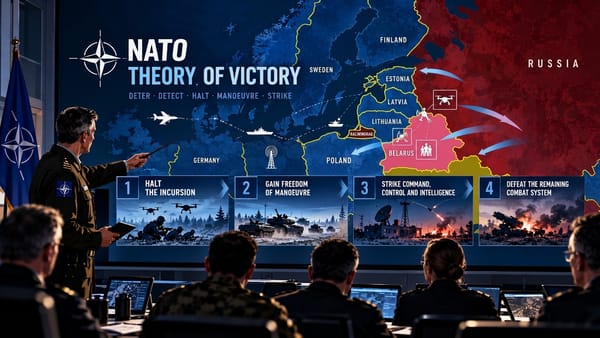
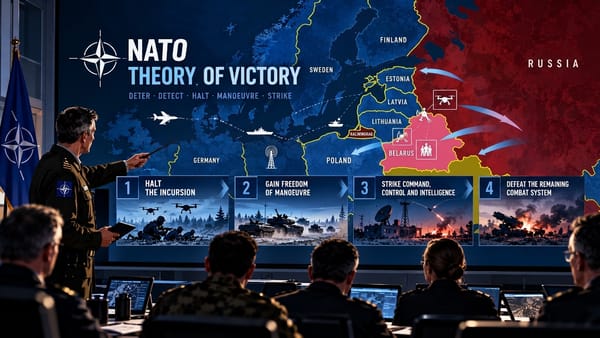
The Baltic region is living through a structurally similar scenario, cast in a different genre. Lithuania's president warned in July that intelligence had identified signs of possible Russian provocations against energy or transport infrastructure in the Baltic states — with the caveat that these were likely to be limited rather than large-scale attacks. (Belfer Center, Russia-NATO Baltics Scenarios)
This isn't invasion preparation — it's the kind of threat Russia can actually afford: sabotage, drones, information operations. Analysts note Moscow is using grey-zone tactics and open threats of military action precisely to weaken NATO cohesion and assert a de facto veto over its neighbours' geopolitical choices, without crossing the threshold that would trigger Article 5.
BSM analysis: the line between hysteria and analysis is concrete here — focus on what shifts the balance of power, not on headline noise. Missile and drone counts are inputs; the strategic judgment is what you draw from them. Russia now has missile capacity at a scale it didn't have before, but it still hasn't shown the operational ability to convert that capacity into achieving its stated objectives — not on the Ukrainian front, and not as a realised (rather than merely announced) threat to the Baltic region. That distinction is what separates panic from rational preparation.
Bottom line
Mid-August 2026 data doesn't support either a story of Russian triumph or one of imminent Ukrainian collapse. It supports a duller but more accurate conclusion: strike volume is growing faster than operational payoff, while Ukraine keeps demonstrating an ability to run local offensive operations even as its own rear comes under sustained bombardment. This is a war of attrition on both sides at once, and its outcome will keep being decided not by headline missile counts, but by who converts resources into results faster.
Baltic Security Monitor (osint-baltic.com) — an analytical outlet covering security on NATO's northeastern flank. Casualty and territorial figures are drawn from official statements by a party to the conflict (the Ukrainian Presidential Office) and are not independently verified; the toll from the 16 August strikes combines multiple cities and needs refinement on casualties specifically at the Pochaina book market.