The Line Washington Drew: BSM Security Watch, August 12

Baltic Security Monitor | Analytical Review BSM Security Watch — 12 August 2026, 08:00 (Europe/Tallinn) Run status: NO MATERIAL UPDATE — no new development met BSM's materiality threshold since the previous scheduled run
Flagged 🟡 (WATCH): 5 · 🔴 (WARNING): 0
A "no material change" run status doesn't mean an empty day. This cycle's lead story is already flagged WATCH by BSM itself: an FT report that Washington personally pressed Kyiv to stop strikes on CPC-linked tankers near Novorossiysk. BSM checked that claim with its own research and found something the bulletin missed: independent corroboration of the deal's substance from Bloomberg — not from 31 July, not attributed to Vance personally, but from an agreement Bloomberg had already described four days earlier. The verification status needs correcting, not leaving as "unconfirmed."
FT: Washington pressed Kyiv on CPC tanker strikes at Novorossiysk
OSINT score: WATCH 🟡 — potentially high significance
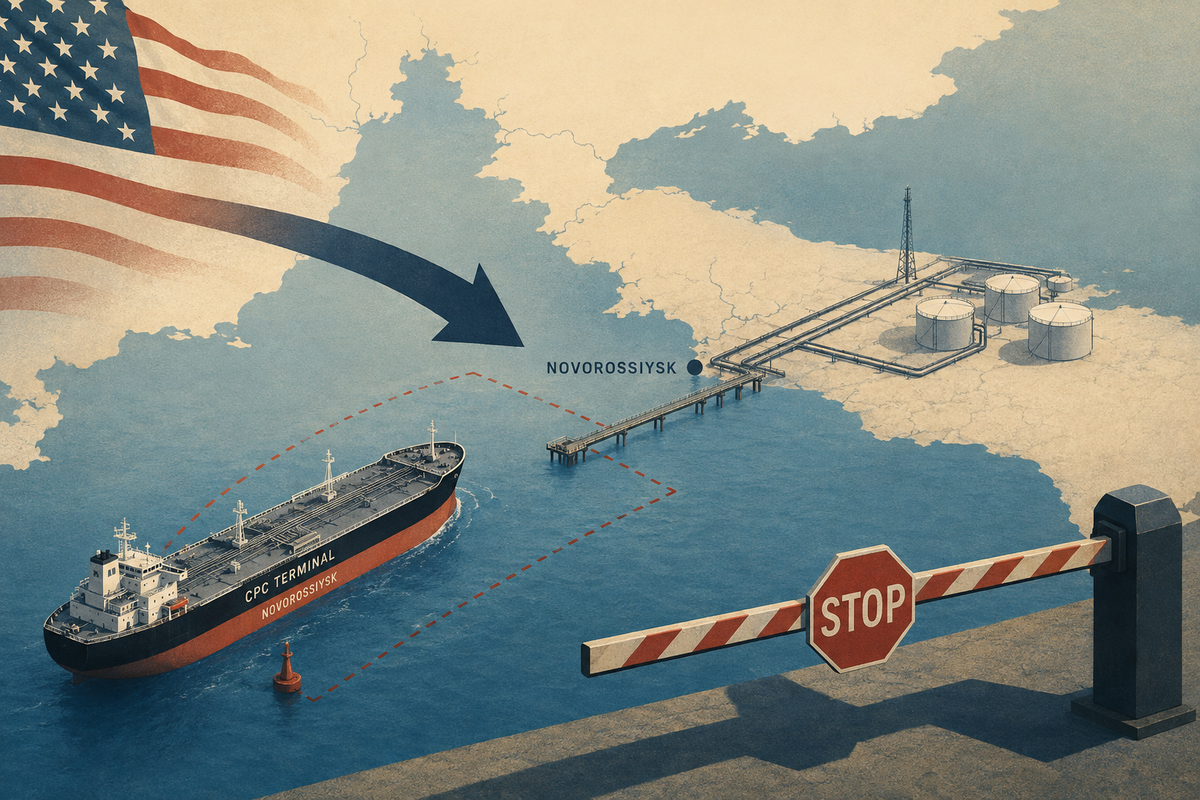
The Financial Times reported on 12 August that US Vice President JD Vance asked President Volodymyr Zelenskyy during a 31 July call to halt Ukrainian strikes on tankers using Russia's Novorossiysk port when connected to the Caspian Pipeline Consortium (CPC) and non-Russian cargo. According to FT, Kyiv complied and has refrained from such attacks since then, while continuing strikes against other Russian energy targets.
Bulletin's verification status: the specific Vance–Zelenskyy request and Ukrainian agreement are currently sourced to FT alone; no White House, Ukrainian presidential, Pentagon or independent Reuters/AP confirmation was found in this run.
BSM analysis — a verification correction. BSM's own search finds that the substance of this agreement was already documented by a separate outlet earlier: Bloomberg reported on 8 August, citing a US official, that Kyiv had agreed not to strike the CPC terminal at Novorossiysk or tankers carrying non-Russian cargo, following a string of July strikes that had halted loadings and pressured global commodity markets. Bloomberg also described the mechanism: Kyiv set up contact points for commercial carriers to guarantee safe passage for vessels that are not under Ukrainian sanctions, not Russian-owned, and not carrying Russian cargo. Kazakhstan and CPC had already formally protested the strikes earlier in July, and the chair of a relevant US House subcommittee warned on 23 July that further strikes on CPC infrastructure would "not be tolerated."
In other words: the targeting-restriction agreement itself is already corroborated fact, not just an FT claim. What remains unconfirmed is the bulletin's narrower claim — that Vance specifically, on 31 July specifically, delivered the request by phone. BSM records that distinction explicitly: the substance is material and backed by two independent sources (FT, Bloomberg); the specific channel and date of communication are not.
Why this matters: if the FT detail holds, it would be direct evidence that US political pressure — driven by commercial interests (Chevron and ExxonMobil hold stakes in CPC) and global energy security — is actively shaping the boundaries of Ukraine's Black Sea maritime campaign. Bloomberg already confirms the restriction itself; what's open is attribution to a specific individual and communication channel.
Next-run check: White House or Ukrainian presidential confirmation, Reuters/AP corroboration, and evidence that strikes on CPC-linked vessels and infrastructure have in fact ceased since 31 July.
Estimate of up to 50,000 North Korean troops remains uncorroborated
OSINT score: WATCH 🟡
Zelenskyy's 9 August estimate that Russia could receive up to 50,000 additional North Korean troops still lacks matching public confirmation from South Korean intelligence, the US, or NATO. BSM's fresh searches confirm the pattern: Zelenskyy raised his own estimate from 30,000 (given in July) to a 30,000–50,000 range without disclosing sources. No evidence of an identified deployment, arrival point, or troop movement at that scale was found.
Verification status: unchanged; the 50,000 figure remains a Ukrainian assessment, uncorroborated by any third party.
BSM analysis: This is now the third public upward revision from Zelenskyy — from "hundreds" to "thousands" to "30,000–50,000" — without accompanying intelligence detail. The escalating pattern itself is worth watching, but it doesn't meet BSM's materiality bar until a third party confirms it.
Next-run check: South Korean intelligence and defence statements, US/NATO assessments, transport evidence, unit identification, or confirmed arrivals.
Bulgaria–Romania drone: a correction the bulletin missed
OSINT score: WATCH 🟡
The bulletin notes no new NATO operational delta following the 8 August incident. BSM's search confirms that at the alliance level, but adds a detail absent from the bulletin: Bulgaria's defence ministry, after preliminary analysis, said the drone was most likely a "Maya" decoy model — a type widely used by Ukrainian forces — and stated there was no reason to believe the incident was intentional. This is not a Russian provocation but a probable Ukrainian navigation error — a meaningful correction to the event's character, even though it doesn't produce a new NATO action.
Verification status: incident confirmed; drone origin (likely Ukrainian, likely unintentional) now clarified by Bulgarian authorities; NATO operational response still absent.
BSM analysis: Attribution matters for how the region reads this. If the drone is indeed Ukrainian and unintentional, that lowers the likelihood of reading the incident as deliberate Russian escalation — but it also underscores a structural problem: neither Bulgaria nor Romania detected the drone before it exploded, something Prime Minister Radev openly acknowledged, citing delayed delivery of high-precision radar for the Bulgarian military.
Next-run check: official statements from NATO, Bulgaria and Romania on any new counter-drone measures.
Russian strikes on Kyiv and Zaporizhzhia, 11 August
Russian strikes on logistics and industrial targets in Kyiv and Zaporizhzhia caused casualties and targeted infrastructure Russia describes as supporting Ukraine's military production. Current reporting does not establish a new regional-security or Baltic/NATO-flank implication beyond the ongoing strike campaign.
Regional Context
The pressure on Ukraine's Black Sea maritime campaign isn't an isolated episode: the CPC route carries roughly 80% of Kazakhstan's oil exports, and its shareholders include Chevron, ExxonMobil and Shell. Lobbying from the US oil industry — notably Chevron CEO Mike Wirth — is directly tied to the political pressure on Kyiv over targeting boundaries, an example of how a third party's commercial interests can shape the limits of an ally's military campaign.
Conclusion
The formal "no material update" status conceals real movement underneath: BSM's own check shows the FT's core claim about Washington's pressure on Kyiv is already partially corroborated by Bloomberg, just under a different attribution angle. That's precisely why BSM never treats a digest source's verification status as final — independent research remains a required step even when the automated system marks a cycle as unchanged.
Baltic Security Monitor (osint-baltic.com) — an analytical publication on security along NATO's northeastern flank. All OSINT coefficients are calculated by an automated indexing system based on open sources.