Not Debris From One Stray Drone: Five Missiles and UAVs Landed on Moldovan Soil in a Single Morning Strike Cycle

Baltic Security Monitor | Analytical Brief Snapshot: 3 October 2026, 20:00 (Europe/Tallinn) · Material OSINT Update
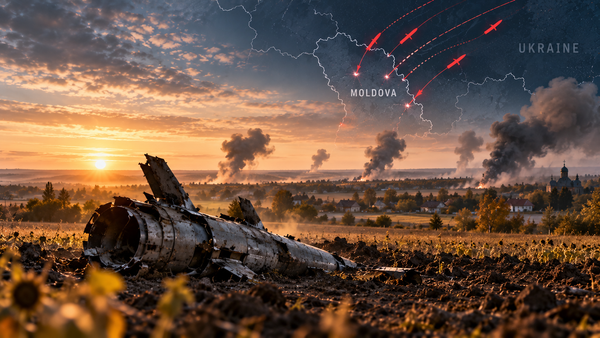
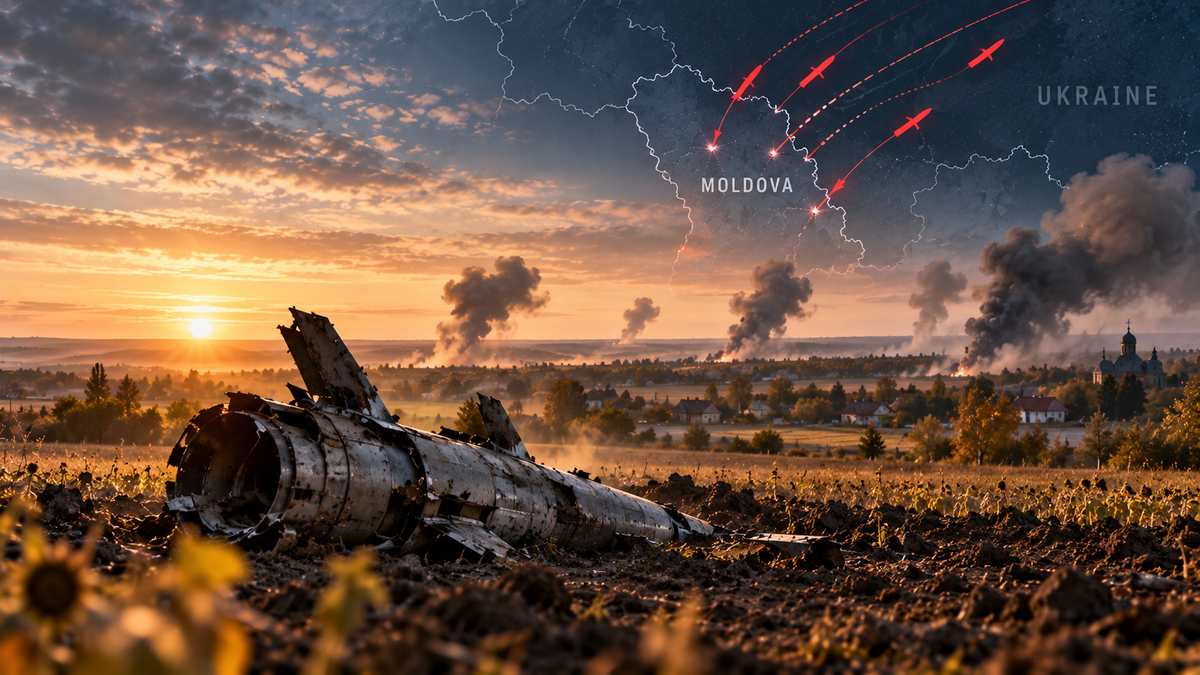
Until now these were isolated stray drones that Chișinău logged and condemned. On 3 October the picture is different: within minutes one morning, five weapons, three of them missiles, exploded on the territory of a non-belligerent country across four districts. President Sandu put it this way: the war is dangerously approaching Moldova.
What happened
On the morning of 3 October, during Russia's large-scale attack on Ukraine, Moldova's airspace surveillance recorded several unauthorized flights. Initial reporting spoke of five UAVs crossing between 07:45 and 08:00. Defence Minister Anatolie Nosatîi later clarified that the incident involved three missiles and two drones, saying the cases had been documented and that evidence recovered at the sites could be presented to Russia's ambassador.
The National Army's Air Operations Service then reported a sixth unauthorized flight: an object entered Moldovan airspace at 08:04 from the direction of Udobne in Ukraine's Odesa region, passed near Palanca, and left at 08:05 back toward Ukraine. The other five objects exploded on the ground. Debris was found in four districts, with two explosions in one of them, and police recorded five separate incidents. Fires and property damage were reported, including shattered windows near Crocmaz. No casualties were reported.
President Maia Sandu wrote: "This war is dangerously approaching Moldova. Five Russian aerial targets, including Banderol missiles and drones, violated our airspace and exploded on our land." By evening Moldova's Foreign Ministry had summoned Russian Ambassador Oleg Ozerov and delivered a protest note, urging Moscow to respect Moldova's sovereignty and territorial integrity and ensure such incidents do not recur.
Confirmed versus outstanding
| Claim | Status |
|---|---|
| Six unauthorized flights on 3 October | ✅ Official clarification from Moldova's Defence Ministry |
| Three missiles and two drones exploded on Moldovan territory | ✅ Defence Minister Nosatîi, corroborated across several outlets |
| Debris and explosions in four districts, no casualties | ✅ Confirmed by police and authorities |
| Sixth object entered at 08:04 and exited at 08:05 | ✅ Air Operations Service statement |
| Russian ambassador summoned, protest note delivered | ✅ Confirmed by Moldova's Foreign Ministry |
| Missile type ("Banderol") | 🟡 Named by President Sandu; identification of debris is ongoing |
| Intended target and whether weapons were aimed at Moldova | 🟡 Public evidence does not show the weapons were deliberately aimed at Moldova |
BSM analysis: from isolated episodes to a pattern
What makes this incident significant is structure, not scale of destruction. Where "a drone strayed over" used to suffice, one strike cycle has now put multiple weapons into the country, three of them missiles, all of which exploded on the ground rather than being shot down or merely transiting.
The context shows escalation. On 17 September an S-8000 Banderol cruise missile entered Moldovan airspace during an attack on Odesa and crashed in a cornfield about three kilometres from the village of Talmaz in Ștefan Vodă district. On 24 September suspected Russian drones crashed in both Romania and Moldova. On 30 September drones violated the border three times, with one exploding near a highway in Orhei district, prompting road and airspace closures; Chișinău summoned Ambassador Ozerov then as well. Ozerov acknowledged the drones could be Russian but said they were aimed at Ukraine. Today's note is therefore the second protest in four days.
BSM analysis: Moldova is not a NATO member, so collective defence does not apply, which is exactly what makes the case instructive. A country with no allied umbrella and limited air defence absorbs spillover from mass strikes on the Odesa region. For NATO's eastern flank this is not abstract: the same approach corridors lie close to Romania, which has recorded its own drone crashes. The problem of identifying and intercepting low-flying drones and missiles that deviate or change course over the sea and border is the same for every state along the line.
The Baltic connection
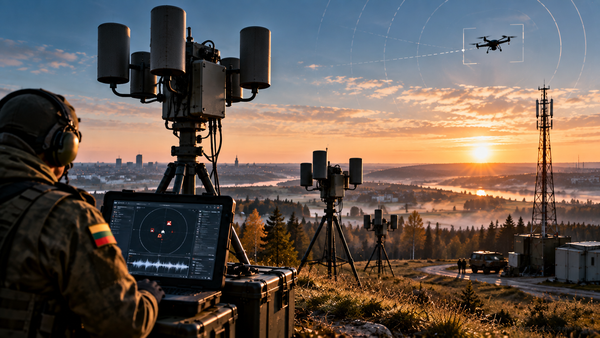
On 2 October Lithuania announced a pilot deployment of Ukraine-developed SkyFortress, an acoustic and RF detection system designed specifically for spotting low-flying drones and cruise missiles. BSM has already covered that development, so it is not a second material story here, but the Moldovan incident illustrates the kind of detection problem such systems are meant to address.
Checking other items from today
The separate yellow air alert over Vilnius and Ukmergė this morning was also checked. NATO fighters were scrambled, but the alert was cancelled at about 10:35 and no suspicious object was confirmed. It does not independently meet the materiality threshold.
What it means for Ukraine and the region
For Ukraine, this is another illustration that mass strikes on the south carry a regional cost paid by neighbours. For the Baltic states and Poland, the practical lesson echoes Poland's recent decision to simplify air-defence engagement rules: states far from the front increasingly have seconds to decide on objects whose trajectory and intent are unknown.
Conclusion
This is a move from isolated stray incidents toward a recurring phenomenon: Moldova has had several episodes within a week, and on 3 October five weapons landed on its soil. The next material delta would be an air-defence procurement or deployment decision, verified identification of recovered weapons, casualties or substantially greater damage, or evidence that Moldova itself was deliberately targeted.
Next checks: identification of the recovered debris and missile type; any concrete Chișinău decision on air defence or detection systems; reactions from the EU and Romania; whether a comparable number of violations recurs in the next large strike on the Odesa region.
Baltic Security Monitor (osint-baltic.com) — an analytical publication on security on NATO's northeastern flank. All OSINT assessments are produced by an automated monitoring system using open sources.