Not the Target, Still the Casualty: Fact-Checking the Moldova Drone Posts

Baltic Security Monitor | Fact-check analysis 17 October 2026
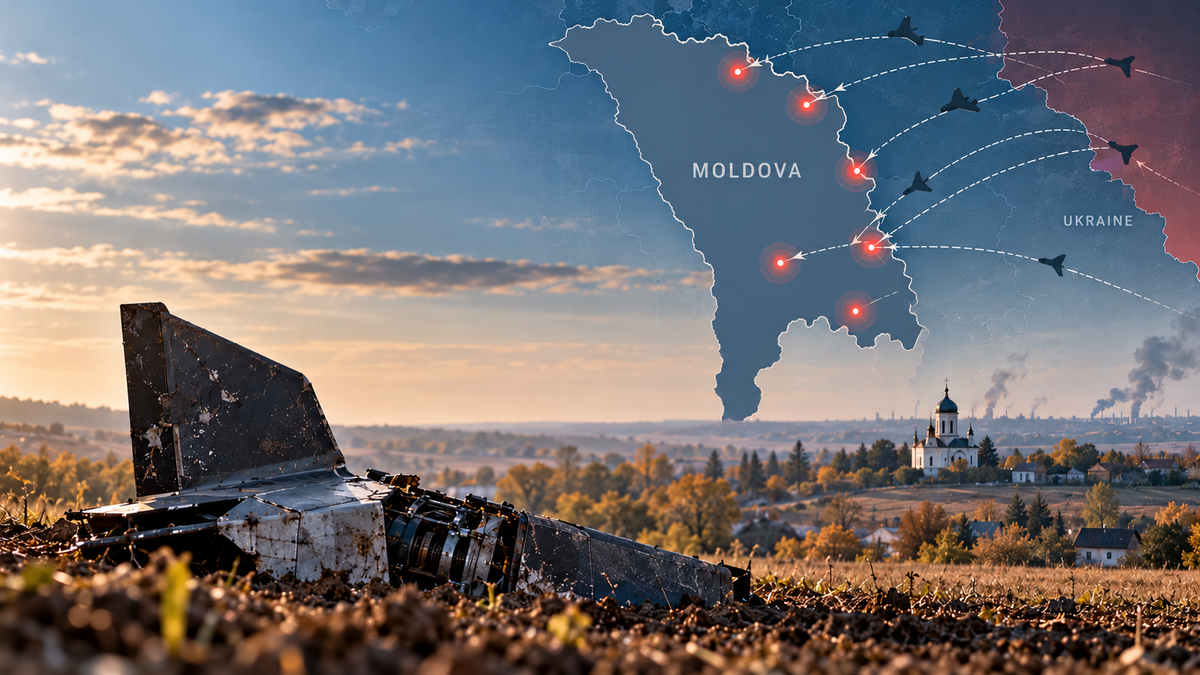
The posts arrive tagged BREAKING. Five Russian suicide drones "hit" northern Moldova in the past 24 hours. "Aggression that crosses borders." A 🇷🇺➡️🇲🇩 arrow and a row of hashtags complete the picture.
The core of the story holds up. Read Moldova's foreign ministry statement and the Reuters and AFP reporting instead, though, and you get a sharper picture. It is also a more worrying one, just not for the reasons the posts suggest.
What is confirmed
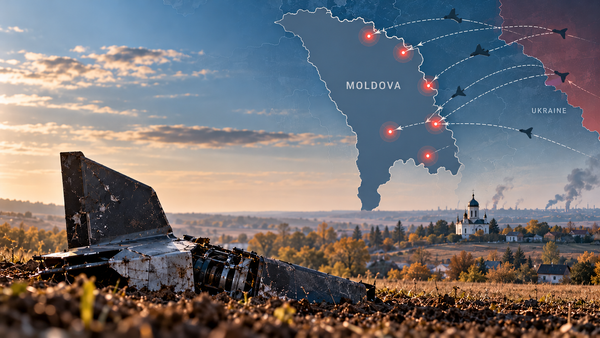
Five drones that Moldovan authorities identified as Russian crashed on Moldovan soil.
- Timing: they entered Moldovan airspace over a little more than 17 hours on Thursday and Friday, 15–16 October. The foreign ministry statement came on Friday.
- Location: the crash sites were mainly in northern and eastern districts.
- Damage: one person was lightly injured, and there was minor material damage.
- Diplomatic response: Russia's ambassador, Oleg Ozerov, was summoned again. The ministry said the incidents threaten citizens' safety and show the direct regional consequences of Russia's war against Ukraine.
- The night's context: on the night of 15–16 October, Moldova's surveillance systems recorded four airspace violations coming from the direction of Ukraine. Russia was striking Odesa region at the same time, injuring four people there.
Where the posts go wrong
"Last 24 hours." The incidents took place on 15–16 October, and the posts are circulating on the 17th. For a BREAKING tag, this is already yesterday's news.
"Northern Moldova." This is incomplete. Drones came down in the east as well as the north.
"Hit" and "suicide drones." This is the real distortion. No source says Moldova was the target. Everything points to drones straying off course during strikes on Ukraine. Officials have not named the drone type for this batch. Earlier incidents have involved both armed Geran drones and decoys, so "suicide drone" is an assumption for now.
"Citizen wounded." Officially, the injury was light.
BSM analysis: The posts overstate intent and understate the system. "Russia attacks Moldova" is a frame that can be debunked in one sentence, and that is precisely what Russian messaging will do. The real issue is that Moldova has become a standing debris field for someone else's war, with no one accountable for any single incident.
The real story is frequency
The 15–16 October incidents are part of a series, not an outlier. Here is the last six weeks:
| Date | Incident |
|---|---|
| 8–9 Sep | A Shahed crossed Moldova into Romania, came back, and crashed near Mihăilenii Vechi in Rîșcani (north). Passing near Chisinau, it disrupted several landings. The same night, an attack near the Tudora–Starokazacie border crossing killed two Ukrainian civilians and injured three, including a Moldovan citizen |
| 24 Sep | Geran-4 wreckage found in Briceni district, near the Ukrainian border |
| 30 Sep | A jet-powered drone exploded near Hîrbovăț (Anenii Noi). A second drone came down near Brănești (Orhei) the same day. Airspace over the north and centre was closed |
| 3 Oct | Five drones in 15 minutes. Debris in four districts, a vineyard fire in Crocmaz, shattered windows |
| 5 Oct | Palanca crossing suspended after a ricocheting projectile struck a bus and a border booth |
| 10–11 Oct | A drone exploded in a forest near Geamăna (Anenii Noi). Air surveillance detected no border crossing |
| 15–16 Oct | Five drones in 17 hours, one person lightly injured |
From 30 September to 16 October, at least 13 drones came down in Moldova. That is close to one a day.
BSM analysis: The most alarming entry in the table is not the injury on 16 October. It is 11 October, when a drone exploded inside the country and the surveillance system never saw it cross. Moldova has no air defence capable of downing Shaheds and no complete radar picture. It can record the aftermath, summon an ambassador and build shelters at border crossings, and that is exactly what it is doing.
The other side of the distortion
Pro-Kremlin channels typically answer these incidents with claims of "Ukrainian drones" or "Chisinau provocations." Moscow routinely accuses President Maia Sandu of pursuing anti-Russian policies. Sandu, for her part, has refused for over two years to accept Ozerov's credentials.
That frame runs into physical evidence. Moldovan officials have previously shown the ambassador debris marked Geran-2. And the incursions from the Ukrainian side keep coinciding with mass strikes on Odesa region.
The wider picture
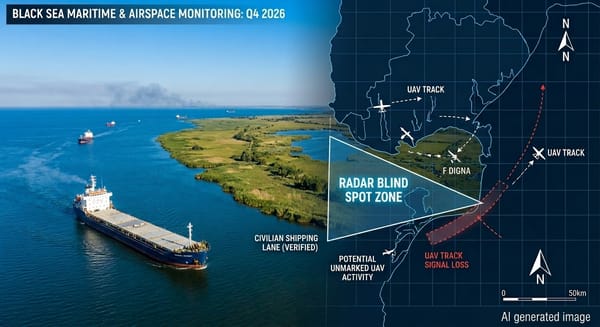
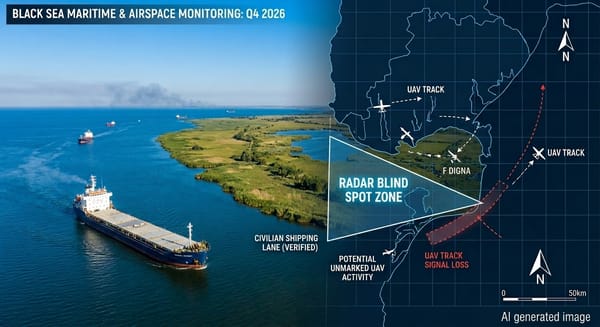
For NATO's eastern flank, Moldova works as an early-warning gauge. On 8 September, a Shahed flew from Ukraine through Moldova into Romania, which is NATO airspace, and then flew back. Romania has already shot down drones entering from the Moldovan side, and other flank states have reported a rise in drone incidents this year.
Moldova is not at war, has no air defence and is outside the alliance. That is why it shows first what "accidental" spillover looks like once it becomes routine.
Conclusion
The posts got the event right and its nature wrong. Russia is not "attacking" Moldova, and saying so hands propagandists an easy rebuttal. What Russia is doing is creating conditions in which drones falling on a neutral neighbour have become a daily statistic.
Thirteen drones in seventeen days is not aggression in the classic sense. For the region's long-term security, it is something worse: normalisation.
Baltic Security Monitor (osint-baltic.com) — an analytical publication covering security on NATO's northeastern flank. This piece checks social media claims against statements from Moldova's foreign and defence ministries and reporting by Reuters, AFP, NV, Ukrainska Pravda and Romania Insider.
Sources: Reuters / Free Malaysia Today, The Copenhagen Post (AFP), UNN, NV.ua, Ukrainska Pravda, Romania Insider, Radio Moldova, Mezha.