From License to Manufacturer: Ukraine Enters Direct Talks With Lockheed Martin

Baltic Security Monitor | Geopolitical Commentary Based on a Material OSINT Update, 29 July 2026, 08:00
One day in Washington captured the gap between a political promise and an industrial reality. In the morning, a Patriot license was a talking point with the president. By evening, the same topic was on the table with the company that actually builds the missile. That's the shift worth watching — not the headlines about "agreements," but who's actually in the room.
What Happened
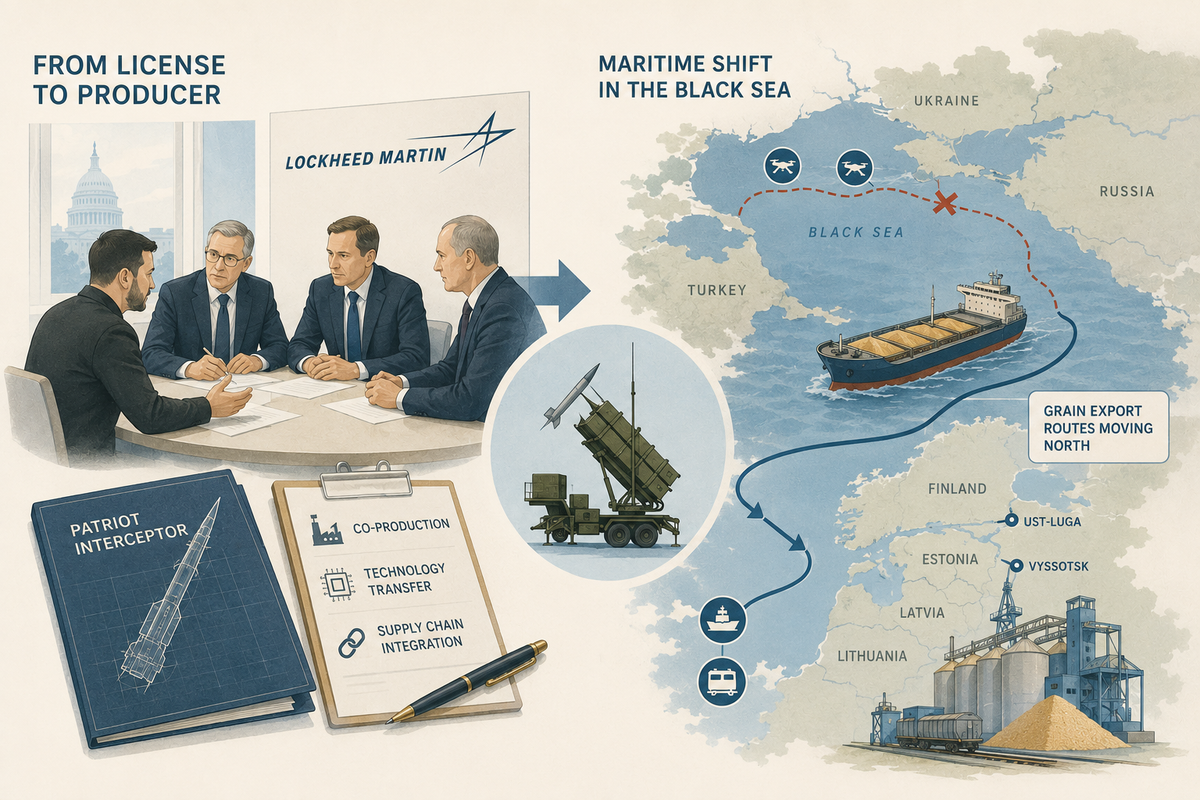
Following Volodymyr Zelenskyy's meeting with Donald Trump at the White House on 28 July, Ukraine officially announced a separate meeting with a Lockheed Martin team — one of the largest US defense manufacturers, producer of ATACMS, HIMARS, F-16s, and Patriot missiles. Zelenskyy said the talks focused on "further development of our cooperation — joint production and technology exchange," and that teams are already working on concrete solutions to move to co-production as quickly as possible.
This was Zelenskyy's second meeting with a Patriot interceptor manufacturer in under a week: on 23 July he discussed joint production with Raytheon in Kyiv. Both meetings coincided with his Washington trip for the funeral of Senator Lindsey Graham, one of Ukraine's most influential congressional allies, who died suddenly on 11 July.
Why It Matters
This does not mean a contract to manufacture Patriot interceptors has been signed, or that a site, volumes, and timeline have been set. But compared with the previous stage, something important has changed: the talks have moved past political sign-off on a license and into direct engagement with an industrial producer. According to Reuters, Trump announced earlier this month at the NATO summit in Ankara that Washington would grant Ukraine a license to manufacture Patriot interceptors, and the two sides reached what Zelenskyy called a political-level agreement; Tuesday's discussion was aimed at moving that commitment toward implementation.
BSM Assessment
Ukraine's critical shortage isn't Patriot launchers themselves but its limited, slowly replenished stock of interceptors. Localizing even part of production would reduce dependence on one-off decisions to transfer missiles from US and European stockpiles, embed Ukraine in a long-term Western air-defense supply chain, create an industrial model European allies could fund directly, and potentially increase the total pool of interceptors available to NATO's eastern flank. That said, treating production as secured before an agreement specifies missile type, division of manufacturing operations, and a timeline would be premature — trade press coverage suggests that even with political agreement, the process could take years, since the PAC-3 MSE interceptor Kyiv is seeking is one of the hardest pieces of US-exported technology to replicate.
The Second Story: Black Sea Risk Is Moving North
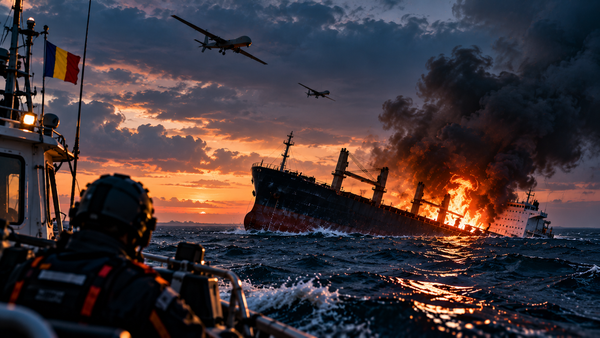
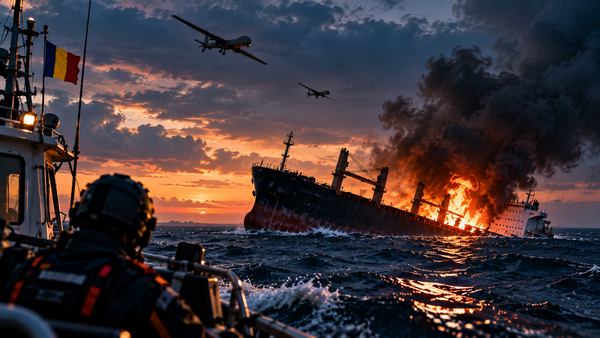
Three major Russian grain terminals — NZT and KSK in Novorossiysk, and ZTKT in Taman — have restricted truck deliveries as shipping risk rises in the Black and Azov seas, following Ukrainian drone strikes on several Russian grain vessels along a route that carries roughly a quarter of Russia's grain exports. Port Kavkaz is closed, and a nighttime vessel-movement ban at Novorossiysk remains in force. Combined, these terminals can ship more than 20 million tons of grain a year.
Reuters sources say Russia is looking at Baltic ports as the safest alternative route for part of its export flow. This isn't an abstract plan: according to Bloomberg, Russia's Ministry of Agriculture has already proposed covering 90% of rail freight costs for grain shipped from Rostov region to Black Sea and Baltic Sea ports, and traders have begun applying for subsidized shipments to Ust-Luga and Vysotsk.
Why This Matters for the Baltics
If the rerouting proves durable, traffic from Russian cargo vessels and their associated logistics chains will increase in the Gulf of Finland and the eastern Baltic Sea. That could mean heavier loads on Ust-Luga, Primorsk, and other Russian Baltic terminals; more overlap between grain shipments and the oil "shadow fleet's" routes; higher demands on maritime surveillance from Finland, Estonia, and NATO; and a shift of part of the economic fallout from Ukraine's maritime campaign from the Black Sea to the Baltic region. For now this is an adaptation trend documented by industry sources and backed by a confirmed government subsidy program — not an officially announced Russian export-relocation program.
Why Both Stories Belong Together
Ukraine's maritime campaign in the Black Sea and the shift of Patriot talks into an industrial phase look, at first glance, unrelated. But both illustrate the same mechanism: pressure applied at one point — Black Sea ports, an interceptor shortage — forces the system to find a new equilibrium elsewhere — Baltic terminals, a US industrial base. For BSM, that means both threads, production and maritime, are worth tracking as parts of the same process of risk and capacity redistributing inland and northward.
Baltic Security Monitor (osint-baltic.com) — an analytical publication covering security on NATO's northeastern flank.